

By Commerce Reporter
KARACHI: Pakistan’s fast-evolving SUV market is entering a new phase of competition — not just between brands, but within the same global automotive groups.
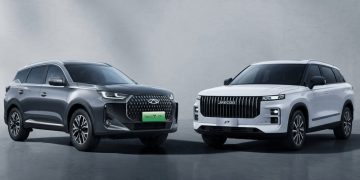
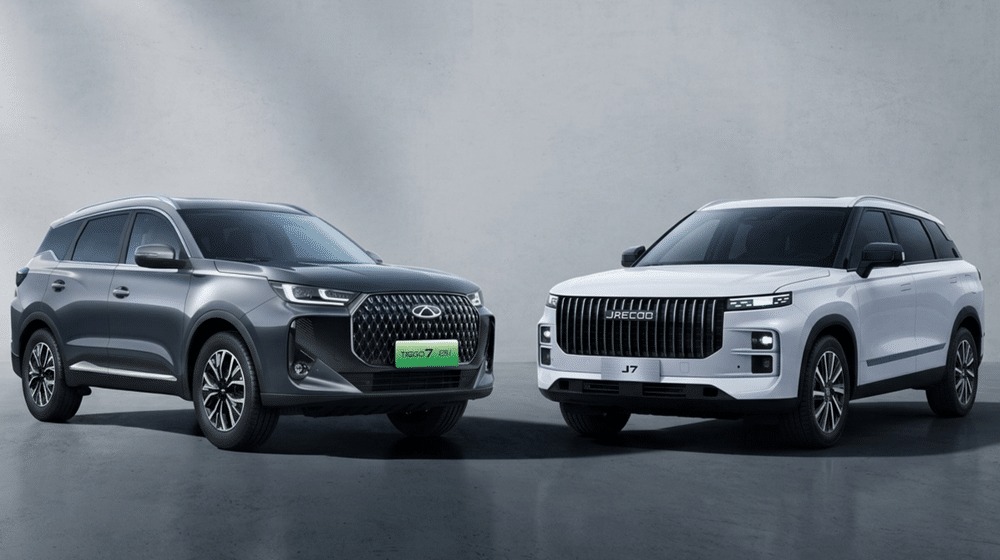
A clear example is the comparison between the Chery Tiggo 7 PHEV and the Jaecoo J7 — two models developed under the umbrella of Chery.
At first glance, both vehicles appear to target similar buyers — modern SUV consumers seeking electrification, performance, and advanced technology. However, a deeper analysis reveals a more nuanced picture. Despite being built on closely related platforms and sharing core engineering, the two models are priced differently in Pakistan, with an estimated gap of nearly Rs1 million.
The Tiggo 7 PHEV enters the market as a C-segment plug-in hybrid based on Chery’s Super Hybrid architecture. It pairs a 1.5TGDI engine with an 18.3 kWh battery and a dedicated hybrid transmission. The setup delivers strong performance, offering up to 90 kilometres of pure electric range and a combined range of approximately 1,200 kilometres — placing it among the more capable electrified SUVs available locally.
The Jaecoo J7, on the other hand, reflects Chery’s sub-brand strategy focused on design-led and lifestyle-oriented positioning. It features a more rugged and upright exterior with off-road-inspired styling. However, its underlying engineering remains closely aligned with Chery’s established hybrid systems.
This overlap reflects a global automotive practice known as badge engineering, where manufacturers deploy shared platforms across multiple brands. In Pakistan’s price-sensitive market, however, such overlaps are increasingly influencing consumer decisions.
With a price difference approaching Rs1 million, the Tiggo 7 PHEV positions itself as a stronger value proposition, offering similar hybrid performance and core features at a more accessible price point. For many buyers transitioning from conventional petrol SUVs, this gap significantly affects affordability and long-term ownership costs.
The Tiggo 7 PHEV also aligns with prevailing market dynamics. With fuel prices remaining high and volatile, plug-in hybrid vehicles provide a practical alternative — enabling electric-only daily commutes while retaining the flexibility of a combustion engine for longer trips.
Industry observers note that as global automakers expand sub-brands and overlapping product lines, Pakistani consumers are becoming more informed. Buyers are increasingly evaluating vehicles based on platform, powertrain, and real-world value rather than solely on styling or brand perception.
In this context, the Tiggo 7 PHEV’s market positioning becomes clearer. It is not only competing on features or design but also on delivering greater value for technology.
As Pakistan’s hybrid vehicle segment continues to grow, such intra-group comparisons are expected to become more common. For consumers, the key question may no longer be which SUV looks different — but which one offers more for the price.