


The Meridian National Barometer 2026, conducted among 5,000 adults across the country’s four provinces, found that 77 percent of respondents supported the creation of new provinces, reflecting growing public dissatisfaction with the performance of existing administrative structures.
The survey indicated a 23-percentage-point increase in support since November 2022, when 54 percent of respondents favoured additional provinces. The figure rose to 66 percent in 2024 before reaching 77 percent in the latest findings.
The results suggest that the debate over provincial restructuring is increasingly driven by concerns about public administration, regional inequality and the ability of provincial governments to address the needs of communities located far from provincial capitals.
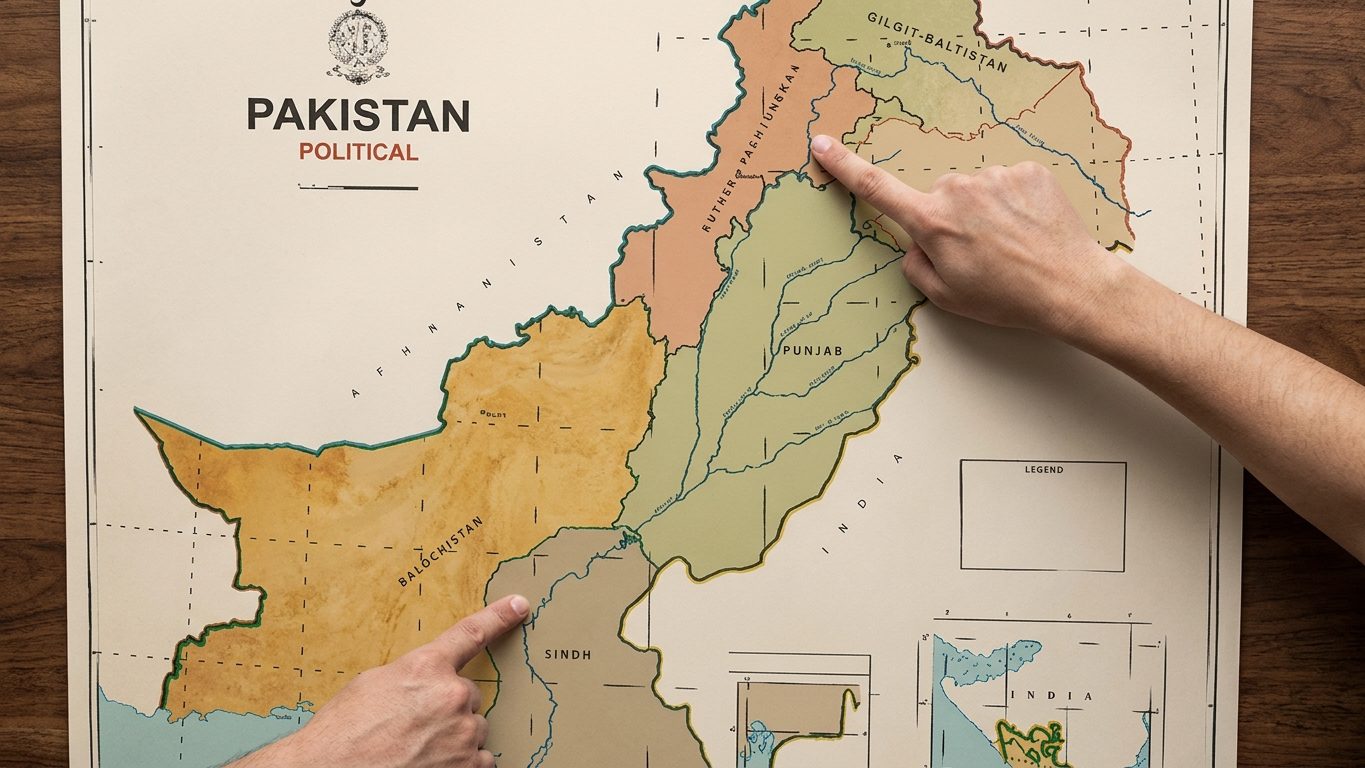
Support was recorded across all four provinces, with Sindh leading at 80 percent, followed by Punjab at 78 percent, Khyber Pakhtunkhwa at 75 percent and Balochistan at 72 percent.
Karachi recorded particularly strong support, with 92 percent of respondents favouring the creation of additional provinces or administrative units.
The findings also indicated that 73 percent of respondents wanted their own districts to become part of a new province, suggesting that the demand is closely connected to expectations of improved local representation and development opportunities.
South Punjab and Bahawalpur demands
In Punjab, the debate over new provinces has largely centred on proposals for separate South Punjab and Bahawalpur administrative units.
Supporters of a South Punjab province argue that the region has historically received insufficient attention in development planning and resource allocation compared with central and northern parts of the province.
The proposed region includes districts such as Multan, Bahawalpur, Dera Ghazi Khan, Rahim Yar Khan and Muzaffargarh, among others.
Advocates believe a separate provincial administration could improve access to government departments, strengthen local decision-making and ensure that development funds are directed towards regional priorities.
The demand for Bahawalpur province, meanwhile, has a distinct historical background, with supporters calling for restoration of the former Bahawalpur state’s provincial status.
Both proposals have remained part of political discussions and electoral commitments over the years, but disagreements over geographical boundaries, administrative arrangements and political consensus have prevented significant progress.
Demands emerging in other regions
The movement for additional provinces is not confined to Punjab.
In Khyber Pakhtunkhwa, calls for a separate Hazara province have continued to feature in regional political discussions.
Similarly, proposals for a Pothohar province covering parts of northern Punjab have attracted attention, while demands for changes to Sindh’s administrative structure, including proposals concerning Karachi, have periodically generated political debate.
However, these proposals remain politically sensitive, particularly where questions of provincial identity, language, historical boundaries and control over resources are involved.
Governance concerns drive public opinion
The survey identified dissatisfaction with provincial administration as a major factor behind the growing demand for smaller administrative units.
Around 82 percent of respondents believed existing provincial governments were not adequately addressing the development requirements of their districts.
Some 83 percent expected new provinces to reduce travelling time to government offices, while 79 percent believed administrative restructuring could increase funding for district-level development.
In addition, 77 percent anticipated improved police responsiveness, reflecting expectations that smaller administrative structures could strengthen public security and make government institutions more accessible.
Support was also strong among younger citizens. The survey recorded 83 percent backing among respondents aged 18 to 29 and 82 percent among those aged 30 to 44. Among people aged 45 to 64, support stood at 72 percent.
Urban respondents showed 76 percent support, compared with 68 percent among rural residents.
The findings indicate that the demand crosses geographical and generational boundaries, although its intensity varies between different population groups.
Constitutional and political challenges
Despite growing public support, creating additional provinces would require a complex constitutional process.
Article 239(4) of Pakistan’s Constitution provides that a constitutional amendment seeking to alter the limits of a province cannot be presented to the president for assent unless it has been passed by the provincial assembly of the affected province with at least two-thirds of its total membership.
This requirement makes political consensus essential, particularly because any proposal involving changes to provincial boundaries would require substantial support within the relevant provincial assembly.
Beyond constitutional approval, establishing new provinces would also involve decisions concerning administrative headquarters, financial resources, government departments, public-sector employees and the distribution of assets and liabilities.
The survey, conducted between October 12 and November 4, 2026, included 5,000 adults aged between 18 and 64. Its provincial sample comprised 2,000 respondents from Punjab, 1,200 from Sindh, 1,000 from Khyber Pakhtunkhwa and 800 from Balochistan.
The findings have added fresh momentum to a longstanding national debate over whether Pakistan’s existing provincial structure can adequately meet the needs of its growing population.
While supporters view additional provinces as a possible route towards more effective governance and balanced development, the proposal also raises questions about administrative costs, political representation and the distribution of national resources.
Ultimately, translating public demand into constitutional change will depend on political agreement and the ability of policymakers to develop an arrangement that addresses regional concerns while maintaining national cohesion.