


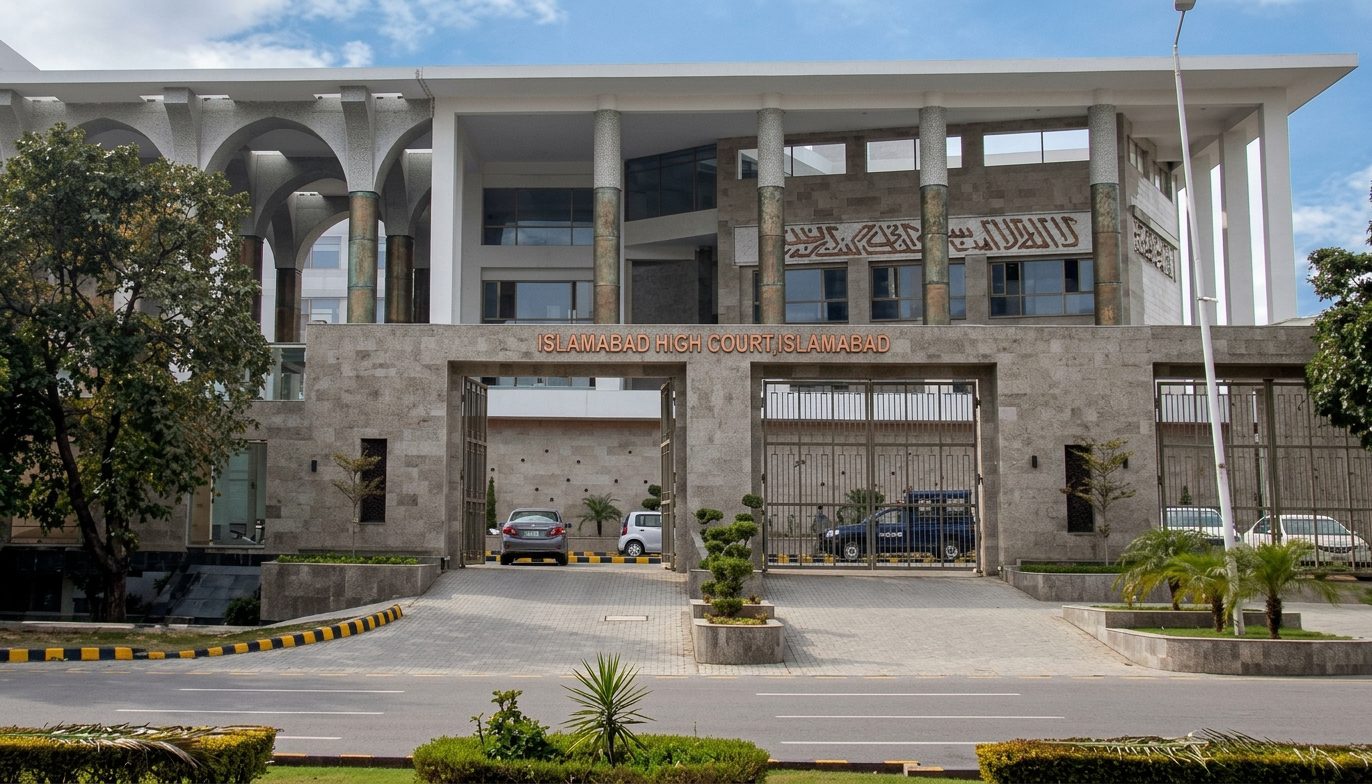
Justice Umair Majeed Malik announced a reserved verdict on a petition challenging the Election Commission of Pakistan’s (ECP) notification issued on October 21 and seeking suspension of the election schedule.
Through its order, the court restrained further proceedings under the announced schedule and issued a notice to the Election Commission, directing it to submit its response by November 26.
The petition, filed by Amjad Ali, raises questions about the legal validity of the delimitation process and the electoral framework under which the upcoming local government elections were announced.
According to the petitioner, fresh delimitation was conducted in 2024, after which the Election Commission proceeded with announcing the election schedule. However, the federal government subsequently introduced a new Local Government Ordinance in 2026, changing the legal framework governing local administration in the capital.
The petitioner’s counsel argued that after the ordinance ceased to operate, the previous delimitation arrangements were not restored before the Election Commission issued the election programme.
The legal challenge maintains that the electoral process requires a clear and legally consistent framework to ensure that constituencies, voter representation and election arrangements comply with the applicable law.
The suspension has placed the immediate electoral timetable on hold pending further proceedings, while the Election Commission is expected to explain the legal basis for its notification and the steps taken regarding delimitation.
The case has broader implications for local democratic representation in Islamabad, where elected local government institutions have remained absent since the expiry of the previous administration’s term.
The term of the last elected local government in the Islamabad Capital Territory expired in February 2021. However, fresh elections have not been held despite the passage of several years, with legal amendments, administrative decisions and disputes over the electoral framework contributing to repeated delays.
Section 219(4) of the Elections Act, 2017, requires the Election Commission to hold local government elections within 120 days of the expiry of the previous local government’s term.
The prolonged delay has raised questions about the implementation of statutory requirements and the availability of an effective elected local government system in the federal capital.
Local governments are responsible for addressing important civic matters, including municipal services, neighbourhood development, sanitation, local infrastructure and other community-level requirements.
The absence of elected representatives has left residents without the regular local democratic mechanisms intended to provide direct representation in municipal decision-making.
The latest court intervention also comes against the backdrop of tensions between the Election Commission and the federal government over preparations for the Islamabad elections.
A day before the court’s decision, Chief Election Commissioner Sikandar Sultan Raja had expressed concern over what he described as attempts by the federal government to undermine the upcoming local government polls.
While heading a three-member ECP bench hearing a case concerning an alleged violation of the code of conduct during the recent NA-77 by-election in Gujranwala, Raja questioned the government’s decision not to assign teachers duties for the Islamabad local government elections.
He questioned how the Election Commission would arrange the necessary polling staff if teachers were excluded from election duties.
The chief election commissioner maintained that the constitutional and statutory authority to conduct elections rested with the Election Commission and that the government was required to facilitate the electoral process.
He also made it clear that the commission intended to proceed with the Islamabad local government elections according to its announced programme.
His remarks highlighted institutional concerns over the administrative arrangements required to conduct elections in the federal capital.
The High Court’s latest order, however, has introduced a legal obstacle that must now be addressed before the electoral process can move forward.
The Election Commission’s response on November 26 is expected to clarify its position on the petitioner’s objections, the status of the 2024 delimitation exercise and the impact of the 2026 ordinance on the election schedule.
The court proceedings will be closely watched by political stakeholders and residents of Islamabad, particularly those seeking the restoration of elected local institutions.
The central question before the court is whether the election schedule was issued under a legally valid delimitation framework following changes in the local government legislation.
Until the legal dispute is resolved, the future timetable for Islamabad’s local government elections remains uncertain.
The case has once again brought the issue of prolonged delays in local democracy in the federal capital into focus, raising questions about electoral continuity, institutional responsibilities and the rights of residents to elected municipal representation.