


By Commerce Reporter
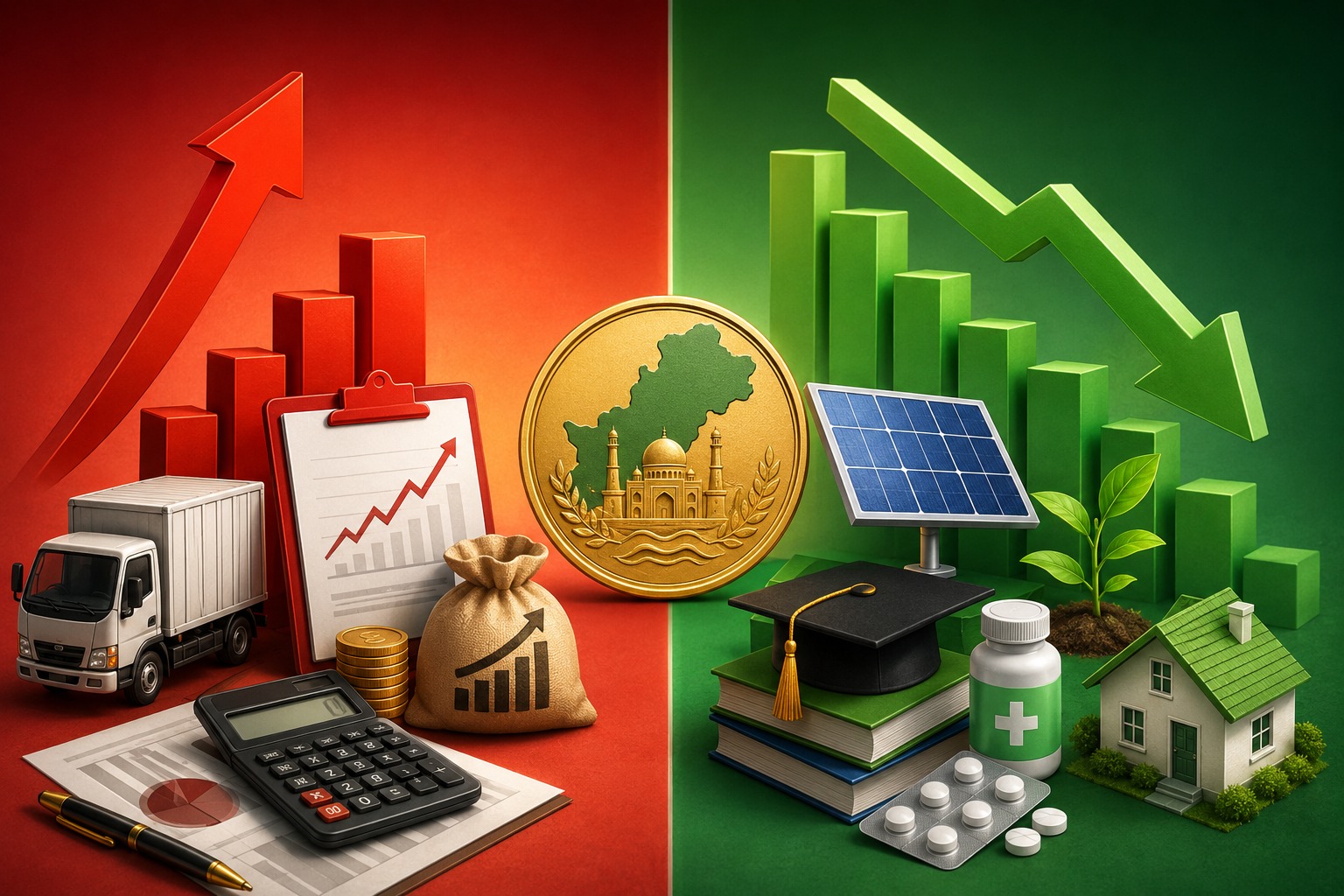
LAHORE: The Government of Punjab has introduced major revenue adjustments in its latest legislative session. According to the reference document, “Talking points on the Fiannce Bill and Other Tax Proposals.pdf”, the province is undergoing a major structural tax overhaul. To help taxpayers navigate these changes, here is a definitive breakdown of which provincial levies are increasing and which are decreasing under the new proposals.
The Increases: Where Taxpayers Will Pay More
The primary focus of the new fiscal strategy is to boost provincial revenue by adjusting long-frozen tax rates to reflect current inflation and rising asset values.
• Luxury and High-Engine Cars: Token tax rates for vehicles above 1000cc are going up. Cars between 1000cc and 2000cc will see rates rise from 0.2% to 0.3% of the invoice value, while cars exceeding 2000cc will see an increase from 0.3% to 0.4%.
• Commercial Trucks and Delivery Vans: Commercial vehicle token taxes are facing a massive three-fold hike after more than 20 years of no changes. For example, mid-sized trucks (4,060 kg to 8,120 kg) will jump from Rs. 2,200 to Rs. 6,600. Heavy-duty trailers over 16,000 kg will see taxes surge from Rs. 8,000 to Rs. 24,000.
• Vehicle Transfer Fees: The manual 10% annual increase has been scrapped in favor of an immediate jump of up to 50% of the current rate to match soaring vehicle market prices.
• Agricultural Income Tax (Land-Based): Slabs last updated in 2019 are being aggressively rationalized. Cultivated land exceeding 12.5 acres—previously taxed on a gradient of Rs. 300, Rs. 400, or Rs. 500—will now face a flat rate of Rs. 1,000 per acre. Irrigated mature orchards are also rising to Rs. 1,000 per acre.
• Water Rates (Abiana): Irrigation charges are shifting to a flat-rate system rather than being crop-based, set at Rs. 1,650 per acre for the Kharif season and Rs. 850 per acre for the Rabi season.
The Decreases: Where Taxpayers Get Relief
To balance the aggressive hikes, the government has introduced targeted exemptions, structural relief, and full abolitions for struggling sectors.
• Electric Vehicles (EVs): In a massive push for green energy, the government has proposed a whopping 99% exemption on token tax for electric vehicles for the FY 2026-27 period.
• The Cotton Fee: Recognizing the sharp decline in cotton production and the widespread closure of ginning factories, the seasonal raw cotton arrival fee is being completely abolished to support South Punjab’s farmers.
• Property Tax Surcharge Frequency: The late payment penalty on property tax is being relaxed. Instead of the penalizing monthly accumulation, the surcharge will now only be levied on a quarterly basis.
• Property Tax Rebates and Caps: Property owners who utilize the self-assessment mode will enjoy a 5% rebate on their payments. Furthermore, a 20% capping mechanism is being introduced to protect existing taxpayers (assessed before January 1, 2025) from drastic spikes under the new Capital Valuation plan.
Beyond numerical changes, the “Talking points on the Fiannce Bill and Other Tax Proposals.” outlines major procedural modernizations. Property tax payments through the e-pay system will become entirely mandatory to curb corruption and improve transparency. Additionally, motor vehicle dealers will now be authorized as direct agents of the Excise, Taxation & Narcotics Control (ET&NC) Department, allowing citizens to legally register new vehicles directly at the point of sale.