By Maheen Sultan
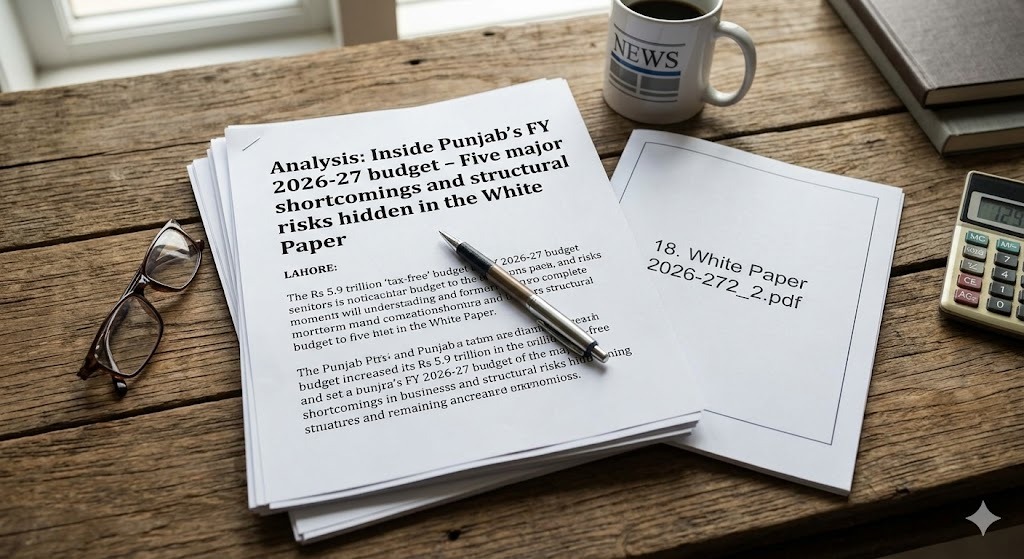
While the Government of Punjab has presented a massive Rs 5.9 trillion “tax-free” budget for Fiscal Year 2026-27, a closer look at the “18. White Paper 2026-27” reveals serious structural vulnerabilities. Despite promises of robust development and economic transformation, the province is operating under intense fiscal constraints, heavily relying on federal handouts, and facing compounding demographic pressures.
For news publishers and economic analysts, these are the critical shortcomings and fiscal risks facing the province in the upcoming fiscal year:
The most glaring vulnerability in Punjab’s financial architecture is its extreme dependence on the federal government.
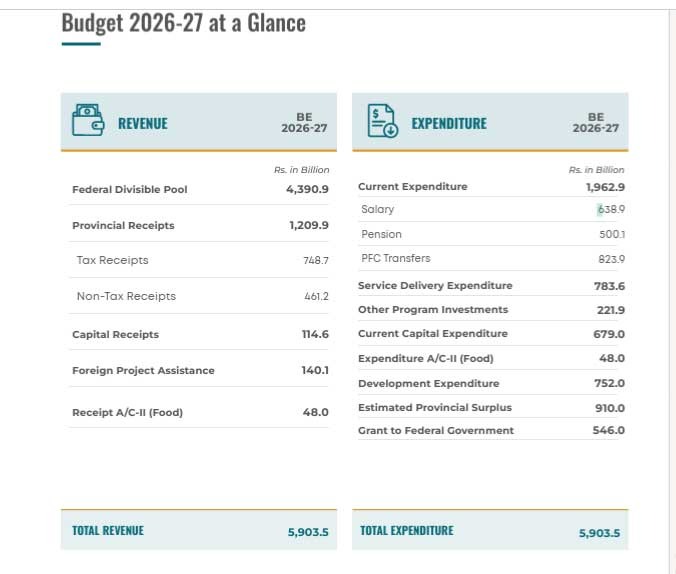
• Out of a total revenue target of Rs 5,903.5 billion, a staggering Rs 4,390.9 billion comes directly from Federal Divisible Pool transfers via the NFC award.
• This means nearly 74% of Punjab’s entire budget is reliant on Islamabad’s ability to collect taxes.
• If the federal government misses its collection targets or faces macroeconomic shocks, Punjab’s entire financial plan—including its development projects—could face severe funding cuts.
While the government boasts a large budget, an immense portion of its capital is completely locked up in administrative overhead, leaving less room for public welfare.
• The Burden: Current expenditure consumes Rs 1,962.9 billion. Within this, government salaries demand Rs 638.9 billion, while pensions take up another Rs 500.1 billion.
• The Shortcoming: Combined, salaries and pensions consume Rs 1,139 billion. This means the government spends significantly more just maintaining its own machinery and retired workforce than the Rs 752 billion it has allocated for the entire Annual Development Program (ADP).
The White Paper explicitly admits that the budget has been prepared in a “challenging environment marked by constrained fiscal space”.
• Finance Minister Mujtaba Shuja-ur-Rehman noted that development spending had to be “carefully rationalized” due to fiscal constraints and resource limitations.
• By keeping the budget “tax-free” to appease the public, the government has limited its ability to generate its own autonomous revenue, forcing it to focus aggressively on squeezing more out of existing tax compliance rather than expanding the tax net sustainably.
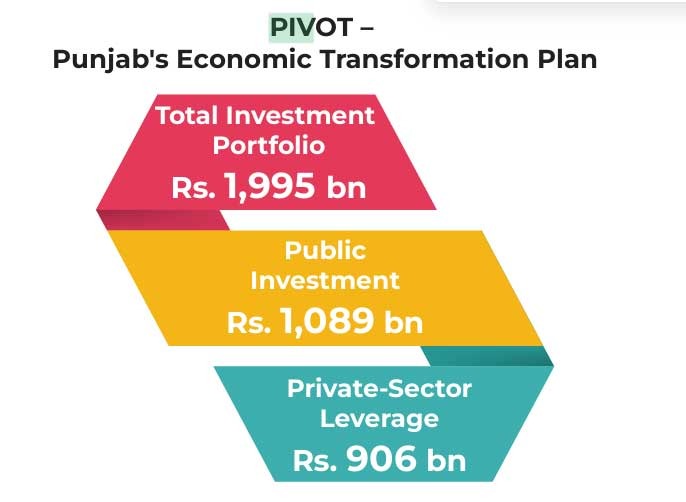
The province has pinned its hopes on an ambitious Economic Transformation Plan called Punjab’s Innovation for Value, Opportunity and Transformation, (PIVOT), carrying a total investment portfolio of Rs 1,995 billion. However, the framework reveals a risky dependency:
• The plan relies on Rs 906 billion in private-sector leverage.
• Relying on the private sector to fund nearly 45% of an economic transformation plan during a period marked by “regional and global uncertainties” and “external risks” in international energy markets is highly optimistic. If private investors back out due to economic instability, the PIVOT framework could stall.
The White Paper openly acknowledges that Punjab is facing severe, compounding structural bottlenecks that the current budget allocations may struggle to fully resolve:
• The Scale: Punjab houses nearly 53 percent of Pakistan’s entire population (per the 2023 census).
• The Gaps: The document notes that the province is facing “persistent challenges including climate stress, widening urban service gaps, poverty alleviation,” and a desperate need to find employment for a massive, youthful labor force.
• Critics argue that an ADP of Rs 752 billion is simply a drop in the bucket when spread across the rapidly expanding urban service gaps and climate vulnerabilities of over 127 million people.
Punjab’s FY 2026-27 budget is sustainable on paper, but only because it heavily relies on federal transfers and a massive projected provincial surplus of Rs 910 billion. By prioritizing the status quo and failing to significantly expand its own-source tax revenue, the government remains vulnerable to external economic shocks, leaving Punjab’s massive youth population to bear the brunt of widening urban service gaps.