



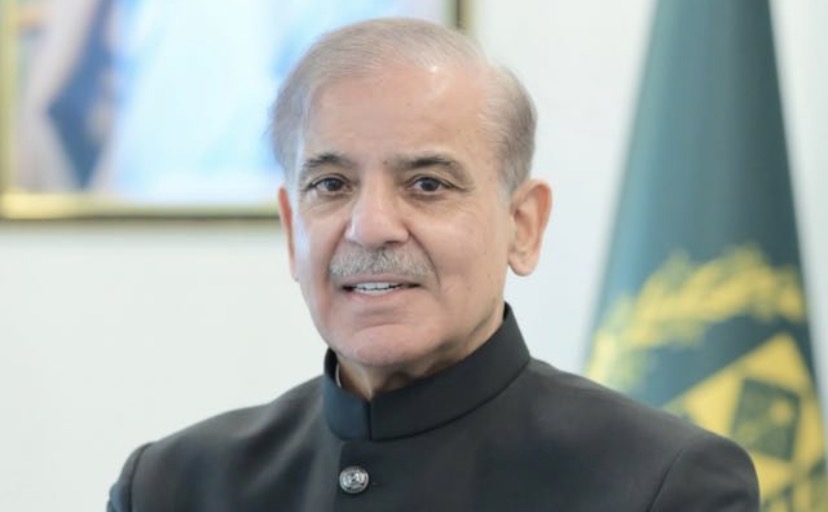
ISLAMABAD (Web Desk) – Prime Minister Shehbaz Sharif has directed all federal and provincial institutions to remain fully prepared for any emergency arising from the ongoing monsoon season, stressing that coordinated action is essential to protect lives and property as heavy rainfall continues across Pakistan.
Chairing a high-level review meeting on the country’s flood situation, the prime minister instructed all relevant departments to maintain continuous coordination with the National Disaster Management Authority (NDMA), Provincial Disaster Management Authorities (PDMAs), and provincial governments to ensure a rapid response to any emergency.
He directed the NDMA to provide timely weather updates and flood forecasts to all concerned institutions so preventive measures could be taken before the arrival of heavy rainfall.
The prime minister also instructed Planning Minister Ahsan Iqbal to chair daily meetings of the National Flood Committee to monitor the evolving situation and finalize response strategies based on weather forecasts and ground assessments.
Officials were further directed to keep the early warning system for glacial lake outburst floods and glacier-related flooding fully operational, particularly in northern Pakistan where rising temperatures have accelerated glacier melting.
During the meeting, Prime Minister Shehbaz said Pakistan contributes only a small share to global greenhouse gas emissions but remains among the countries most severely affected by climate change.
He said the government was implementing short-term, medium-term and long-term climate adaptation measures aimed at reducing the impact of extreme weather events.
The meeting was informed that 110 people have lost their lives during the current monsoon season while another 360 have sustained injuries in rain-related incidents across the country.
Officials also reported that 796 houses have been damaged due to heavy rainfall and flooding, while 376 livestock have perished, causing significant losses to rural communities.
Chief secretaries from all four provinces, as well as Gilgit-Baltistan and Azad Jammu and Kashmir, briefed the meeting on rescue operations, relief activities and rehabilitation efforts underway in their respective regions.
The NDMA informed participants that all available resources were being provided to provincial governments to deal with floods in northern Pakistan and the severe heatwave affecting parts of Sindh and Balochistan.
According to officials, another significant spell of monsoon rainfall is expected over Azad Jammu and Kashmir, Gilgit-Baltistan and southern Sindh during the next two days.
Authorities also warned that another widespread monsoon system is likely to affect several parts of the country during the second week of September, prompting continued preparedness.
The meeting was informed that due to the ongoing El Niño phenomenon, glacier melting has intensified in northern Pakistan, increasing the likelihood of glacial lake outburst floods in vulnerable mountain regions.
Officials said potentially affected locations have already been identified, while precautionary measures are being implemented to reduce possible damage.
The government also reviewed the flood situation in Punjab, where urban flooding has affected several districts, including Lahore.
Authorities said immediate drainage measures had improved conditions in major cities, although floodwater continues to inundate agricultural land in some areas due to overflowing seasonal streams.
The meeting was informed that flood conditions in Dera Ghazi Khan and surrounding areas are currently under control following emergency interventions.
The National Highway Authority briefed participants on restoration work after landslides disrupted transportation in mountainous regions.
Officials said roads blocked at 106 locations had been reopened through emergency operations, allowing traffic to resume.
The Ministry of Information Technology informed the meeting that the National Emergency Telecommunication Center had been activated, enabling Rescue 1122 to receive emergency calls immediately from mobile users during disasters.
Authorities also revealed that approximately 700 sites across Pakistan have been identified for rainwater storage to improve water availability for agriculture during dry periods.
Concluding the meeting, Prime Minister Shehbaz praised the NDMA, provincial governments and rescue agencies for their preparedness and emergency response, directing all institutions to remain vigilant as further monsoon activity is expected in the coming weeks.


