


By Our Correspondent
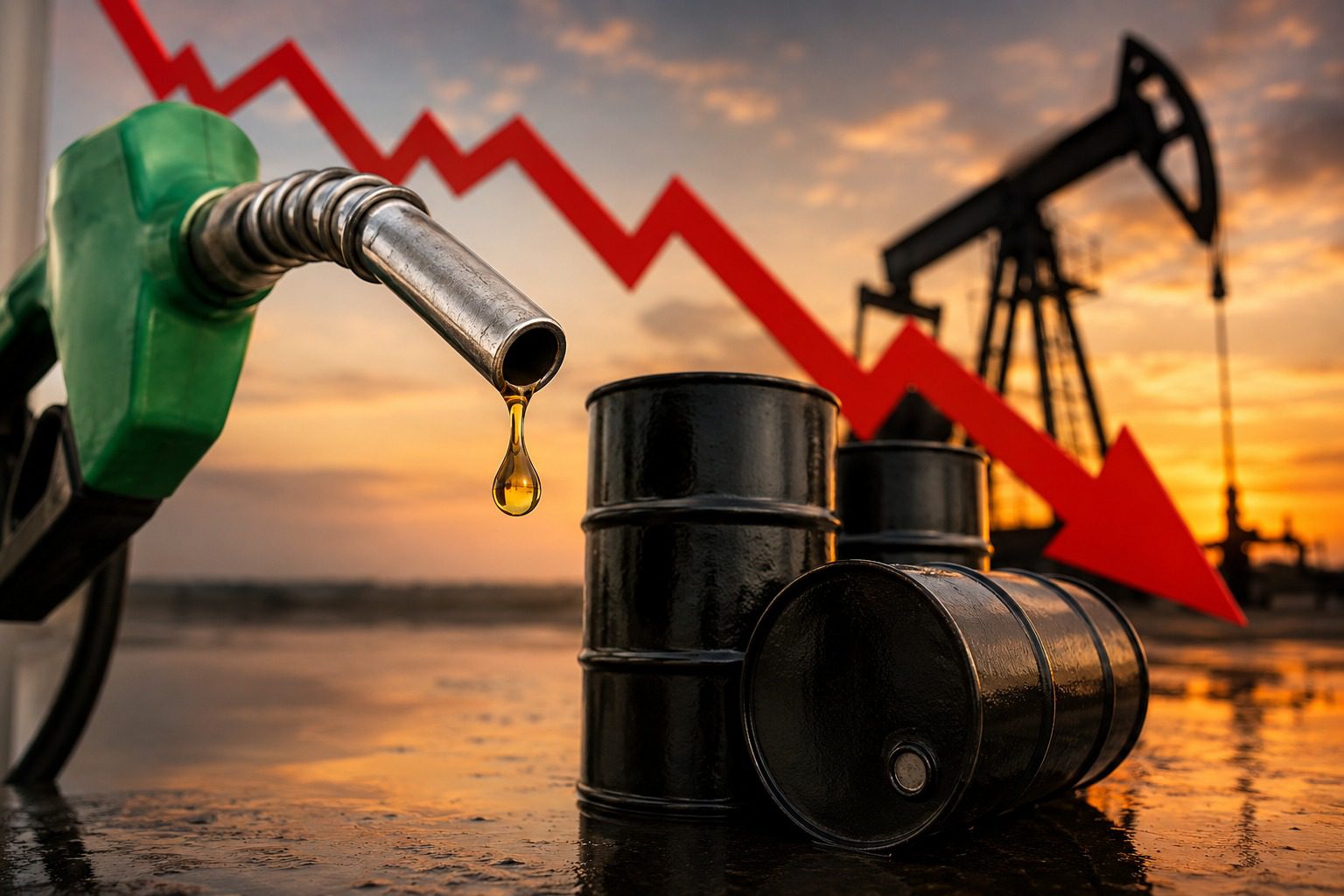
ISLAMABAD – The federal government has announced only a Re1 per litre reduction in petrol prices, despite a sharp nearly six per cent decline in international crude oil prices, drawing attention to the limited relief being passed on to consumers even as global markets witnessed a significant correction.
According to a notification issued by the Petroleum Division, the price of petrol has been reduced from Rs335.18 to Rs334.18 per litre, while the price of high-speed diesel (HSD) has been increased by Rs3.77 per litre, taking it from Rs383.06 to Rs386.83 per litre. The revised prices will come into effect from July 28.
The government attributed the latest revision to fluctuations in international petroleum prices and movements in the global energy market. However, the modest reduction in petrol prices comes at a time when international oil benchmarks registered one of their biggest single-day declines in recent weeks.
On Monday, Brent crude, the international benchmark, dropped by almost 6% to around $90.93 per barrel, while US West Texas Intermediate (WTI) crude also fell by more than 5.5%. During intraday trading, Brent crude briefly declined by as much as 9.5%, touching its lowest level in about a week.
The decline in oil prices followed reports that the United States and Iran paused military strikes over the weekend after weeks of escalating conflict across the Persian Gulf and the Red Sea. The development raised hopes among investors that diplomatic efforts could reduce tensions and gradually restore disrupted oil shipments through the strategically important Strait of Hormuz.
Although analysts cautioned that the ceasefire remained fragile and shipping disruptions had not yet been fully resolved, the easing geopolitical risk prompted a sharp sell-off in crude oil futures.
Despite the substantial fall in international prices, Pakistani consumers received only marginal relief at the pump.
The latest notification also shows that the government continues to collect significant revenue from petroleum products. Consumers are paying approximately Rs110 per litre in taxes and duties on petrol and around Rs96 per litre on high-speed diesel, making petroleum products one of the government’s largest sources of indirect tax revenue.
Earlier, Petroleum Minister Ali Pervaiz Malik announced that Pakistan would shift from weekly to daily fuel price adjustments in response to increased volatility in global energy markets. Under the new mechanism, the Oil and Gas Regulatory Authority (Ogra) will determine fuel prices each day based on international oil prices, exchange rate movements and other pricing components.
The move is aimed at making domestic fuel prices more responsive to developments in the international market. However, it has been criticised by petroleum dealers, who argue that daily price revisions would create uncertainty for retailers and consumers alike.
The All Pakistan Petroleum Dealers Association has rejected the government’s decision to introduce daily pricing and has warned that it may announce a countrywide protest strategy if its concerns are not addressed.
Petrol remains the primary fuel used by motorcycles, rickshaws, private vehicles and small commercial transport, meaning even small changes directly affect millions of middle- and lower-income households. High-speed diesel, on the other hand, is widely used in heavy transport, agriculture, construction machinery, power generation and industrial operations. Consequently, increases in diesel prices often translate into higher transportation costs, rising food prices and broader inflationary pressure across the economy.
Economic analysts note that although international crude prices have retreated considerably from recent highs, domestic fuel prices do not always move in direct proportion because they are influenced by multiple factors, including exchange rate fluctuations, freight costs, petroleum levy, sales tax policies and import pricing formulas.
Nevertheless, the contrast between the nearly six per cent decline in global crude oil prices and the Re1 per litre reduction in petrol prices is likely to renew debate over Pakistan’s petroleum pricing mechanism and the extent to which international price movements are reflected in prices paid by consumers.


