


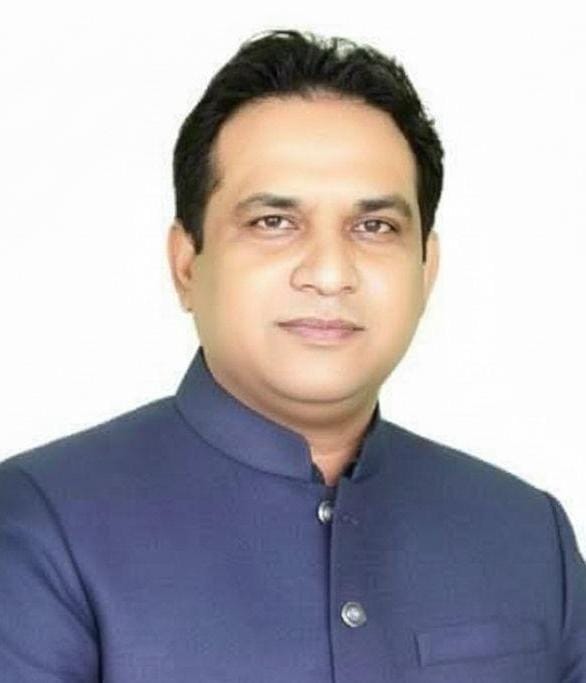
By Rana Farooq Ashraf
Pakistan is standing at a defining moment in its political and economic history. The country is once again debating whether it needs smaller provinces, new administrative units, a restructuring of the political system, judicial reform, stronger local governments and a new economic model capable of reducing dependence on external borrowing.
These are not merely political questions. They are questions about the capacity of the Pakistani state to govern a population of more than 250 million, create productive employment for millions of young people entering the labour market, expand exports, modernise agriculture and industry, provide effective education and healthcare, and maintain law and order in an increasingly complex society.
The real question, therefore, is not simply whether Pakistan needs more provinces.
The real question is:
Can the existing structure of governance deliver the Pakistan that the twenty-first century demands?
The honest answer is difficult to avoid. Pakistan needs structural reform. But structural reform must not become another battlefield between political parties. It must become a national project.
The problem is not merely who governs — it is how Pakistan is governed
Pakistan has changed governments many times. Political parties have alternated in power, governments have introduced different development programmes and economic policies, and every new administration has inherited a familiar list of problems: debt, energy shortages, weak exports, a narrow tax base, low investment, unemployment, institutional inefficiency and political instability. Yet the same structural weaknesses continue to return. This suggests that the problem is deeper than the performance of any single government. Pakistan has a governance problem. Governments are temporary. States are permanent. Political leadership may change every few years, but national economic priorities, institutional reforms and development strategies should not be rewritten with every election.
Successful countries have understood this distinction. Their governments compete politically, but the state continues to function through institutions, rules, measurable targets and long-term policy continuity. Pakistan needs to develop the same culture.
Smaller provinces may be necessary — but smaller, empowered governments are essential
The debate over new provinces should neither be dismissed nor reduced to a political slogan. There are legitimate arguments for creating smaller administrative units where population growth, geography, economic activity and distance from provincial capitals make effective governance difficult. But a new province should not simply mean drawing another line on the map.
A new administrative unit will succeed only if it brings government closer to citizens, improves public services, creates economic opportunities and makes officials more accountable. Therefore, Pakistan should adopt a phased approach. First, strengthen administrative regions and districts. Second, establish genuinely empowered local governments. Third, evaluate their performance over a defined period. And where population, geography, economic viability and public opinion justify it, constitutional arrangements for new provinces should be considered.
In other words: Administrative reform should precede political redrawing. The objective should not be to create more political offices. The objective should be to create better government.
Pakistan needs a genuine three-tier system of government
The most important unfinished business of devolution is not the transfer of authority from Islamabad to provincial capitals. It is the transfer of effective authority from provincial capitals to the people.
The World Bank’s July 2026 assessment of Pakistan’s fiscal federalism makes this point particularly clear. It notes that local governments accounted for less than 5 per cent of total government spending in 2024, while provincial spending remained heavily concentrated in recurrent expenditure. The report argues for stronger local governments, better alignment between responsibilities and financing, broader revenue mobilisation and improved coordination among the three tiers of government. This should become a central element of Pakistan’s reform agenda.
The federal government should focus on defence, foreign affairs, currency, national trade policy, major energy projects and strategic infrastructure. Provincial governments should focus on education, healthcare, policing, agriculture, industry and provincial infrastructure. Local governments should control basic municipal services: primary education, basic healthcare, water, sanitation, local roads, waste management, urban planning and local economic development. But devolution without money is meaningless. Responsibility must follow resources — and resources must follow accountability. That is the essence of meaningful federalism.
Pakistan must move from a debt-driven economy to a production-driven economy
Pakistan cannot borrow its way into prosperity. Debt can finance development when it creates productive capacity. But borrowing simply to finance recurring expenditure creates a cycle in which every economic recovery eventually leads back to another balance-of-payments crisis. The fundamental solution is not austerity alone. It is productivity. Pakistan must produce more, export more and waste less. The country needs a national strategy that connects agriculture, manufacturing, technology, logistics, finance and exports. Every major economic region should develop a clear economic identity. Some regions may have a natural advantage in textiles and garments. Others may specialise in food processing, engineering, minerals, information technology, tourism or agricultural exports. The objective should be to create regional economic engines rather than treating every district as a miniature version of Islamabad. Pakistan must stop exporting raw potential and start exporting value-added products. We should not merely export cotton; we should export high-value textiles and brands. We should not merely grow fruit; we should export processed food, juices, pulp, packaged products and branded agricultural goods. We should not merely celebrate a large youth population; we should turn young Pakistanis into exporters of technology and professional services.
Economic sovereignty begins with productive capacity.
Agriculture must become a modern business
Pakistan cannot afford to manage agriculture through short-term subsidies and political slogans. The farmer needs access to modern seeds, efficient irrigation, mechanisation, crop insurance, storage, cold chains, processing facilities, reliable markets and export networks. The real agricultural revolution will occur when the farmer is connected directly to industry and international markets. A crop should not end at the farm gate. It should move through a chain of storage, processing, packaging, branding and export. Agriculture and industry must therefore be treated as one economic ecosystem. The farmer should not remain a recipient of government support. The farmer should become a partner in Pakistan’s export economy.
The youth question is the economic question
Pakistan’s greatest asset is its young population. But a demographic advantage becomes a liability when young people lack skills, employment and hope. The answer is not to promise every young Pakistani a government job. The answer is to make young Pakistanis employable, entrepreneurial and globally competitive. Every district should have centres for technical training, entrepreneurship and modern skills. Training should reflect the future economy: artificial intelligence, information technology, engineering, digital commerce, renewable energy, advanced agriculture, construction, healthcare and international services. Pakistan’s young people should not be viewed merely as voters. They should be viewed as producers, entrepreneurs, engineers, technicians, researchers and exporters. The state cannot employ every young person. But it can create the conditions in which young people create employment for themselves and others.
Judicial reform is economic reform
There can be no serious investment climate without confidence in the rule of law. A commercial dispute that takes years to resolve is not merely a judicial problem. It is an economic cost. Pakistan needs stronger commercial courts, alternative dispute resolution, digital case management and transparent systems for monitoring case progression. Judicial independence must remain non-negotiable. But independence and efficiency are not opposing principles. Justice delayed is not merely justice delayed; it is economic opportunity delayed.
Police and civil administration must become professional institutions
No country can achieve sustained economic growth without internal security and predictable administration. Police postings, civil-service appointments and transfers should be increasingly protected from arbitrary political intervention. Performance, integrity, competence and professional expertise should matter more than political connections. Every district administration should be measured through publicly available indicators.
How many schools are functioning?
How many children are attending?
How many health facilities are operational?
How much private investment has arrived?
How many jobs have been created?
How effectively is crime being controlled?
How quickly are public complaints resolved?
The government should no longer be judged primarily by speeches.
The state must be judged by measurable outcomes.
Education and healthcare are not expenditures — they are national infrastructure
Pakistan has traditionally measured development through roads, bridges and buildings. But the most important infrastructure is human capital. A child who attends school but does not acquire basic learning skills is a failed development outcome. A young person who completes education without employable skills is a lost economic opportunity. A mother without access to basic healthcare represents not merely a social failure but a national productivity loss. Pakistan should therefore establish district-level human development scorecards covering education, health, nutrition, clean water, employment and skills. Resources should increasingly follow performance and need. Districts that demonstrate measurable improvement should receive incentives and additional development support. Those that fail should face scrutiny. Reward performance. Demand accountability. This principle must become part of the culture of government.
The way out of debt is a larger tax base and stronger exports
Pakistan’s tax system cannot continue to depend disproportionately on those who are already documented and visible. The tax base must expand. Agriculture, retail, wholesale, real estate and other under-documented sectors must gradually become part of a fair and enforceable tax system. At the same time, government must confront inefficient public expenditure and persistently loss-making state-owned enterprises. But tax reform must not become merely a revenue-collection exercise. It must be linked to a social contract.
Citizens are more willing to pay taxes when they can see functioning schools, hospitals, roads, security and municipal services. The state must therefore make a simple promise: Taxes will finance services, and services will be measured.
Pakistan needs a National Compact — not another political confrontation
The greatest danger is that every structural reform becomes another political battlefield. One party proposes change; another assumes it is designed to weaken it. One province demands greater autonomy; another fears losing resources. One institution seeks reform; another interprets it as a challenge to its authority. This cycle must end. Pakistan needs a National Compact for Governance and Economic Transformation agreed upon by political parties, parliament, provinces, business leaders, farmers, academics, civil society and representatives of young people.
The compact should establish a long-term framework covering:
1. Empowered local governments.
2. Clear federal, provincial and local responsibilities.
3. Evidence-based consideration of new administrative units.
4. An export-oriented industrial strategy.
5. Agricultural modernisation and value addition.
6. A national youth skills and employment programme.
7. Faster and more accessible justice.
8. Professional policing and civil administration.
9. Measurable education and healthcare targets.
10. A long-term strategy to reduce dependence on external borrowing.
The World Bank’s current Country Partnership Framework for Pakistan similarly emphasises sustained reforms, stronger investment, productivity and long-term policy continuity rather than fragmented short-term interventions. This is precisely the direction Pakistan should pursue.
The choice before Pakistan
Pakistan possesses land, a large workforce, agricultural potential, industrial capacity, mineral resources, a strategic geographic location, a coastline and access to some of the world’s largest markets. The problem is not that Pakistan has nothing. The problem is that Pakistan has not yet organised what it has. We have debated personalities when we should have debated institutions. We have fought over governments when we should have fought for better governance. We have celebrated consumption when we should have rewarded production. We have measured political success through electoral victories when we should measure national success through jobs, exports, education, health, investment and human development. The time has come to change the national conversation. New provinces may or may not be required. But new governance is unquestionably required. Governments may change. Policies must not change every time governments do. Political parties may disagree. The national economic direction must remain stable. Institutions may have different constitutional responsibilities. But all must ultimately serve the same citizen. Pakistan does not need another political war. It needs a national economic and administrative settlement. It needs a state that is smaller where it should be smaller, stronger where it must be stronger, closer to citizens where services are delivered, and accountable wherever public money is spent. The country must move from dependence to productivity, from borrowing to investment, from raw exports to value addition, from political patronage to merit, and from centralised administration to empowered local government. The choice is ultimately simple. We can continue fighting over who is responsible for Pakistan’s problems — or we can finally compete over who can solve them. History will not remember how loudly we blamed one another. It will remember whether, at a moment of national difficulty, Pakistan’s political leadership had the courage to reform the system. Pakistan does not need another slogan. It needs a direction. It does not need another political settlement built around personalities. It needs a national compact built around institutions. And above all, it does not need a state that merely survives from one crisis to another. It needs a state capable of building a future.


