


LAHORE (The Tribune International) – The report, published by The New York Times on Aug. 11, examined how soaring fuel prices and the wider energy shock linked to the war in Iran are encouraging consumers in developing countries to consider battery-powered motorcycles as an alternative to conventional petrol bikes.
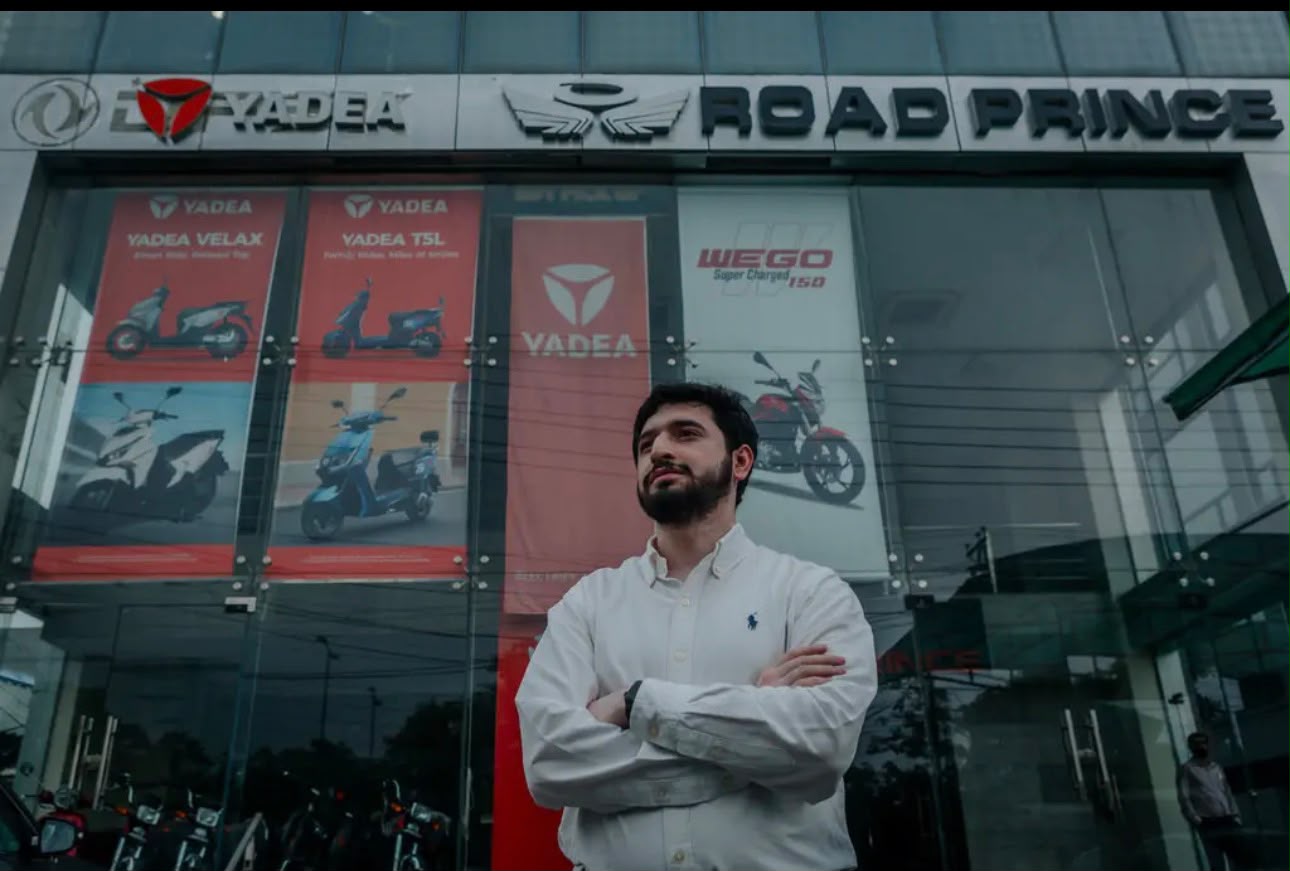
Among the Pakistani industry figures quoted in the report was Salman, whose memorable assessment captured the unexpected relationship between global geopolitical developments and Pakistan’s rapidly changing two-wheeler market.
“Trump is the biggest salesman. Salesman of the year,” Salman told the New York Times, referring to the rise in demand for electric motorcycles following higher fuel prices.
Read the original New York Times report: https://www.nytimes.com/2026/08/11/climate/electric-motorcycles-pakistan.html
While the remark was delivered with a touch of humour, it reflects a serious commercial reality facing millions of Pakistani motorcycle users: the cost of petrol has become an increasingly important factor in household transportation decisions.
Pakistan is one of the world’s major motorcycle markets, with two-wheelers serving as an essential means of transportation for workers, students, small-business owners and families.
For many consumers, the decision to switch to an electric motorcycle is therefore increasingly being driven by economics rather than environmental considerations alone.
Electric motorcycles generally require a higher initial investment than conventional petrol-powered bikes. However, their lower running costs can make them attractive to users who travel long distances every day and face rising fuel expenses.
That changing consumer calculation is creating significant opportunities for companies such as Yadea Pakistan.
The company is competing in a market that has seen a growing number of electric motorcycle brands enter Pakistan, reflecting rising interest in cleaner and potentially cheaper forms of urban transportation.
For Salman, the opportunity extends beyond the immediate impact of fuel prices.
The growth of electric two-wheelers could gradually change the structure of Pakistan’s motorcycle industry, creating new demand for batteries, charging infrastructure, maintenance services, local assembly and specialised technical skills.
It could also reduce some of the pressure created by Pakistan’s dependence on imported petroleum.
Petroleum products account for a substantial portion of Pakistan’s import requirements, meaning international oil-price increases can affect the country far beyond petrol stations. Higher fuel costs can place additional pressure on household budgets while also contributing to inflation and foreign-exchange pressures.
The electric-bike transition consequently has implications for both consumers and the wider economy.
Yadea Pakistan is seeking to establish itself as a major player in this changing market, with its products targeting consumers who want the familiarity and practicality of a two-wheeler without the continuing expense of petrol.
The company’s challenge, however, is to turn growing public interest into long-term confidence.
Consumers considering electric motorcycles are likely to examine battery life, charging time, range, durability, after-sales service, spare-parts availability and resale value before making a purchase.
These factors will be particularly important in Pakistan, where motorcycles are often expected to remain in service for many years and where consumers place considerable value on reliability.
The growing electric-bike market is also attracting entrepreneurs and investors who see an opportunity to participate in what could become one of the country’s most important transportation shifts.
For established players such as Yadea Pakistan, this creates both an opportunity and a competitive challenge.
Salman’s appearance in the New York Times report provides an international platform for a Pakistani business leader at a time when the country’s electric-mobility sector is attracting increasing attention.
His “salesman of the year” comment has also become a memorable illustration of how global events can have unexpected consequences in local markets.
A conflict in the Middle East can push up energy prices; higher energy prices can change consumer calculations; and those calculations can accelerate demand for technologies that previously appeared too expensive or unfamiliar.
That chain of events is now playing out on Pakistan’s streets.
For Yadea Pakistan and Salman, the opportunity is to turn that sudden momentum into a sustainable electric-mobility business — one capable of convincing ordinary motorcycle users that electric transportation is not merely a response to expensive petrol, but a practical part of Pakistan’s transportation future.
Original source: The New York Times, “On These Motorcycles, the Thrill Is Truly Electric,” Aug. 11, 2026.


