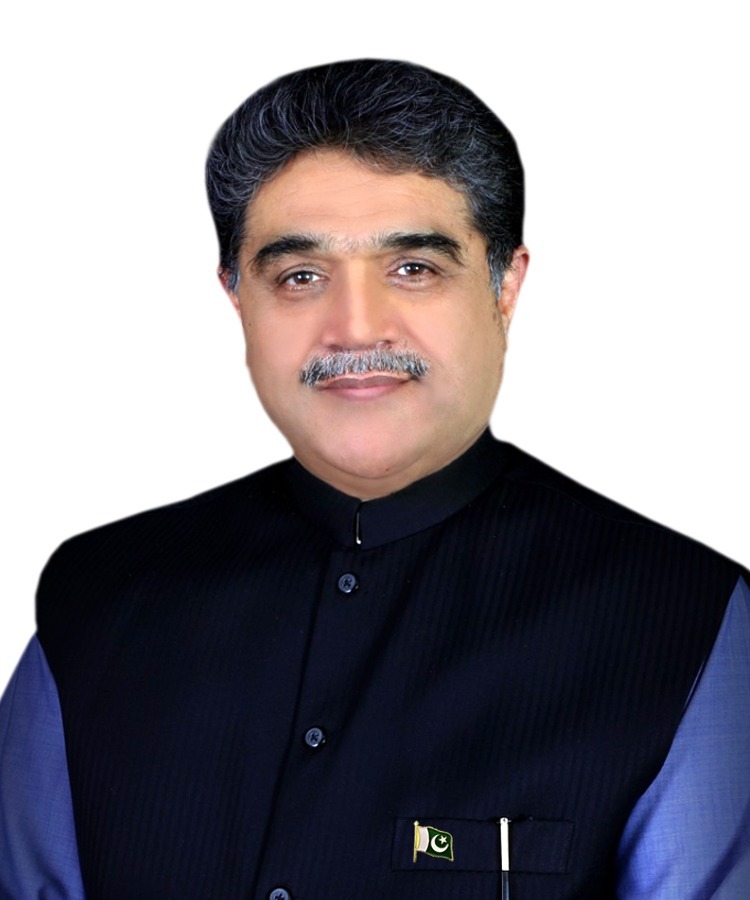



By Mian Abuzar Shad
LCCI President
When Israel recently launched an airstrike in Qatar targeting Hamas leadership, the news reverberated across the Muslim world. The incident, reportedly carried out with a nod from Washington, exposed yet again the fragility of Arab states when it comes to defending their sovereignty. Ironically, the same U.S. President—hailed with red-carpet treatment during visits to the Gulf, and gifted with multi-billion-dollar defense contracts—presided over a situation in which one of America’s closest allies in the region was struck with impunity.
Qatar, with its $14.4 billion defense budget and 11,581 square kilometers of territory, was caught flat-footed. Its expensive fighter jets, purchased from the West at enormous costs, could do little to deter or respond to the attack. The United Arab Emirates (UAE), with an even larger defense budget of $25 billion and a land area of 83,600 square kilometers, finds itself in a similar position. Despite their immense wealth and advanced weaponry, these states remain unable to mount a credible deterrence when it matters most.
The Paradox of Wealth and Weakness
This paradox is not new. Arab monarchies and emirates are some of the richest states on the planet. They sit atop vast reserves of oil and gas, control sovereign wealth funds worth trillions of dollars, and spend lavishly on Western arms. Yet when push comes to shove, their military readiness often proves hollow. Their dependency on the United States and Western allies for protection has become not just a weakness but a strategic liability.
Time and again, history has shown that money alone cannot buy security. Weapons without will, strategy, and indigenous capability are like showpieces—flashy but ineffective when the enemy strikes. The latest Israeli attack has once again reminded the world that Gulf states, despite their glittering skylines and cutting-edge arsenals, cannot defend their own turf without foreign backing.
Pakistan: Doing More with Less
Now contrast this with Pakistan. With a defense budget of merely $2 billion—tiny compared to Qatar and the UAE—Pakistan has time and again demonstrated its ability to defend itself against much larger adversaries. On May 10, the world witnessed Pakistan’s military prowess in full force when it decisively thwarted aggression from a far bigger rival. The message was clear: Pakistan may not have endless coffers of wealth, but it has developed an indigenous defense capability, coupled with unmatched resolve and professionalism.
For decades, Pakistan has built a reputation as a tough, resilient state that punches above its weight in matters of security. Its armed forces have fought multiple wars, confronted terrorism on their soil, and maintained credible deterrence against a nuclear-armed neighbor seven times its size. Unlike Gulf states, Pakistan does not rely on outsourced protection. Instead, it has built a homegrown ecosystem of defense industries, training institutions, and strategic doctrines tailored to its security environment.
Lessons for the Arab World
Arab states need to ask themselves some hard questions. What good is a $25 billion defense budget if it cannot prevent or respond to an airstrike on your territory? Why should wealthy kingdoms rely on external powers, who often pursue their own interests at the expense of Arab sovereignty, to defend their borders?
The lesson is straightforward: security cannot be bought off the shelf. It must be cultivated through strategy, training, and national willpower. And this is where Pakistan can serve as a role model.
Pakistan’s armed forces have a proven record of self-reliance and resilience. From indigenously produced fighter jets like the JF-17 Thunder to a robust missile program and a nuclear deterrent, Pakistan has built credible defenses despite chronic financial constraints. Its real asset, however, is not hardware but human capital—the discipline, training, and commitment of its soldiers and officers.
A Practical Proposal
It may sound unconventional, but perhaps the time has come for Arab states to rethink their security architecture. Instead of funneling billions of dollars into foreign defense contractors with little return on investment, why not collaborate directly with Pakistan?
Imagine a strategic arrangement where wealthy Arab states pool resources to clear Pakistan’s external debts and, in return, Pakistan takes charge of designing and implementing their defense strategies. If even 50% of the Gulf’s existing defense budgets were allocated in this manner, not only would Pakistan’s economy be stabilized, but the Arab world would gain a credible shield against external threats.
Such an arrangement is not unprecedented. Throughout history, states have outsourced or shared defense responsibilities with allies who have the experience and will to deliver. In this case, it would not be outsourcing to the West but partnering with a brotherly Muslim country that has proven its mettle under fire.
The Strategic Payoff
For Arab states, the benefits would be enormous. Instead of wasting billions on foreign arms that gather dust in hangars, they would acquire a tested and trusted partner with real combat experience. Their skies and borders would no longer be open playgrounds for aggressors. Moreover, by investing in Pakistan’s defense ecosystem, Arab states would be strengthening the security of the wider Muslim world, sending a message to Israel and its allies that the era of unchecked strikes is over.
For Pakistan, the payoff would be equally significant. Relief from crushing debts would provide breathing space for the economy. With enhanced resources, Pakistan could further modernize its forces while simultaneously ensuring the security of its allies. It would be a win-win arrangement, strengthening both economic and security ties between Pakistan and the Arab world.
Breaking the Cycle of Dependency
The latest Israeli strike in Qatar should serve as a wake-up call. If Gulf monarchies continue down the path of dependency on the U.S. and Western allies, they will remain vulnerable. Their wealth will continue to be siphoned off by arms manufacturers abroad, while their sovereignty remains compromised.
It is time to break this cycle. By looking eastward, toward Pakistan, Arab states can build a new model of security—one rooted in self-reliance, regional cooperation, and shared destiny.
Conclusion
The Arab world today stands at a crossroads. On one hand lies the path of continued dependency, which has brought humiliation and vulnerability. On the other lies the path of partnership with Pakistan, a country that has repeatedly shown it can stand tall even against overwhelming odds.
If Arab leaders are serious about protecting their people and asserting their sovereignty, they must think beyond buying shiny toys from the West. Real security comes from real allies, and in the Muslim world, no ally is better tested, more capable, or more committed than Pakistan.
The choice is clear: follow the old script of weakness, or embrace a bold new vision of strength. The time to decide is now.