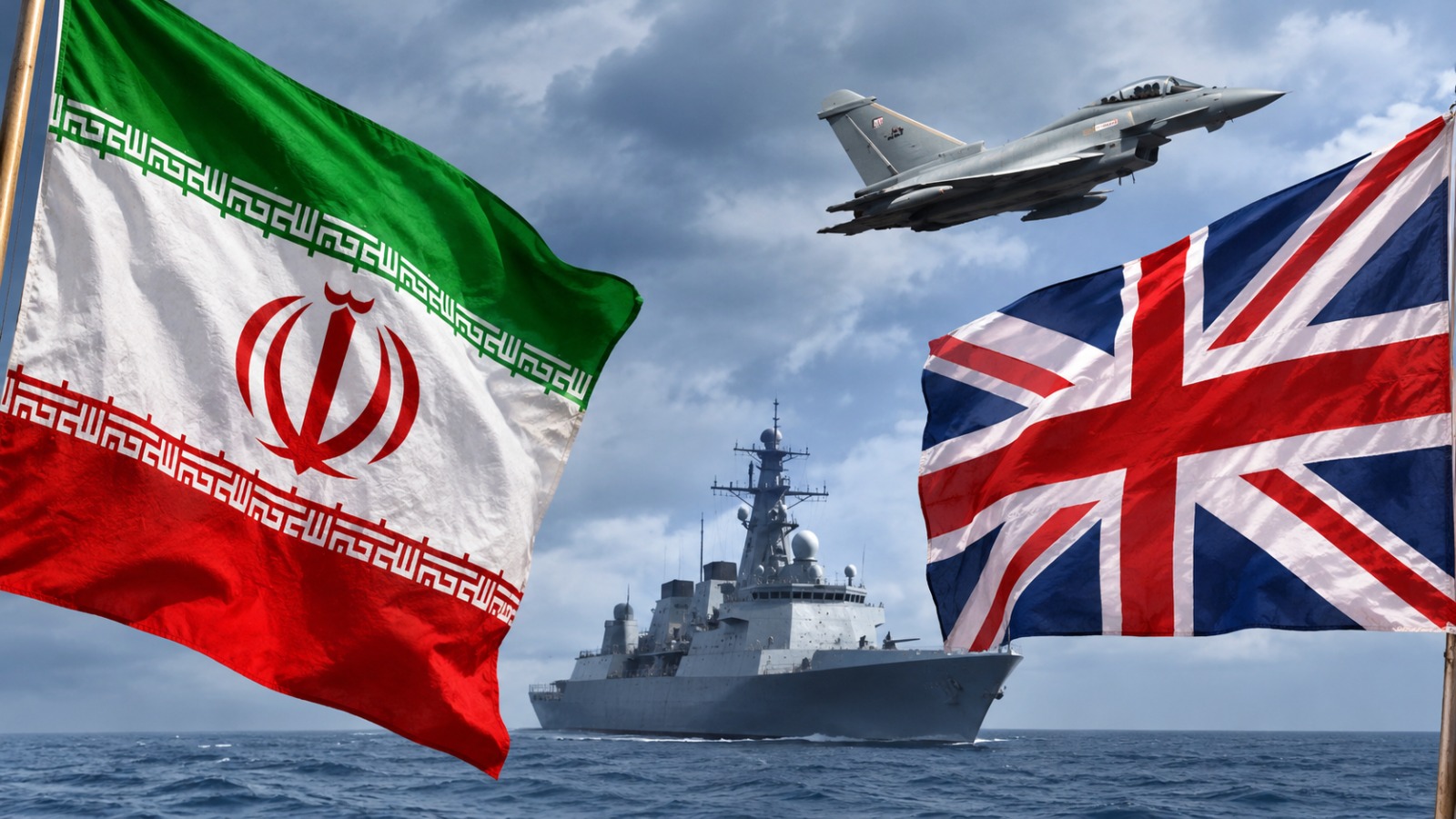
TEHRAN (Web Desk) – Iran has designated Britain’s Royal Navy and Royal Air Force as terrorist organisations and classified its foreign intelligence agency, MI6, as a hostile group in a retaliatory move against what Tehran describes as hostile actions by the British government.
The Iranian Foreign Ministry announced the measures on Sunday, saying they had been adopted under a resolution of the country’s Supreme National Security Council and would take effect from the date of the announcement.
The decision marks a further escalation in tensions between Tehran and London, with Iran accusing Britain of supporting military operations against the Islamic Republic and taking action against its Islamic Revolutionary Guard Corps (IRGC).
According to a statement carried by Iran’s state-run news agency IRNA, the Foreign Ministry said Britain’s Secret Intelligence Service, commonly known as MI6, had been designated a hostile group under Iranian legislation dealing with espionage and cooperation with countries considered hostile to Iran.
Separately, the Royal Navy and Royal Air Force have been placed under Iran’s law on reciprocal measures against the United States’ designation of the IRGC as a terrorist organisation. Under this legislation, both British military branches have been declared terrorist organisations.
The ministry said the measures were based on the principle of reciprocity and were intended to safeguard Iran’s national security and national interests.
Why Iran announced the measures
Tehran cited two major developments behind its decision.
First, the Iranian government accused Britain of participating in what it described as the US-Israeli war against Iran by providing access to military bases, facilities and logistical support within territories under British jurisdiction.
Iran said such assistance constituted hostile action against its sovereignty and national security. These allegations form part of Tehran’s justification for the latest measures and have not been independently established by the Iranian announcement.
Second, the Foreign Ministry referred to Britain’s decision on July 13, 2026, to bring the IRGC under its State Threats Act 2026.
The British measure was cited by Tehran as a direct reason for adopting reciprocal action against British military and intelligence institutions.
Iran argued that the British government’s policies contradicted the principles of the United Nations Charter and international law, particularly respect for national sovereignty and the prohibition of unlawful measures against other states.
The Iranian announcement distinguishes between the treatment of Britain’s military branches and its intelligence service.
The Royal Navy, which is responsible for Britain’s maritime defence and naval operations, and the Royal Air Force, which oversees the country’s air defence and military aviation, have both been designated terrorist organisations under Iranian law.
MI6, formally known as the Secret Intelligence Service, has instead been classified as a hostile group under a separate provision of Iranian legislation.
The distinction is significant because Tehran has invoked different legal frameworks for the military institutions and the intelligence agency.
The Foreign Ministry said the relevant provisions of Iranian law would apply to the designated British entities from November 1.
The latest announcement comes amid a series of retaliatory measures involving Iran and Western governments over the status of the IRGC.
In February 2026, Iran also declared the armed forces of European Union member states terrorist groups following the European bloc’s decision to designate the IRGC as a terrorist organisation. Tehran presented that decision as a reciprocal response.
The IRGC is a powerful branch of Iran’s armed forces, operating alongside the country’s regular military. It plays a major role in Iran’s security and military structure.
Britain’s July decision to place the IRGC under the State Threats Act 2026 further intensified the dispute between the two countries.
Iran has maintained that its latest measures are consistent with international law and the principle of reciprocity.
Potential diplomatic implications
The designations add another complication to relations between Britain and Iran at a time of heightened tensions over regional security and military involvement in the Middle East.
Although Tehran has announced the legal classifications, the Foreign Ministry statement does not provide a detailed explanation of the practical consequences for British military personnel, naval vessels, aircraft or intelligence operations.
The announcement also does not, by itself, establish how the measures will affect diplomatic contacts, military communications or other official interactions between the two countries.
Iran’s Foreign Ministry warned that the British government would bear responsibility for the consequences of its actions, reiterating Tehran’s determination to take measures to protect its national security and interests.
The move is largely framed by Iran as a response to Britain’s treatment of the IRGC and its alleged involvement in military operations against Iran. It underscores the increasingly confrontational relationship between the two countries.