


By M Qadeer
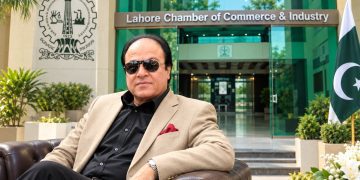
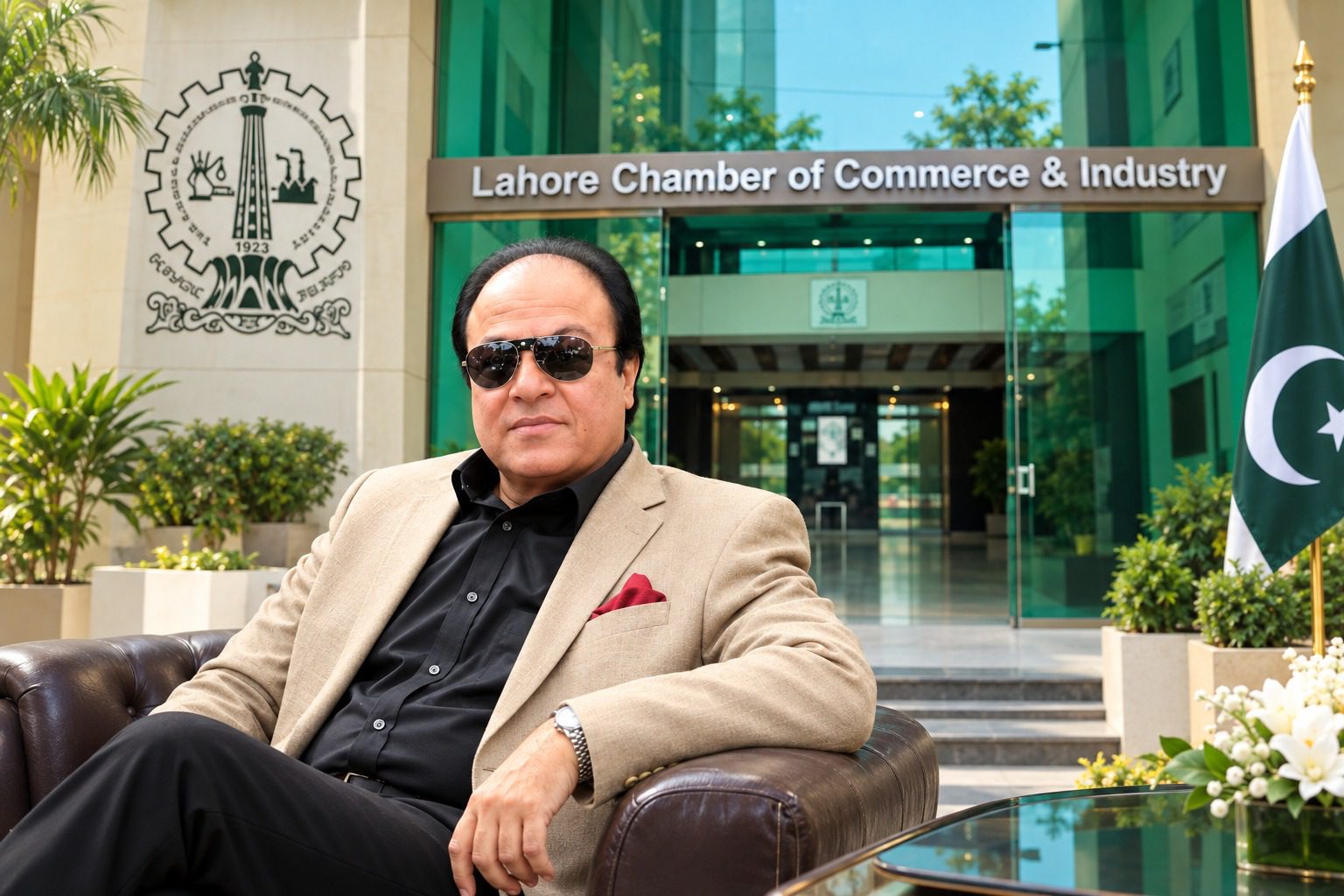
LAHORE: The Lahore Chamber of Commerce and Industry (LCCI) should function as an inclusive business institution where every member — from a small trader to a major industrialist — has access to representation, guidance and a platform for raising legitimate business concerns, says Ch Tahir Manzoor, former vice president of LCCI, CEO of Lever Engineering Industries and candidate for the Executive Committee in the LCCI elections 2027-28.
Drawing on his previous experience as LCCI vice president and his background in industry, Manzoor said the chamber must remain closely connected with the people it represents rather than allowing interaction with members to be confined to elections, ceremonies or formal meetings.
He said his approach towards the chamber has been shaped by a simple principle: a business organisation derives its strength from the confidence of its members.
Recalling his tenure as vice president, Manzoor said he made strenuous efforts to make LCCI a platform accessible to traders and industrialists from different sectors and business areas. He said that approach would remain central to his priorities if elected to the Executive Committee.
In an interview to The Tribune International, ahead of the LCCI elections, Manzoor discussed what he described as the need for stronger member services, industrial competitiveness, easier regulatory procedures, lower business costs and sustained communication between the private sector and government.
Experience at LCCI shaped his approach
Manzoor said serving as vice president gave him an opportunity to understand the chamber from both sides — as a businessman seeking institutional support and as an office-bearer responsible for representing thousands of businesses with different requirements.
He said the experience reinforced his belief that LCCI cannot operate effectively through a one-size-fits-all approach.
A manufacturer may be concerned about energy, raw materials, taxation, infrastructure or production costs. A trader may be dealing with market access, regulatory procedures, parking, documentation or municipal issues. An exporter may require information about foreign markets and international standards, while a small enterprise may simply need guidance about the government department responsible for a particular matter.
Manzoor said an effective chamber must be capable of understanding all these perspectives.
For him, accessibility is therefore not merely about keeping the doors of the chamber open. It means ensuring that members know where to take their concerns and that legitimate issues receive appropriate attention and follow-up.
Chamber belongs to its members
Manzoor said LCCI should never become disconnected from the businesses whose membership gives the institution its representative character.
He maintained that traders and industrialists should feel a sense of ownership in the chamber.
According to him, elected representatives have a responsibility to remain available to members and regularly interact with markets, industrial areas and sectoral associations.
He said the concerns of a small entrepreneur deserve to be heard with the same seriousness as those of a larger business, even though the nature and scale of their problems may differ.
Manzoor said this inclusive approach was among the principles he tried to promote during his previous tenure at LCCI.
His objective as an Executive Committee candidate, he added, is to contribute his previous institutional experience while remaining directly connected with businesses at the grassroots level.
Industrial background provides practical perspective
As CEO of Lever Engineering Industries, Manzoor said his industrial experience has given him an understanding of the practical consequences of economic and regulatory decisions.
Manufacturing businesses, he said, make investments in machinery, employees, inventories and production systems and therefore require a reasonably predictable operating environment.
Changes in input costs or procedures can affect production planning, pricing and investment decisions.
Manzoor said industrialists are willing to compete, innovate and improve productivity, but they also need an environment in which legitimate businesses can operate efficiently.
He believes LCCI should continuously gather information from different industries and use that feedback when communicating with policymakers.
Cost of doing business needs sustained attention
Manzoor identified the cost of doing business as one of the major issues requiring sustained chamber attention.
He said competitiveness is influenced by several interconnected factors, including energy, taxation, financing, logistics, transportation and administrative compliance.
For manufacturers, higher production costs can affect their ability to compete in both domestic and international markets.
For traders and SMEs, even relatively modest increases in operating expenses can put pressure on margins and discourage expansion.
Manzoor said LCCI cannot itself determine electricity tariffs, tax rates or monetary policy, but it can analyse their impact on businesses and present evidence-based recommendations to the authorities empowered to make those decisions.
He said this distinction is important because a chamber should make realistic commitments and concentrate on areas where professional advocacy can produce meaningful engagement.
Energy remains critical for industry
Manzoor said reliable and competitively priced energy is particularly important for the manufacturing sector.
Industrial businesses need to calculate production costs in advance, especially when negotiating orders or planning investment.
He said unpredictable operating expenses make business planning more difficult and can weaken competitiveness.
According to Manzoor, LCCI should maintain dialogue with policymakers and relevant institutions on energy-related issues affecting industry.
Rather than treating energy purely as a utility issue, he said it should also be considered from the perspective of industrial competitiveness, employment and investment.
He maintained that businesses also have a responsibility to improve efficiency and adopt modern technologies where economically feasible.
Simplification can improve compliance
On taxation and regulation, Manzoor said businesses recognise their legal obligations, including the responsibility to comply with applicable tax and regulatory requirements.
However, he maintained that a simpler and more predictable system can make compliance easier and reduce administrative costs.
Small and medium enterprises can face particular difficulty when procedures are complicated because many do not have large teams of accountants, legal advisers or compliance professionals.
Manzoor said LCCI can help in two ways: by providing information and awareness to its members and by communicating practical procedural difficulties to the relevant authorities.
He favoured consultation, digitalisation and better institutional coordination where these can lawfully reduce duplication and make legitimate business activity easier.
Government coordination should produce solutions
Manzoor said LCCI’s relationship with government institutions should be constructive but purposeful.
Meetings alone, he maintained, are not an adequate measure of effective representation.
The chamber should identify a problem, determine the competent authority, develop a practical proposal and follow the matter through appropriate institutional channels.
He said government and the private sector have different responsibilities, but their economic interests frequently overlap.
Businesses generate employment, investment, production and revenue, while government provides the legal, regulatory and infrastructure framework within which economic activity takes place.
Manzoor said regular communication can help both sides understand the practical impact of policies.
Where businesses raise legitimate concerns, he said LCCI should present them firmly but professionally, supported by facts wherever possible.
Small businesses need greater access
Manzoor said SMEs and smaller traders deserve particular attention because they often have the least capacity to navigate institutional procedures.
A large organisation may have specialised departments to handle taxation, banking, regulations and documentation, whereas the owner of a smaller enterprise may personally manage almost every aspect of the business.
He said LCCI should make its information and facilitation services easy to access.
Awareness sessions, help desks, sector-specific consultations and digital communication can potentially help members obtain information more efficiently.
Manzoor said strengthening SMEs was important not only for individual entrepreneurs but for Lahore’s broader economic development.
Small businesses create jobs, support larger industries through supply chains and can eventually develop into significant manufacturers and exporters, he added.
Markets and industrial areas have different needs
Manzoor said LCCI represents a diverse business community and should recognise that the problems of commercial markets and industrial areas are not identical.
Traders may raise concerns about parking, congestion, accessibility, movement of goods and municipal services.
Industrial units may require attention to roads, utilities, logistics, infrastructure and other production-related requirements.
He said solutions should therefore be developed after consultation with the people operating in the affected areas.
According to Manzoor, elected chamber representatives should visit markets and industrial clusters rather than depending entirely on information reaching them through formal correspondence.
Ground-level interaction, he said, can help representatives understand the difference between an isolated complaint and a wider issue requiring institutional attention.
Stronger industry can support exports
Manzoor said Pakistan’s export ambitions are closely connected with the strength of its domestic manufacturing sector.
Exports ultimately depend on businesses being able to produce goods at competitive prices and according to the quality, consistency and delivery requirements of international customers.
He said Lahore has significant industrial and entrepreneurial potential that can be used to expand international business.
LCCI can contribute by helping members obtain information about international markets, connecting businesses with foreign chambers and trade organisations and promoting awareness of changing global requirements.
However, Manzoor said export promotion must go hand in hand with improvements in the domestic business environment.
A company facing high production costs, infrastructure difficulties or complicated procedures at home may find it harder to compete internationally, he maintained.
Technology should improve chamber services
Manzoor said LCCI itself should continue adopting technology to improve communication with members.
Businesses increasingly expect information to be available quickly and digitally.
He said members should be able to learn about important regulatory developments, trade opportunities, seminars and government notifications without unnecessary delays.
Technology can also help the chamber collect member feedback more systematically.
According to Manzoor, digital systems should supplement personal interaction rather than replace it.
The chamber, he said, must retain the human connection that allows traders and industrialists to discuss complex problems directly with their representatives.
Young entrepreneurs need a place at LCCI
Manzoor said Lahore’s next generation of entrepreneurs should also feel that LCCI is relevant to them.
Young businesspeople are entering areas such as technology, e-commerce, engineering, services and innovative manufacturing alongside traditional sectors.
He said the chamber can help connect emerging entrepreneurs with experienced business leaders and create opportunities for networking and mentorship.
A stronger relationship between established industry, startups and educational institutions could also contribute towards innovation and skills development, he maintained.
Manzoor said a century-old institution such as LCCI should respect its history while continuously adapting to changes in the economy.
Advocacy should be backed by research
Manzoor said effective business representation increasingly requires credible information and research.
When LCCI approaches policymakers regarding taxation, energy, regulations or infrastructure, he said its case becomes stronger if it can demonstrate the actual impact on businesses.
Sectoral consultations, surveys and data collection could help the chamber develop more focused proposals.
He said the objective should be to move from general complaints towards workable recommendations.
Not every proposal presented by the business community will necessarily be accepted by government, he acknowledged, because policymakers must consider fiscal, legal and wider public-interest factors.
However, he said professional advocacy can ensure that the business perspective is properly placed before decision-makers.
Executive Committee must remain accountable
Manzoor said membership of the LCCI Executive Committee should be viewed as a responsibility rather than simply a position.
Members elect representatives because they expect them to devote time to chamber affairs and remain accessible.
He said Executive Committee members should regularly review business issues, participate in policy discussions and maintain contact with the constituencies they represent.
His previous experience as vice president, Manzoor said, taught him that meaningful chamber work requires persistence.
Some issues can be addressed quickly, while others require repeated meetings, correspondence and follow-up.
He said representatives should be prepared for both.
A chamber for every business
As he seeks election to the Executive Committee, Manzoor said his central objective remains closely connected with the approach he pursued during his tenure as vice president: making LCCI a platform for the entire business community.
He said Lahore needs a chamber where industrialists, traders, exporters, SMEs, women entrepreneurs and younger businesses can all find meaningful representation.
The institution should facilitate members, engage government, encourage investment and exports, promote industrial development and help businesses understand their regulatory responsibilities, he maintained.
At the same time, Manzoor said the chamber must remain realistic about its mandate. It cannot replace government institutions or guarantee that every business demand will be accepted, but it can ensure that legitimate concerns are documented, professionally presented and consistently pursued.
For Manzoor, the ultimate test of LCCI is therefore not the number of meetings held or statements issued but the relationship it maintains with its members.
He said his experience as a former vice president and an industrialist has strengthened his belief that the chamber is most effective when businesses regard it as their own institution — a place they can approach for guidance, representation and a serious hearing.
As an Executive Committee candidate, Manzoor said he wants to bring that approach back to the forefront: an accessible LCCI connected with markets and factories, responsive to businesses of every size and committed to practical, sustained representation of Lahore’s traders and industrialists.


