



By Asim Shahzad
LAHORE: Punjab’s Environment Protection Agency (EPA) has significantly scaled up its enforcement actions against environmental violations across multiple sectors, with official data revealing a sharp increase in inspections, penalties, and compliance measures from 2024 through early 2026.
Read also: Salary irregularities, delayed recoveries in Home Department flagged in audit review
According to the latest enforcement figures, the agency has maintained an aggressive regulatory approach targeting brick kilns, industrial units, plastic usage, vehicular emissions, and construction-related dust pollution, reflecting a broader policy push to address worsening environmental challenges.
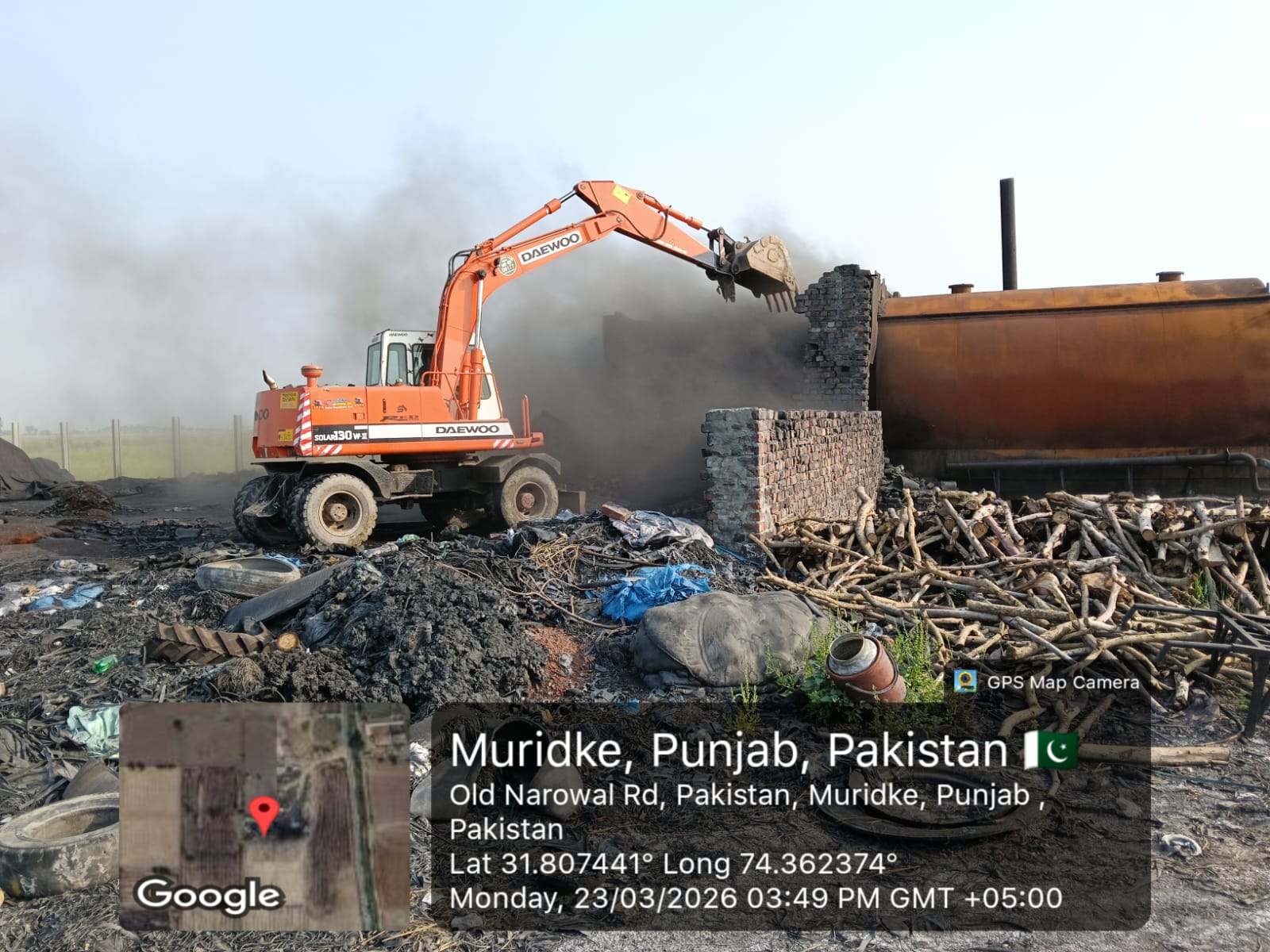
The number of brick kiln inspections rose markedly from 62,173 in 2024 to 81,827 in 2025, reflecting a strong enforcement drive. In early 2026 alone, 24,883 inspections have already been carried out. FIRs in this sector also increased from 1,862 in 2024 to 2,357 in 2025, indicating stricter legal action, while 323 FIRs have been registered so far in 2026, suggesting early signs of improving compliance.
In the industrial sector, inspections nearly doubled from 24,344 in 2024 to 44,684 in 2025, while 14,834 inspections have already been conducted in 2026. Sealing actions rose from 1,538 units in 2024 to 1,834 in 2025, with a further 327 units sealed this year, highlighting continued enforcement against non-compliant industries.
The anti-plastic campaign recorded one of the most significant increases, with confiscations rising from 36,094 kilograms in 2024 to 419,033 kilograms in 2025. In early 2026, authorities have already seized 78,876 kilograms of plastic. Financial penalties also increased from Rs2.51 million in 2024 to over Rs8.14 million in 2025, demonstrating intensified action against single-use plastics and related violations.
Monitoring of construction sites to control fugitive dust also expanded considerably, with inspections increasing from 242 in 2024 to 3,817 in 2025. In 2026, 104 sites have been inspected so far, as authorities continue efforts to reduce dust emissions contributing to smog.
Efforts to curb vehicular pollution have also intensified. The EPA conducted 294,228 vehicle emission tests in 2025, while an additional 3,268 vehicles have been tested in 2026, bringing the cumulative figure close to 300,000 vehicles checked for emissions compliance.
In parallel, the agency has promoted water conservation measures by facilitating the installation of 2,242 water recyclers at service stations in 2025, with 57 more units installed so far in 2026.
Secretary Environment Protection and Climate Change Department, Punjab, Silwat Saeed, said the government remains committed to strengthening environmental governance through sustained enforcement and public engagement. She noted that the rise in inspections and penalties reflects a clear policy direction of zero tolerance towards environmental violations, while also emphasizing the importance of awareness and adoption of modern technologies for long-term environmental sustainability.
Director General EPA Punjab, Imran Hamid Sheikh, said the data reflects both increased vigilance and a gradual shift towards compliance. He observed that while enforcement actions rose sharply between 2024 and 2025, early trends in 2026 indicate that regulated sectors are beginning to respond positively due to consistent monitoring and strict penalties. He further cited findings from IQAir, noting that 2025 was recorded as one of the best years for Lahore’s air quality in recent years, with the city’s average Air Quality Index (AQI) showing a notable decline compared to previous years. He added that this improvement reflects the impact of sustained enforcement measures and coordinated policy actions, while reaffirming that the EPA would continue expanding its operations to tackle industrial emissions, plastic pollution, and vehicular smoke in order to address the province’s persistent smog challenges.
The comparative data from 2024 to 2026 highlights a clear trajectory of enhanced enforcement, wider regulatory coverage, and improving compliance, suggesting that sustained institutional efforts are beginning to yield measurable environmental outcomes across Punjab.


