By Our Correspondent
LAHORE: rare cross-party and cross-sector consensus on the urgent need to reform Pakistan’s governance design emerged today as participants of the Devolution Summit 2026 formally adopted the Islamabad Devolution Summit Charter 2026, concluding that Pakistan’s current system of governance is structurally broken and requires constitutional, fiscal, and institutional correction.
Read also: Punjab Law Committee reviews 2025–26 budget, judicial projects, and infrastructure plans
The Summit concluded with the Acting President of Pakistan and Chairman Senate, Syed Yousaf Raza Gillani, attending as Chief Guest, who acknowledged the Charter as a serious and timely articulation of reform priorities.
Addressing participants, he commended the Speaker Punjab Assembly, Malik Ahmad Khan, and the Punjab Local Government Caucus for convening a bipartisan, principle-driven dialogue on an issue central to Pakistan’s democratic and federal future.
The Charter — endorsed by parliamentarians and legislators from across the political spectrum, constitutional experts, economists, former public office holders, civil servants, civil society organizations and local government representatives — reflects a shared assessment that Pakistan has been unable to achieve meaningful constitutional, fiscal, and administrative devolution, despite repeated commitments. Participants agreed that governance failures are not episodic but structural, rooted in the absence of a durable three-tier system of governance.
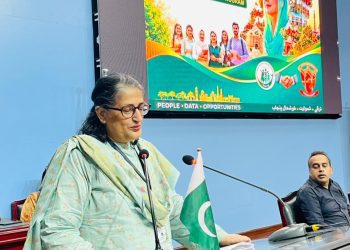
Speaking at the Closing Ceremony, Syed Yousaf Raza Gillani noted that the Summit’s focus on constitutional design, fiscal devolution, and institutional reform addressed the core fault lines of the federation. He remarked that constitutional clarity is essential for stabilising state authority, that fiscal arrangements must ensure resources reliably follow responsibilities, and that institutional reform — particularly of the civil service — is indispensable for translating policy into service delivery. He added that addressing these themes together demonstrated a mature, non-partisan approach to reform.
Earlier in the day, Day 2 of the Devolution Summit 2026 commenced with Mr Ahmad Iqbal Chaudhary, Convener of the Punjab Local Government Caucus, presenting a recap of Day 1 deliberations during which all political parties and representatives of Provincial Assemblies, National Assembly and the Senate of Pakistan agreed that a constitutional amendment is urgently necessary for devolution of power. The deegates stressed upon the need for fair and equitable rule based distribution of resources between the three tiers, and to reform Pakistan’s unitary administrative structure in line with the three tiered model. This was followed by three high-level thematic roundtables on constitutional design, devolution and resources, and civil service reform, where participants deliberated in depth and developed concrete recommendations. These recommendations were consolidated and incorporated into the final Charter adopted at the Summit’s conclusion.
The Islamabad Devolution Summit Charter 2026 affirms key principles including the constitutional permanence of local governments, fiscal correspondence, democratic continuity, and administrative alignment. It calls for constitutional amendments to secure local governments as a permanent tier of the federation, rule-based fiscal transfers, reform of the civil service to support devolved authority, and strengthened mechanisms for accountability and citizen engagement.
The Charter was adopted as a consensus-based framework, not a partisan position, and was acknowledged by the Acting President as an important contribution to ongoing national discourse. Participants agreed that the Charter should serve as a reference point for future parliamentary engagement, legislative reform, and public debate on strengthening Pakistan’s federal democratic order.
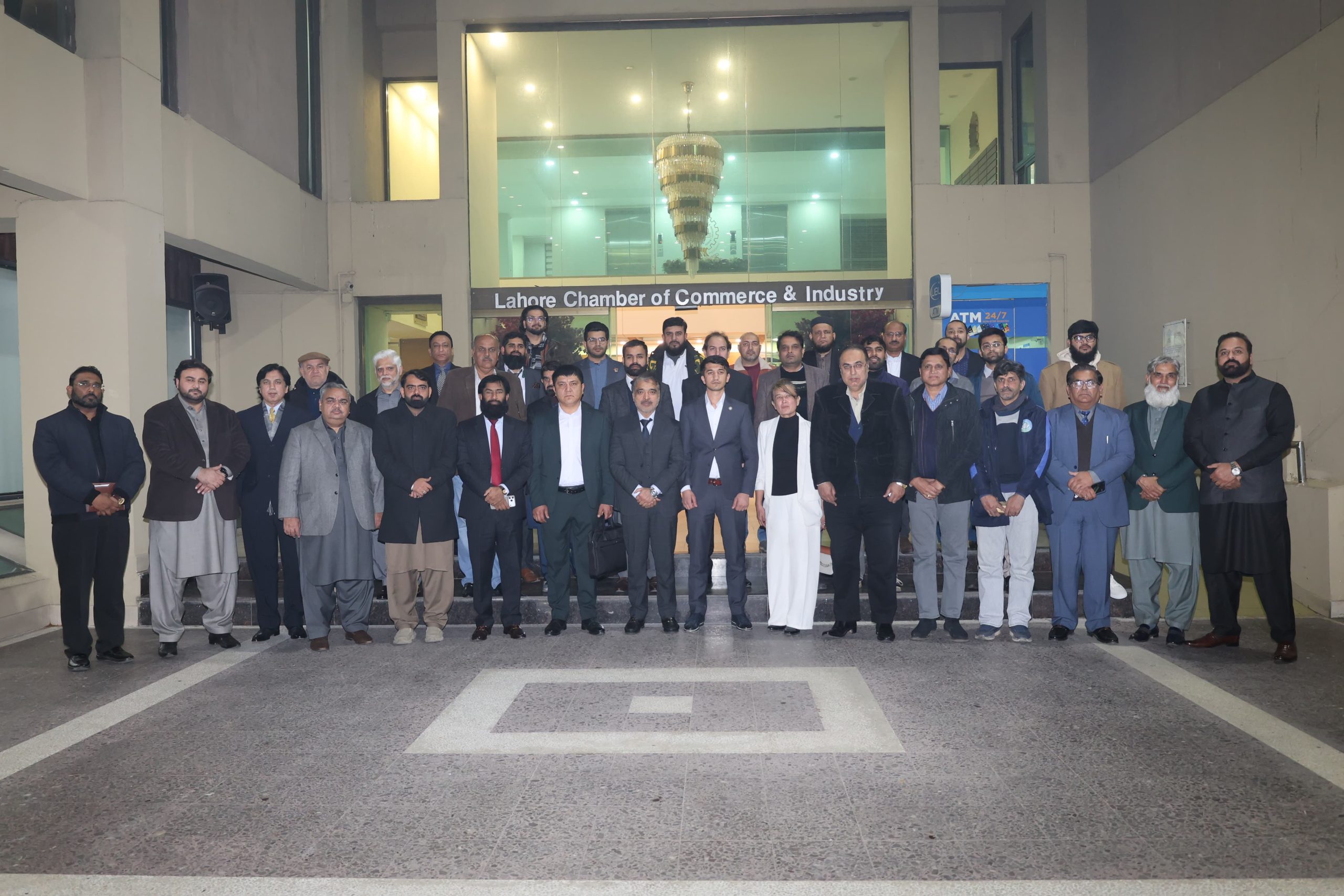
The Devolution Summit 2026, convened by the Punjab Local Government Caucus in Islamabad on 13–14 January, brought together leading voices from Parliament, provincial assemblies, academia, civil society, and public administration, marking one of the most substantive national conversations on devolution in recent years.