



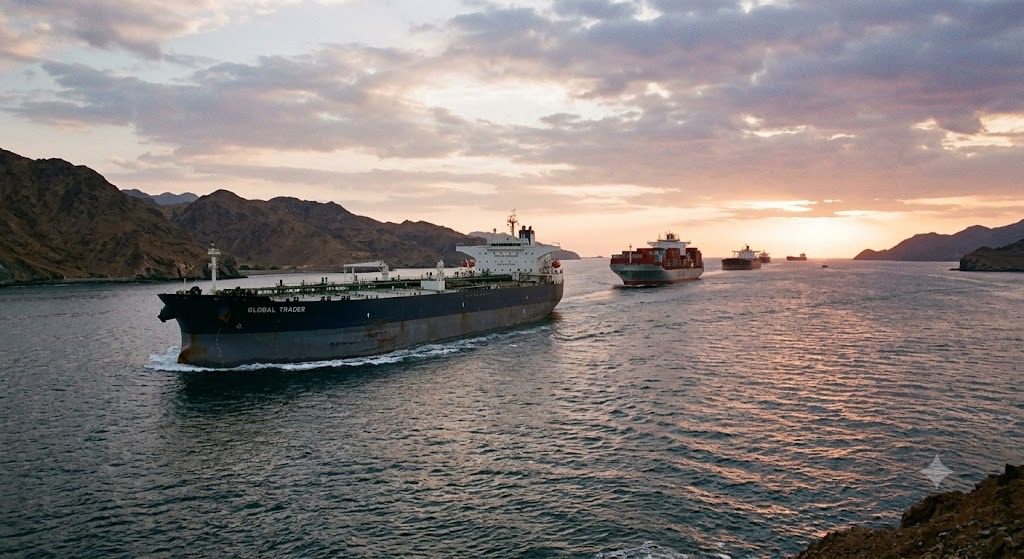
TEHRAN (Agencies) — Global energy markets experienced a significant relief rally today as crude oil prices fell sharply following the official resumption of commercial shipping traffic through the Strait of Hormuz.
The reopening of the critical maritime chokepoint has effectively cleared the geopolitical risk premium that had locked up energy supply lines, triggering a widespread downward price correction across major international benchmarks.
Global Oil Benchmarks Experience Sharp Declines
According to the latest trading data from global energy exchanges, West Texas Intermediate (WTI) crude futures dropped by $1.32, or nearly 1.8%, settling at $72.54 per barrel. Simultaneously, Brent crude, the global benchmark for oil pricing, witnessed a mirror drop of $1.40, dragging its trading valuation down to $76.50 per barrel.
The sudden price drop reflects an immediate change in market sentiment. For days, speculators and energy traders had priced in heavy premiums over fears of extended supply chain disruptions. With tankers now moving freely through the Persian Gulf corridor, those artificial premiums have completely evaporated.
Relief Across the Strait of Hormuz Chokepoint
The Strait of Hormuz is widely considered the world’s most vital energy transit artery. Located between Oman and Iran, the narrow channel connects the Persian Gulf with the Gulf of Oman and the Arabian Sea. It serves as the primary gateway for more than 20% of the world’s total petroleum liquid consumption—amounting to roughly 20 million barrels of oil moving through the channel daily from major OPEC producers.
Local maritime authorities confirmed that shipping lanes are fully operational, with delayed oil tankers, container ships, and liquefied natural gas (LNG) carriers successfully resuming their scheduled routes. The backlog of maritime traffic accumulated during the temporary bottleneck is expected to clear completely within the next 48 hours, restoring normalcy to global distribution networks.
Market Analysts Weigh In on Supply Chain Stability
Energy market experts point out that the swift price correction underscores how sensitive global inflation and energy security remain to Middle Eastern logistical hubs. The stabilizing of the region has directly relieved systemic pressure on downstream suppliers and refineries worldwide.
“The easing of regional tensions and the restoration of a steady oil supply chain have successfully removed the immediate fear factor driving the market,” noted a senior energy analyst. “We are seeing a logical stabilization. When supply lines are secure, market fundamentals like global demand take over, which currently points to a well-supplied environment.”
Furthermore, US media outlets emphasize that macro factors, such as industrial consumption data from China and overall global economic growth pacing, will continue to dictate where prices trend next. However, for the immediate future, the removal of the Hormuz premium offers vital breathing room for global economies navigating high energy costs.


