


By The Tribune International staff
Long before the University of Cambridge and centuries ahead of Harvard University, a Muslim woman in North Africa established what is today known as the world’s oldest continuously operating university — and it is still awarding degrees.
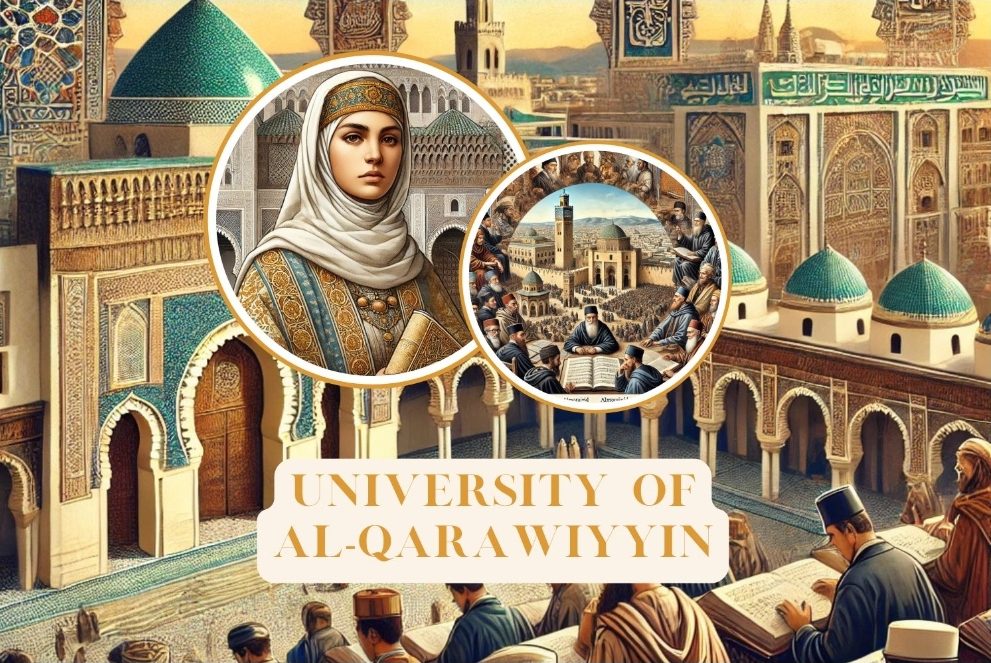
The University of al-Qarawiyyin, founded in 859 CE in Fez, Morocco, was built by Fatima al-Fihri, the daughter of a wealthy merchant family that migrated from Kairouan, now in Tunisia. After inheriting a large fortune from her father, she chose to dedicate her entire wealth to building a mosque and educational institution for her community.
Historical records indicate that Fatima personally oversaw construction, demonstrating rare female leadership in education during the 9th century. Over time, the mosque expanded into a formal center of learning, offering structured education in Islamic jurisprudence, theology, mathematics, astronomy, linguistics and philosophy.
Teaching at Al-Qarawiyyin has continued uninterrupted for more than eleven centuries. This extraordinary academic continuity earned recognition from UNESCO, which acknowledges it as the world’s oldest existing and continually operating higher learning institution.
Cambridge, founded in 1209, and Harvard, established in 1636, were created hundreds of years later. By that time, Al-Qarawiyyin had already become a major intellectual hub of the Islamic Golden Age, attracting scholars from across North Africa, Andalusia and parts of Europe.
The university’s historic library remains one of the oldest functioning libraries in the world and houses rare manuscripts dating back centuries. The architectural complex itself reflects Morocco’s layered dynastic history, with expansions and renovations carried out under successive rulers.
In 1963, Al-Qarawiyyin was incorporated into Morocco’s modern state university system. Today, it continues to grant academic degrees, mainly in Islamic studies and related fields, while preserving its historic academic traditions.
Historians say the story of Fatima al-Fihri challenges common assumptions about women’s historical roles, showing that more than 1,100 years ago, a Muslim woman used her personal fortune to build an institution that continues educating students today.