


By Commerce Reporter
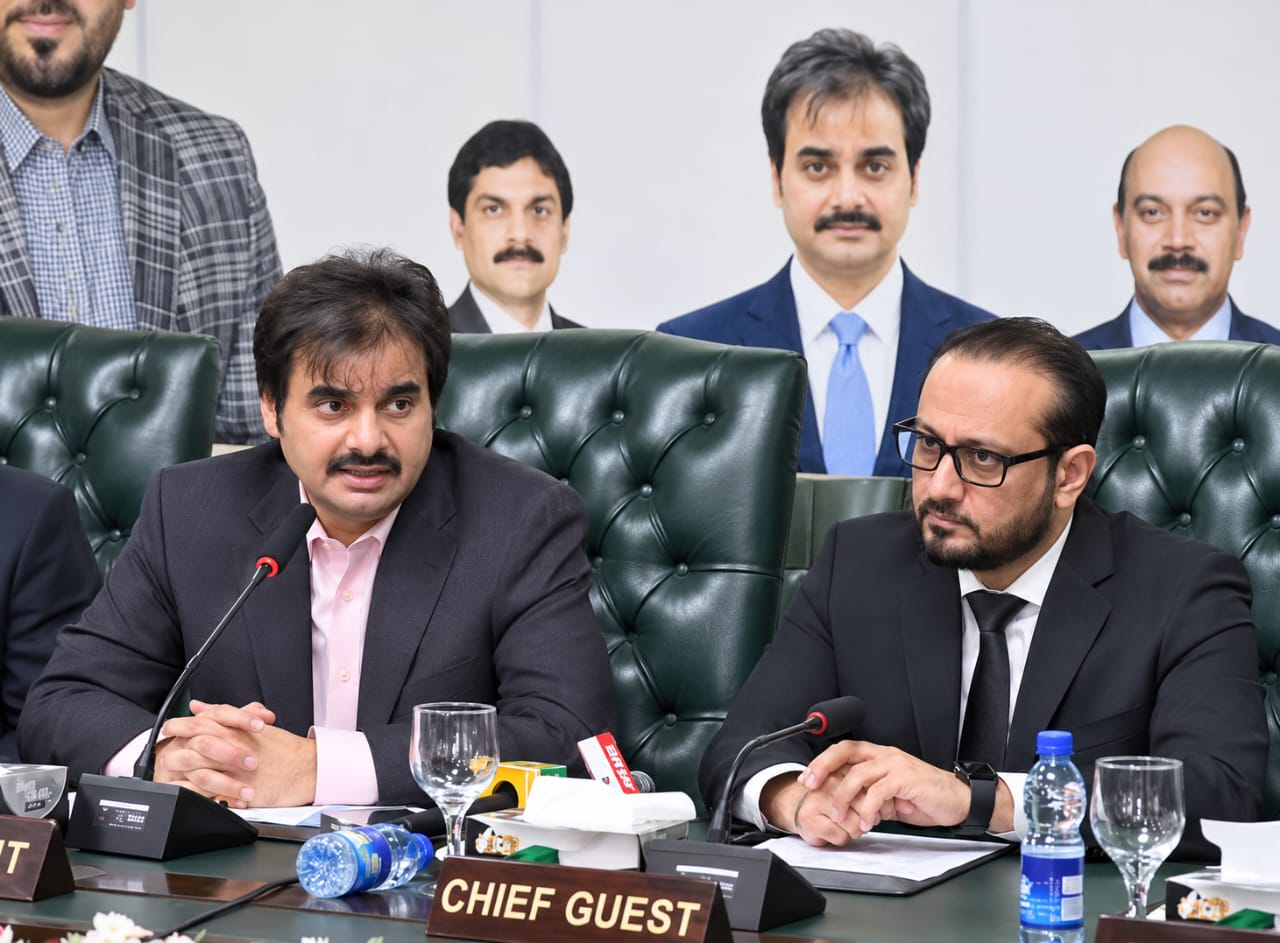
LAHORE: Provincial Minister for Health and Population Khawaja Imran Nazeer has said that legislation will be introduced to replace FIRs in dengue-related violations with a graduated fine mechanism, under which first-time violations will attract a fine, repeat violations a higher penalty, while prosecution will be considered in case of a third violation.
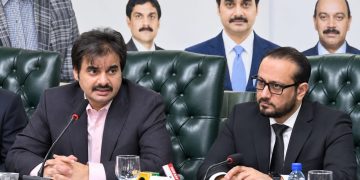
He was speaking at the Lahore Chamber of Commerce and Industry. LCCI President Ali Hussam Asghar, Senior Vice President Sardar Usman Ghani and Vice President Chaudhry Khadim Hussain also spoke on the occasion while former LCCI President Mian Misbah-ur-Rehman, former Vice Presidents Haris Atiq and Shahid Chaudhry, Senior Member Muhammad Amjad Chaudhry, Executive Committee Members Naila Nadeem, Mardan Ali Zaidi, Hamid Raza, Muhammad Ijaz Ghauri, Shahab Basharat, Adeel Babar, Dr. Shahzad Mahmood, Amir Ata Barry and Syed Azmat Ali Shah, along with former Executive Committee Members Waqar Ahmed and Haji Muhammad Akram, were also present.
The Provincial Minister said that he would take up the proposal with the relevant authorities and play his role in moving the necessary legislation through the Punjab Assembly. He said the proposed mechanism would provide businesses with an opportunity to rectify violations instead of facing immediate criminal proceedings.
Khawaja Imran Nazeer said he had attended the meeting on the directions of Chief Minister Punjab Maryam Nawaz Sharif, who was keen to maintain close engagement with the business community and intended to visit the Lahore Chamber. He congratulated the LCCI office-bearers and newly elected Executive Committee, urging the business community to put election-related differences behind them and work together for economic progress.
The minister also appreciated LABARD, the LCCI-supported institution providing medical rehabilitation, vocational training and employment opportunities to persons with disabilities and paid rich tributes to Late Pervez Malik.
On healthcare facilities for the business community, Khawaja Imran Nazeer said the Health Department would extend the Clinic on Wheels initiative to Lahore’s markets through regular visits and proper mapping of commercial areas. The programme would be implemented in coordination with the LCCI under the supervision of its President to facilitate traders, workers and market employees. He also offered to establish a mobile field hospital at the LCCI premises once a month, equipped with X-ray and laboratory testing facilities.
The minister proposed the formation of joint technical committees comprising representatives of the LCCI and the Health Department. These committees would meet monthly to discuss matters relating to the pharmaceutical sector, the Provincial Quality Control Board and other regulatory issues. He also announced a focal person for LCCI.
Discussing pharmaceutical-sector concerns, he said the Punjab government was working with the federal government to develop a uniform pharmaceutical policy applicable across the provinces. He said the objective was to avoid duplication of regulations and create a consistent policy framework. Clarifying concerns regarding Good Manufacturing Practices (GMP) inspections, he said the inspections had been advisory in nature and no action had been taken against any company on that basis.
He invited pharmaceutical representatives to sit with the department and discuss their concerns, including regulatory procedures and the cost of compliance, so that practical solutions could be developed. He also assured the business community that outstanding payments to suppliers who had provided goods and services to government departments would be taken up with the relevant authorities, observing that government commitments should be honoured regardless of changes in officials or administrations.
LCCI President Ali Hussam Asghar said that the business community needed facilitation, respect and protection for legitimate commercial activity, rather than unnecessary regulatory pressure. He appreciated the Chief Minister’s initiatives and said the LCCI was working to strengthen coordination between the government and businesses through its complaint-resolution mechanism.
He informed the minister that the Chamber had established a complaint Centre linked with the federal government, 11 economic ministries and the Punjab government. He said the Chief Minister had accepted the LCCI’s proposal for developing Lahore as a District Economy, while the designation of Additional Deputy Commissioners (Headquarters) had been changed to Additional Deputy Commissioners (Economy) across Punjab.
The LCCI President said unnecessary raids, arrests and other punitive measures had created a trust deficit between government departments and the business community. He appreciated the Chief Minister’s directions regarding the examination of notices and inspection procedures before registration of FIRs, adding that effective implementation and appropriate legislation were needed to protect businesses from disproportionate action.
He specifically requested the minister to support legislation replacing FIRs with fines in cases involving regulatory violations, including dengue-related matters. He said minor or technical violations should be addressed through a fair and proportionate penalty system, while criminal proceedings should be reserved for serious offences. He thanked the minister for agreeing to take up the dengue-related proposal with the relevant authorities.
He also proposed transparent standard operating procedures for medical representatives’ access to government hospitals, enabling them to share scientific research, medicine-safety information and professional updates with healthcare practitioners. Regarding the Provincial Quality Control Board, he called for appointment-based hearings, online proceedings, time-bound decisions and opportunities to rectify minor technical or administrative shortcomings. He said prosecution should be reserved for serious and deliberate violations.
Senior Vice President Sardar Usman Ghani highlighted the importance of mental healthcare, particularly for the workforce and industrial communities. Referring to a report presented at the meeting, he drew attention to the mental-health treatment gap in Pakistan and Punjab and called for greater awareness, improved access to professional care and dedicated attention to mental health.
He proposed extending the Clinic on Wheels initiative to major industrial clusters so that workers could receive medical attention closer to their workplaces. He also called for improved emergency healthcare arrangements near industrial areas, where distance and traffic congestion could delay access to hospitals in cases of accidents or medical emergencies.
The minister welcomed the proposals and said the joint coordination mechanism would provide a regular platform for resolving the issues raised by the Chamber. He assured the LCCI leadership that the Health Department would remain engaged with the business community and work towards practical solutions to healthcare and pharmaceutical-sector concerns.