


ISLAMABAD (Web Desk) – Pakistan will host the Economic Cooperation Organization (ECO) Summit in 2027, Deputy Prime Minister and Foreign Minister Ishaq Dar has announced, describing the event as an opportunity to strengthen regional economic cooperation and promote closer ties among member countries.
Read More : Pakistan and China reaffirm strategic partnership as Ishaq Dar meets Liu Haixing in Islamabad
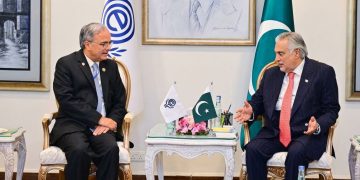
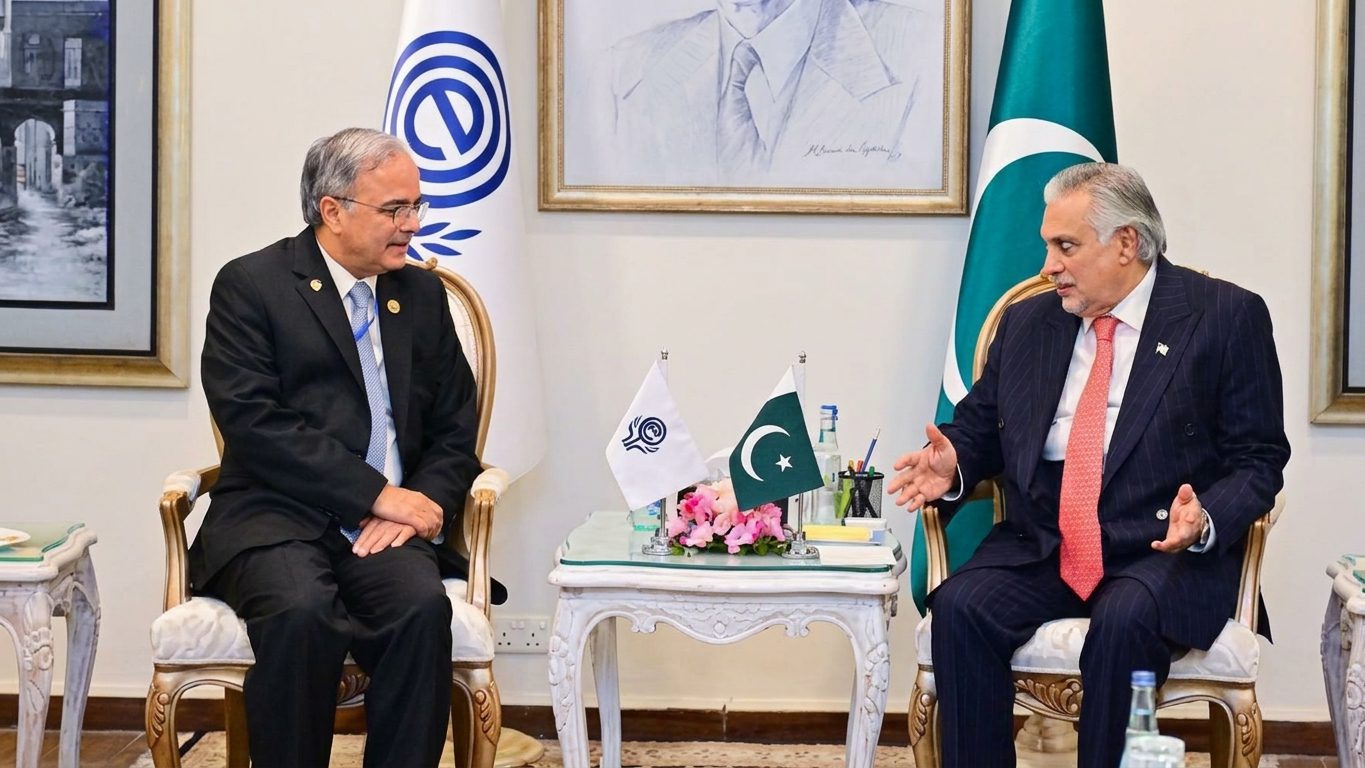
The announcement came during Dar’s meeting with ECO Secretary General Dr Asad Majeed Khan in Islamabad on the sidelines of the 30th session of the ECO Council of Ministers.
The two officials discussed regional economic priorities, institutional cooperation and measures to improve connectivity among member states, according to the Foreign Office.
Dar said Pakistan remained committed to advancing the objectives of the regional organisation through enhanced trade, investment, infrastructure development and economic integration.
He emphasised that regional cooperation was essential for unlocking the economic potential of member countries, particularly at a time when countries were seeking new opportunities to strengthen their economies and expand international trade.
The deputy prime minister said improved connectivity could play a significant role in bringing regional markets closer, facilitating the movement of goods and people and creating new opportunities for businesses and investors.
He also stressed the importance of translating regional commitments into practical initiatives that could deliver tangible economic benefits to the populations of member states.
Pakistan’s decision to host the ECO Summit in 2027 is expected to provide an important diplomatic platform for discussions on regional trade, transportation networks, energy cooperation, investment and sustainable development.
The summit will bring together leaders and senior representatives from ECO member countries to discuss common challenges and explore ways to strengthen economic partnerships.
Dr Asad Majeed Khan appreciated Pakistan’s arrangements for the 30th session of the ECO Council of Ministers and praised the hospitality extended to participating delegations.
He congratulated Pakistan on assuming the organisation’s upcoming chairmanship and its plans to host the Council of Ministers meeting and the ECO Summit in 2027.
The ECO secretary general said Pakistan’s role was important in promoting regionalism and multilateral cooperation, adding that its engagement with the organisation could contribute to advancing shared development objectives.
Both sides agreed to maintain close coordination between Pakistan and the ECO Secretariat to ensure the effective implementation of agreed initiatives and strengthen institutional cooperation.
They also discussed the importance of maintaining momentum in regional programmes and ensuring that decisions taken at ministerial and summit-level meetings were translated into concrete results.
The ECO, established in 1985 by Pakistan, Iran and Türkiye, provides a framework for economic cooperation among countries in West and Central Asia. Its membership subsequently expanded to include Afghanistan, Azerbaijan, Kazakhstan, Kyrgyzstan, Tajikistan, Turkmenistan and Uzbekistan.
The organisation aims to promote economic development through cooperation in trade, transport, energy, agriculture, industry, tourism and other sectors.
For Pakistan, the ECO framework offers opportunities to strengthen commercial relations with neighbouring countries and expand access to markets across Central Asia, the Middle East and beyond.
Pakistan’s geographical position gives it potential to serve as a regional transit and trade corridor, connecting landlocked Central Asian countries with the Arabian Sea through its transport infrastructure and seaports.
However, experts say achieving this potential will require improvements in transport facilities, customs procedures, border management and cross-border infrastructure.
Greater regional connectivity could also help Pakistan attract investment in logistics, energy, manufacturing and industrial development while providing Central Asian economies with additional routes for international commerce.
Trade facilitation is another important area where member countries could benefit from closer cooperation. Simplifying customs procedures, reducing non-tariff barriers and improving transport arrangements could encourage businesses to explore new regional markets.
Energy cooperation also remains an important component of the ECO agenda, particularly given the region’s natural resources and growing demand for reliable energy supplies.
The organisation’s member countries possess significant opportunities for cooperation in electricity transmission, energy trade, renewable energy and infrastructure development.
Pakistan’s upcoming chairmanship will provide an opportunity to place these priorities on the regional agenda and encourage member states to pursue practical cooperation.
The 2027 summit is also expected to offer a platform for strengthening diplomatic engagement and developing a shared approach towards regional economic challenges.
With Pakistan preparing to assume a leading role in the organisation, the government is expected to focus on promoting connectivity, expanding trade opportunities and strengthening cooperation among member states.
The success of the summit, however, will depend on the ability of participating countries to convert political commitments into measurable progress through coordinated policies and sustained implementation.