



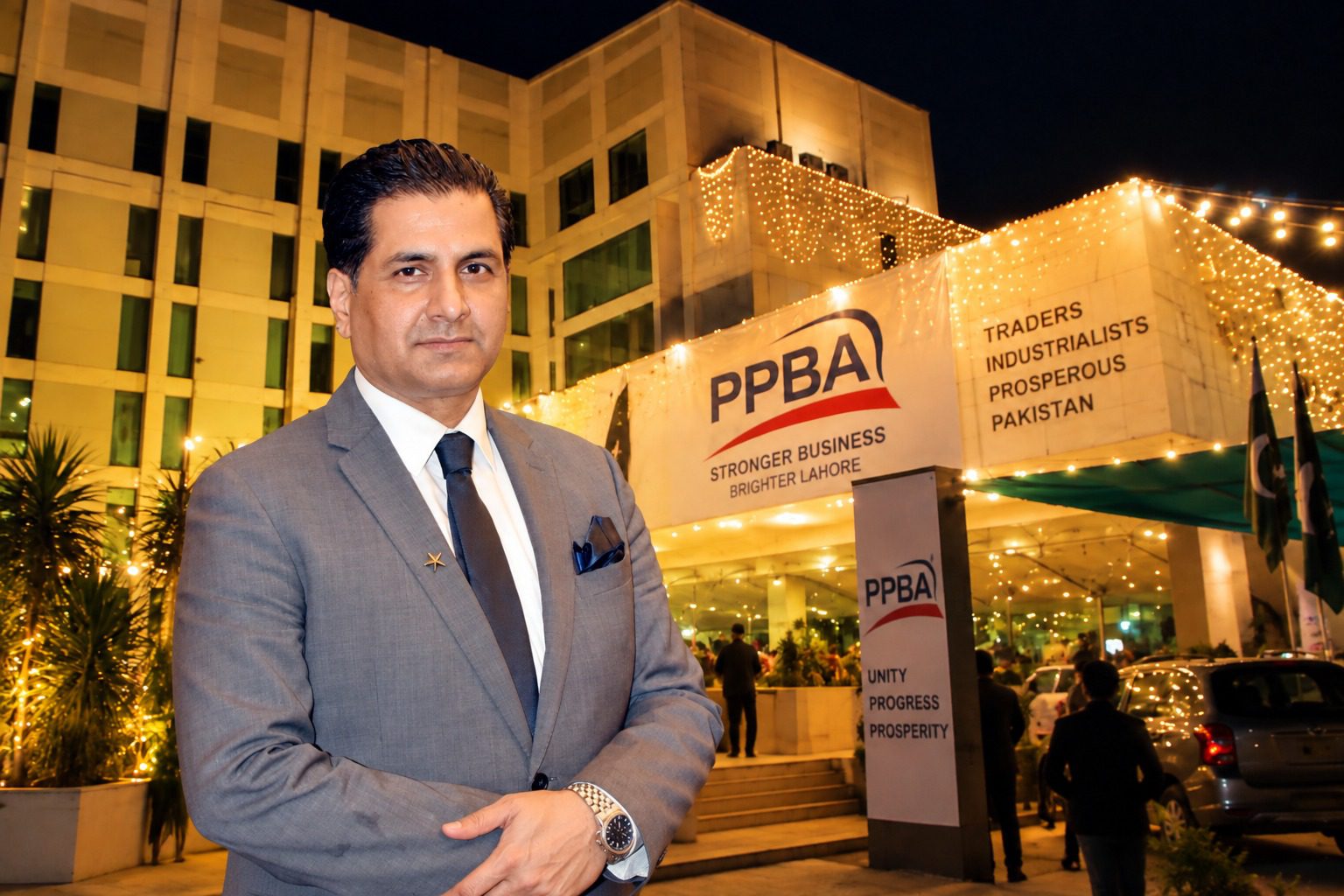
By M Qdeer
LAHORE: Former Lahore Chamber of Commerce and Industry (LCCI) Executive Committee member and Patron-in-Chief of the National Businessmen Group (NBG) Usman Malik has called for a stronger and more practical institutional role for the chamber in addressing the challenges faced by Lahore’s traders, industrialists, manufacturers and exporters.
In an interview, Malik said the business community needed an LCCI that remained connected with markets and industrial areas and maintained continuous engagement with government departments on taxation, energy, infrastructure, regulatory matters, exports and investment.
He said chamber representation should not be limited to raising concerns but should also involve research, policy proposals, coordination with authorities and consistent follow-up.
Malik has previously participated in LCCI policy discussions as a former Executive Committee member. In October 2024, he was among former LCCI Executive Committee members attending a meeting at the chamber where the importance of private-sector participation in policymaking and closer government-business coordination was discussed.
LCCI should remain connected with businesses
Malik said the strength of a chamber depends largely on how effectively it understands the problems of its members.
According to him, Lahore has a diverse business community comprising manufacturers, exporters, importers, traders, SMEs and service-sector businesses, each facing different operational challenges.
He said LCCI should maintain regular interaction with business associations and individual members so that policy advocacy reflects actual conditions in markets and industrial areas.
The LCCI’s 2026 directory includes more than 51,000 affiliated business entities across manufacturing, exports, imports, trade and services, illustrating the breadth of the chamber’s membership base.
Malik said such diversity requires a representative approach in which the concerns of both large companies and smaller businesses receive institutional attention.
Industrial competitiveness needs urgent attention
Malik said the competitiveness of Lahore’s industrial sector should remain one of the major priorities of chamber policy.
He said manufacturers operate within a cost structure influenced by energy, taxation, financing, transportation, labour, raw materials and regulatory requirements.
Any increase in these costs, according to him, can affect production decisions and the ability of Pakistani companies to compete in international markets.
He said LCCI should compile sector-specific information on the cost of doing business and use that data while engaging policymakers.
According to Malik, general statements about economic difficulties are less effective than documented proposals identifying the exact problem, its economic impact and a workable solution.
Energy costs affect the entire production chain
Malik identified electricity, gas and fuel prices as important concerns for industrial and commercial businesses.
He said energy costs directly affect manufacturing and indirectly influence transportation, storage and the prices of finished products.
According to him, industrial policy should recognise the relationship between competitive energy costs and production, employment and exports.
He called for greater predictability in energy-related policies so businesses can make medium- and long-term investment decisions.
Malik said the chamber should continue presenting evidence-based recommendations to relevant authorities on energy pricing and industrial competitiveness.
Export growth should be a national priority
Malik said Pakistan’s economic growth cannot be sustained without strengthening exports and expanding the country’s presence in international markets.
He said Lahore has considerable manufacturing and trading capacity that could support greater export activity if businesses receive appropriate facilitation.
According to him, exporters require competitive production costs, reliable energy supplies, efficient logistics, access to machinery and raw materials and predictable taxation.
He said LCCI should strengthen its engagement with trade-related institutions and help members obtain information about international markets and regulatory requirements.
Malik also stressed the importance of value addition.
He said exporting finished and higher-value products can create greater economic opportunities than relying heavily on lower-value goods.
Taxation requires clarity and consistency
Malik said taxation remains one of the most important concerns raised by businesses.
He said businesses recognise their responsibility to comply with legitimate tax obligations but require a system that is understandable, predictable and efficiently administered.
According to him, unnecessary duplication between departments and complicated procedures can increase compliance costs.
He said the chamber should advocate greater coordination among tax authorities and increased use of digital systems to make compliance easier.
Malik also said broadening the documented economy should remain an objective of economic policy.
According to him, encouraging businesses to operate formally requires confidence in the taxation system as well as consistent enforcement of applicable laws.
SMEs need access to finance and technology
Malik said small and medium enterprises should receive greater institutional attention because they form an important part of the business ecosystem.
He said SMEs frequently face difficulties in accessing finance, modern technology, skilled labour and international markets.
LCCI, according to him, can play a facilitation role by connecting SMEs with banks, financial institutions, technology providers, government programmes and larger companies.
He said training and capacity-building programmes should also focus on practical business needs, including digital systems, accounting, taxation, export documentation and modern marketing.
Malik said stronger SMEs could also contribute to supply chains of larger manufacturers and exporters.
Industrial infrastructure needs coordinated action
Malik said infrastructure problems in industrial areas can directly affect business operations.
Roads, drainage, waste management, transportation, water supply, telecommunications and access routes all influence the cost and efficiency of industrial activity, he said.
According to him, LCCI should work with industrial associations to identify infrastructure problems and approach the relevant government agencies with documented proposals.
He said area-specific problems should be dealt with through area-specific solutions.
Rather than presenting broad complaints, Malik suggested that chamber committees could prepare detailed assessments of industrial areas and identify the departments responsible for resolving particular issues.
Government-business relationship should be strengthened
Malik said productive engagement between government institutions and the private sector was essential for effective economic policymaking.
He said policies affecting industry and trade should benefit from consultation with businesses before implementation.
According to him, government departments possess regulatory authority while businesses possess practical knowledge of production and market conditions.
Bringing the two perspectives together, he said, could improve the quality of economic decisions.
Malik said LCCI should continue serving as a bridge between the private sector and government while presenting its recommendations through institutional and evidence-based channels.
Regulatory enforcement requires clarity
Malik said businesses are required to comply with applicable laws and regulations, but they also need clarity about the procedures they are expected to follow.
He said notices, inspections, licences, registrations and other regulatory requirements can become difficult for businesses when procedures are unclear or when different departments issue overlapping requirements.
According to him, LCCI can assist members by facilitating communication with competent authorities and helping businesses understand their legal obligations.
He said legitimate regulatory enforcement and business facilitation can operate together when procedures are transparent and properly implemented.
Business complaints should have follow-up mechanisms
Malik said one of the important responsibilities of a chamber should be to ensure that genuine complaints receive appropriate follow-up.
He suggested that recurring complaints should be documented and categorised so that the chamber can determine whether an issue affects an individual business or represents a wider policy problem.
According to him, if similar concerns emerge from several markets or industrial sectors, LCCI should examine the issue and prepare a broader representation.
He said such an approach could make chamber advocacy more organised and measurable.
Investment requires policy predictability
Malik said investors generally require reasonable certainty about the business environment before making long-term decisions.
An entrepreneur planning a new factory, purchasing machinery or expanding an existing operation needs to assess future energy, taxation, financing, labour and regulatory costs, he said.
According to Malik, policies should therefore focus not only on attracting new investment but also on retaining and expanding existing businesses.
He said established companies already possess trained workers, supply chains and market connections, making their expansion an important component of economic growth.
Technology and skills can improve productivity
Malik also emphasised the importance of technology adoption across Lahore’s industrial and commercial sectors.
He said modern machinery, digital management systems, automation and improved production methods can help businesses reduce waste and improve productivity.
However, he said technology adoption should be accompanied by workforce development.
According to him, employees need training to operate modern machinery, manage digital systems and adapt to changing production requirements.
He said LCCI could help create links between businesses, universities, technical institutions and technology providers.
Stronger representation for traders and industrialists
Malik said representation should cover the full spectrum of LCCI’s membership.
He said traders, manufacturers, exporters, SMEs and service-sector businesses all have legitimate concerns that should find space within the chamber’s policy discussions.
According to him, elected representatives should regularly visit markets and industrial areas rather than relying solely on formal meetings at the chamber.
He said direct interaction with members enables representatives to understand operational difficulties that may not always appear in formal policy documents.
LCCI can strengthen market-to-policy link
Malik said LCCI has an opportunity to create a stronger link between problems identified at the market level and decisions made at the policy level.
He suggested that sectoral committees could collect information from businesses, identify recurring problems and develop recommendations for government institutions.
According to him, such a system could also help the chamber assess whether its representations had produced practical outcomes.
He said institutional memory was important because many business issues require sustained engagement rather than one-time meetings.
Focus on manufacturing and value addition
Malik said Pakistan’s economic strategy should encourage manufacturing, value addition and higher productivity.
He said a stronger industrial base could support employment, exports and the development of domestic supply chains.
According to him, businesses need an environment in which investment in machinery, technology and workforce development is commercially viable.
He said the chamber should therefore continue highlighting policies that support productive investment rather than merely short-term commercial activity.
Business community needs continuity in advocacy
Malik said chamber advocacy should continue throughout the elected term.
He said election campaigns naturally generate discussion about business issues, but the more important task is to maintain engagement after elections.
According to him, elected representatives should remain accessible to members and regularly report on the issues being pursued before government departments.
He said continuity could also help prevent important business concerns from being repeatedly raised without institutional follow-up.
Usman Malik’s message to the business community
Malik said Lahore’s traders and industrialists should examine the programmes, experience and priorities presented by all candidates and groups participating in the LCCI election.
He said the chamber’s future direction should be based on practical business issues rather than personalities alone.
According to him, the major concerns confronting businesses include energy costs, taxation, industrial infrastructure, regulatory procedures, financing, exports, technology and access to government institutions.
He said these issues require sustained institutional engagement and cooperation among businesses, government departments and trade bodies.
The LCCI Election Commission has said arrangements for the 2026 elections have been finalised and that the process will be conducted in accordance with the law, with measures concerning polling arrangements, security and election oversight.
A business agenda centred on practical solutions
Malik’s proposed agenda brings together several interconnected areas: industrial competitiveness, business facilitation, taxation, energy, infrastructure, exports, SMEs, investment, technology and government-business coordination.
He said LCCI should continue working as a platform where businesses can raise concerns, obtain information, engage with policymakers and pursue legitimate solutions through institutional channels.
As a former LCCI Executive Committee member, Malik said his experience within the chamber had reinforced the importance of direct engagement with the business community.
He said the future of Lahore’s economy would depend significantly on the ability of businesses to invest, produce, employ workers and compete in domestic and international markets.
For that reason, he said, chamber representation should remain focused on practical facilitation, evidence-based advocacy, accessibility and consistent follow-up.


