



.By Web Desk
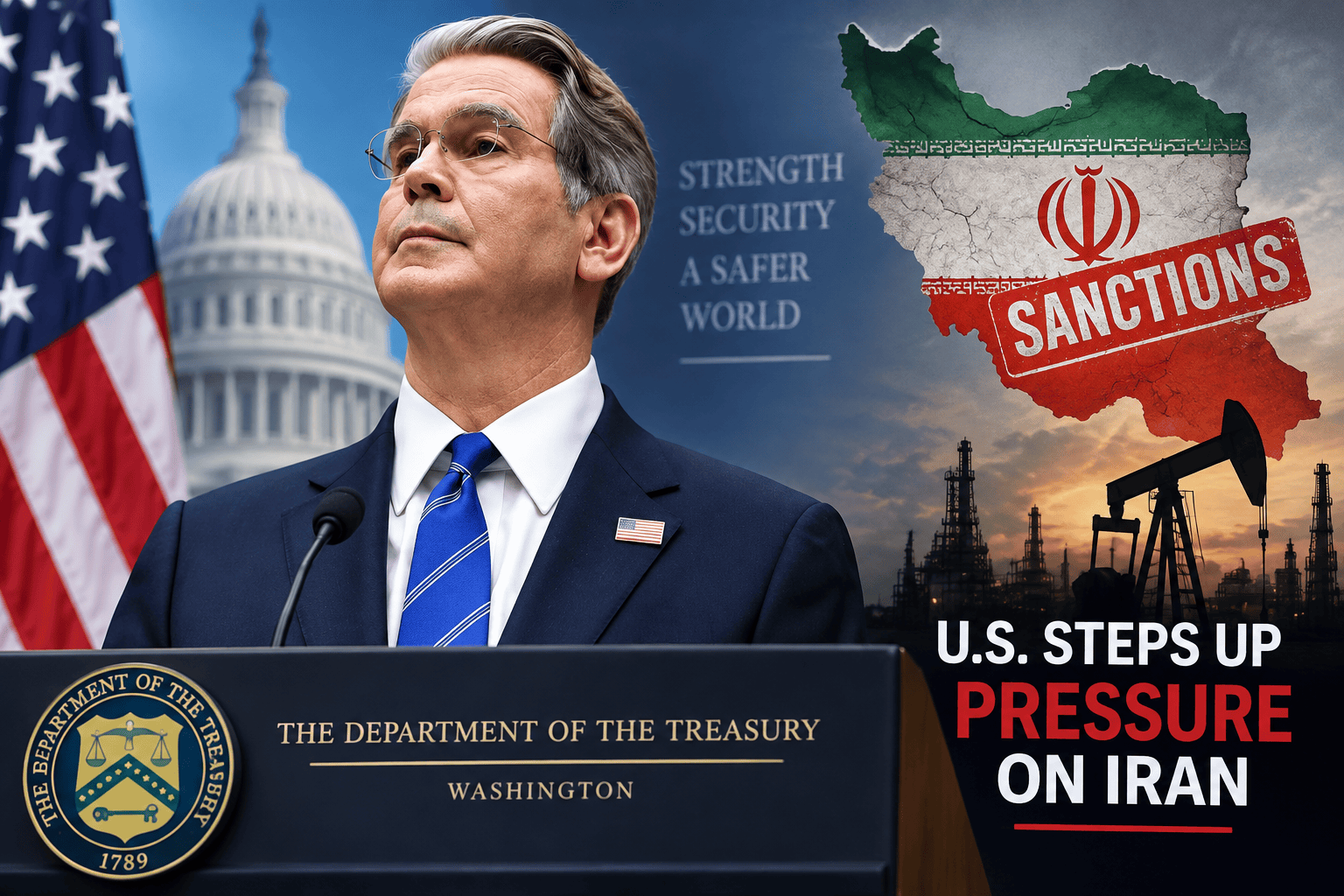
WASHINGTON: US Treasury Secretary Scott Bessent has said the United States is no longer seeking merely to contain what Washington describes as the Iranian threat, but is pursuing a far-reaching economic campaign aimed at isolating Tehran and cutting off its financial lifelines.
Appearing before the US House of Representatives on Tuesday, Bessent said Washington’s economic strength had enabled the administration of President Donald Trump to intensify pressure on Iran and those facilitating its financial activities.
“America is no longer managing the Iranian threat; we are ending it,” Bessent said while discussing the administration’s economic isolation strategy.
His remarks underline the Trump administration’s increasingly aggressive economic policy towards Tehran at a time of continuing military and political tensions between the United States and Iran.
The Treasury Department launched what it calls “Operation Economic Outcast” on August 24, describing it as a sustained, government-wide campaign designed to sever Iran’s financial connections around the world.
According to the Treasury, the initiative is targeting networks, facilitators and financial channels allegedly used by Iran to sell oil, evade international sanctions and generate revenue for the Islamic Revolutionary Guard Corps (IRGC). The department says it intends to pursue a “zero-leakage” approach against sources of Iranian revenue.
Bessent has said the objective is to leave Tehran facing two broad choices: deeper international economic isolation or a route towards reintegration with the global economy.
The US administration has also warned foreign governments, companies and financial institutions about the potential consequences of maintaining certain economic dealings with Iran. The strategy significantly increases the importance of secondary sanctions, under which entities outside the United States can face restrictions for engaging in transactions Washington considers sanctionable.
The latest remarks come against the backdrop of the prolonged US-Iran conflict that began after the United States and Israel launched joint strikes against Iranian targets on February 28. Despite periods of negotiations and a temporary ceasefire, Washington and Tehran have continued exchanging military action amid a wider diplomatic deadlock.
The conflict has also increased concerns about energy security and international shipping. Oil markets have faced renewed volatility amid disruptions affecting key regional supply routes, including the Strait of Hormuz and the Red Sea.
On Tuesday, Brent crude rose to more than $108 a barrel after reports of disruptions affecting Saudi and Libyan supplies, highlighting the wider economic consequences of instability across the Middle East.
What it means
Bessent’s statement signals that economic warfare has become a central component of Washington’s broader strategy towards Iran. Rather than relying only on conventional sanctions against individual officials or institutions, the administration is attempting to place pressure on the networks that allow Iranian trade and financial transactions to continue internationally.
Impact
A sustained tightening of US sanctions could further restrict Iran’s ability to sell oil and conduct international transactions. However, the broader impact will depend significantly on how governments and companies outside the United States respond to Washington’s pressure.
The policy could also have consequences beyond Iran. Any disruption to Iranian oil exports or shipping through strategic waterways could affect global energy prices, transportation costs and inflation, particularly in energy-importing economies.
Future outlook
Washington has indicated that Operation Economic Outcast is intended to be a continuing campaign rather than a single round of sanctions. The Treasury Department has said it will systematically target financial resources it believes support the Iranian government and the IRGC.
At the same time, diplomatic channels have not disappeared completely. Regional governments, including Oman, have continued efforts aimed at reducing tensions and creating conditions for further diplomatic engagement.
Pakistan angle
For Pakistan, developments involving Iran remain particularly significant because of the countries’ shared border and Islamabad’s interest in regional stability, trade and energy security.
Pakistan has also played a diplomatic role during the conflict, including hosting face-to-face US-Iran talks earlier this year. A prolonged confrontation — particularly one affecting oil supplies and regional shipping — could increase pressure on Pakistan through higher international petroleum prices and broader economic uncertainty.