


By M Qadeer
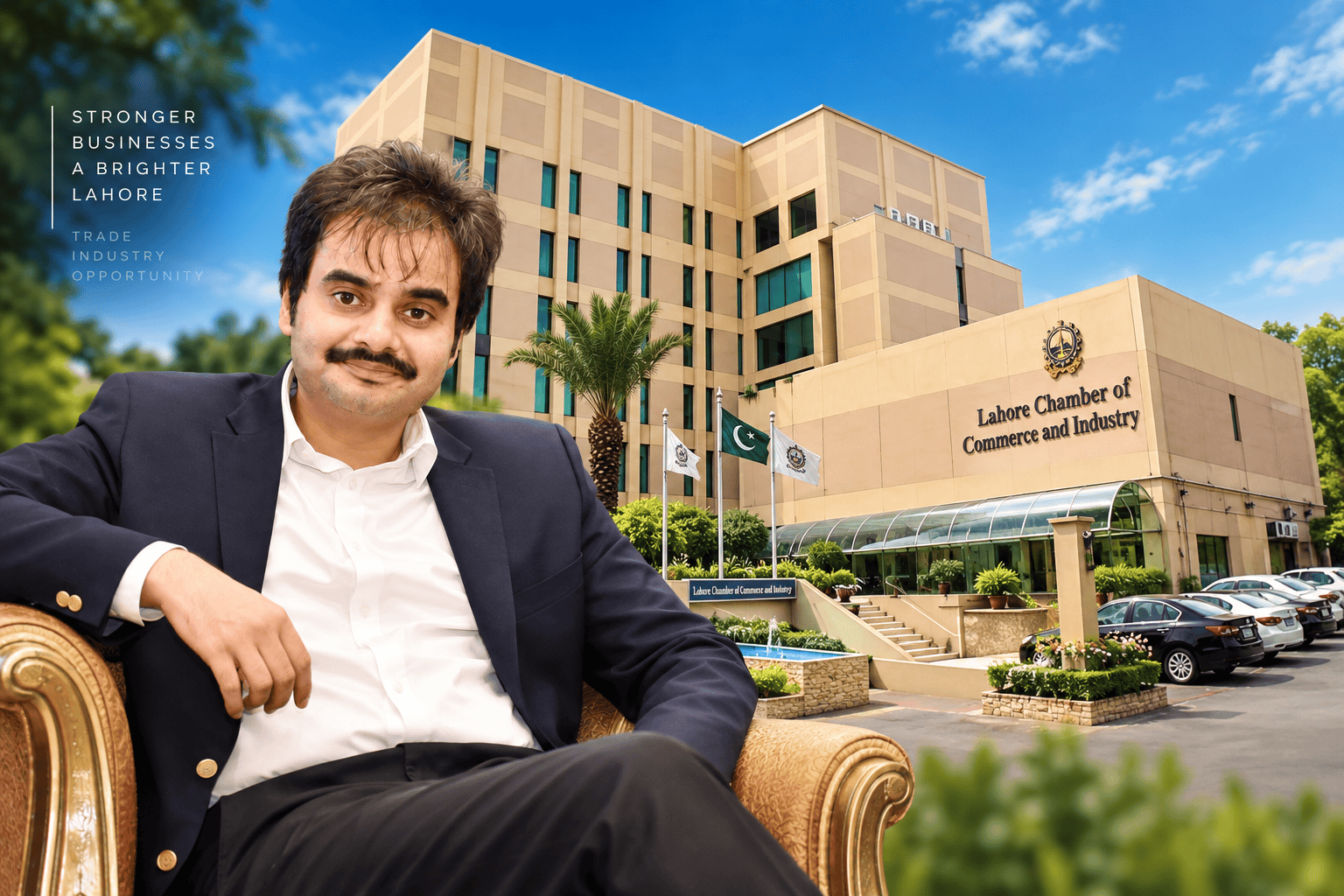
LAHORE: Chronic parking shortages, traffic congestion and inadequate infrastructure in Lahore markets in major commercial centres are no longer minor civic inconveniences but serious business issues that require coordinated action by the government, city authorities and the Lahore Chamber of Commerce and Industry, LCCI presidential candidate Ali Hussam Asghar has said.
Asghar, chairman of the Pioneer Businessman Group and a leading figure in the Vision Alliance, said traders across Lahore operate in markets that have expanded enormously over the years while parking, traffic management and other supporting infrastructure have often failed to keep pace with growing commercial activity.
He said improving ease of doing business must begin with resolving the everyday difficulties confronting traders, customers, employees, suppliers and transporters.
For a businessman operating in a congested commercial area, he maintained, the availability of parking and convenient access to a market can directly affect customer footfall, deliveries, working hours and the overall cost of conducting business.
Asghar said the next LCCI leadership should place market infrastructure prominently on its agenda and pursue practical solutions with the Punjab government, district administration, traffic authorities and other relevant agencies.
He believes Lahore requires a market-by-market assessment rather than a single solution being imposed across commercial areas with very different needs.
Parking is an economic issue
Asghar said parking was sometimes treated as a secondary urban-management problem, whereas traders experienced its consequences every working day.
Lahore has grown into a major commercial metropolis, attracting customers and businesses not only from across the city but also from other districts of Punjab. However, several traditional commercial centres were developed at a time when the number of vehicles on the roads was considerably lower.
The expansion of trade, population and vehicle ownership has placed increasing pressure on the available road and parking space.
Asghar maintained that when customers cannot conveniently reach a market or spend substantial time searching for parking, businesses can suffer. Congested access can also create difficulties for loading and unloading goods and increase the time required for commercial deliveries.
The issue, he said, should therefore be examined from an economic perspective as well as from the standpoint of traffic management.
He called for systematic identification of markets facing the most serious parking constraints, followed by consultation with traders and technical authorities on solutions appropriate to each location.
Multi-storey parking among options
Asghar said modern parking facilities should be considered in commercial centres where land availability and technical feasibility permit.
Multi-storey parking plazas, better utilisation of existing parking facilities, designated loading and unloading areas and improved traffic circulation could form part of a wider strategy.
However, he maintained that decisions should be based on proper planning and consultation rather than assumptions about what traders require.
LCCI could play an important coordinating role by bringing market representatives and relevant government agencies together, documenting the problems and following up on agreed solutions.
According to Asghar’s business agenda, the chamber should increasingly become a platform through which practical problems are converted into workable policy proposals.
Parking is one example of an issue where cooperation between business organisations and public authorities could produce benefits for traders, customers and the city as a whole.
Infrastructure determines competitiveness
Asghar said Lahore’s business community required more than parking facilities.
Road conditions, traffic circulation, drainage, sanitation, street lighting, security, access to utilities and efficient movement of commercial vehicles all contribute to the quality of the business environment.
He maintained that discussions about economic competitiveness often concentrate on national-level issues such as taxation, electricity and interest rates, while local infrastructure problems receive less attention.
Both dimensions matter.
A business may be financially viable but still face unnecessary costs because employees, customers and goods cannot move efficiently through a commercial area.
Asghar said Lahore should aspire to provide commercial infrastructure comparable with other major regional business centres if the city wanted to attract investment and support existing enterprises.
Traditional markets need special attention
Lahore’s older commercial districts present a particular challenge because many were established long before current levels of population, traffic and commercial activity.
Asghar said solutions for these areas must recognise their physical limitations as well as their economic importance.
Large-scale businesses, wholesalers and thousands of smaller traders operate from established markets that have developed commercial ecosystems over decades. Simply relocating businesses is neither practical nor necessarily desirable.
Instead, he said authorities and business representatives should explore ways of improving accessibility and traffic management while preserving commercial activity.
Digital parking management, clearly designated commercial loading times, improved public transport connections and strategically located parking facilities could be considered where appropriate.
Asghar stressed that the precise solutions should emerge from consultation with the traders who work in those markets and the agencies responsible for urban planning and traffic management.
Ease of doing business begins outside the office
Asghar has made reducing the cost and complexity of doing business a central theme of his LCCI campaign.
He said ease of doing business was often discussed in terms of licences, taxes and regulatory approvals, but its meaning was broader for the ordinary entrepreneur.
It also included whether a customer could reach a shop, whether goods could be delivered efficiently, whether commercial vehicles had appropriate access and whether traders had to spend unnecessary time dealing with avoidable administrative or infrastructure problems.
Asghar maintained that LCCI should listen more closely to these ground-level concerns.
The chamber represents businesses ranging from major industrial enterprises to smaller commercial establishments. Their problems differ, and the institution should develop mechanisms capable of identifying those differences.
Market-by-market approach proposed
Asghar favours creating a structured inventory of issues affecting Lahore’s principal commercial and industrial areas.
Under such an approach, representatives from individual markets could identify their most pressing problems, which could then be categorised according to the government department or authority responsible.
Parking and traffic issues could be pursued with the relevant city and traffic authorities, while matters involving electricity, taxation, regulation or industrial infrastructure could be referred to the appropriate institutions.
Asghar believes this would allow LCCI to monitor progress instead of repeatedly raising the same problems without an institutional record of what action had been sought.
The effectiveness of a chamber, he maintained, should ultimately be judged by how successfully it translates the concerns of its members into engagement with decision-makers and practical outcomes.
Traders should be partners in urban planning
Asghar also called for greater consultation with the business community when decisions affecting commercial areas are planned.
He maintained that traders possess first-hand knowledge of how their markets function, including peak business hours, delivery requirements, customer movement and the practical consequences of traffic arrangements.
Their views should therefore form part of the decision-making process.
That does not mean, he said, that commercial interests should override public safety, traffic regulations or legitimate urban-planning requirements. Instead, better consultation could help authorities achieve regulatory and civic objectives while minimising unnecessary disruption to lawful businesses.
Asghar’s approach emphasises institutional dialogue rather than confrontation with public authorities.
He believes LCCI should maintain constructive working relationships with government departments while representing members firmly when business interests are affected.
Infrastructure investment can strengthen Lahore’s economy
Asghar said better commercial infrastructure could generate benefits extending beyond individual shopkeepers.
Improved market accessibility can encourage commercial activity, enhance the customer experience and make established business districts more attractive for future investment.
Infrastructure improvements can also contribute to the wider image of Lahore as a business destination.
The city, he maintained, has enormous advantages: a large consumer market, an established industrial base, skilled entrepreneurs, educational institutions and connections with domestic and international markets.
Those advantages should be supported by infrastructure capable of meeting the requirements of a modern commercial economy.
LCCI must become problem-solving institution
Asghar said his wider vision was to make LCCI more responsive to the everyday concerns of its members.
Electricity costs, multiple taxation, regulatory compliance, parking, industrial infrastructure, SMEs, exports and interaction with government departments may appear to be separate subjects, but he believes they are connected by one fundamental objective — reducing unnecessary obstacles to business.
He maintained that LCCI should not promise that it can independently solve matters that legally fall within the jurisdiction of government agencies. Instead, the chamber should use its institutional strength to document problems, propose solutions, bring stakeholders together and persistently pursue legitimate business concerns with the authorities empowered to act.
That distinction, he believes, is important for building confidence between the chamber, government and business community.
As the September 23 and 24 LCCI elections approach, Asghar is seeking to place these everyday business concerns at the centre of the electoral debate.
For Lahore’s traders, he maintains, economic development should be visible not only in statistics and policy documents but also in better markets, easier access, improved infrastructure and lower barriers to conducting legitimate business.
His message to the business community is that Lahore cannot aspire to become a stronger commercial and investment hub while ignoring the practical difficulties encountered every day in the streets and markets where much of its economic activity actually takes place.