


By Maheen Sultan
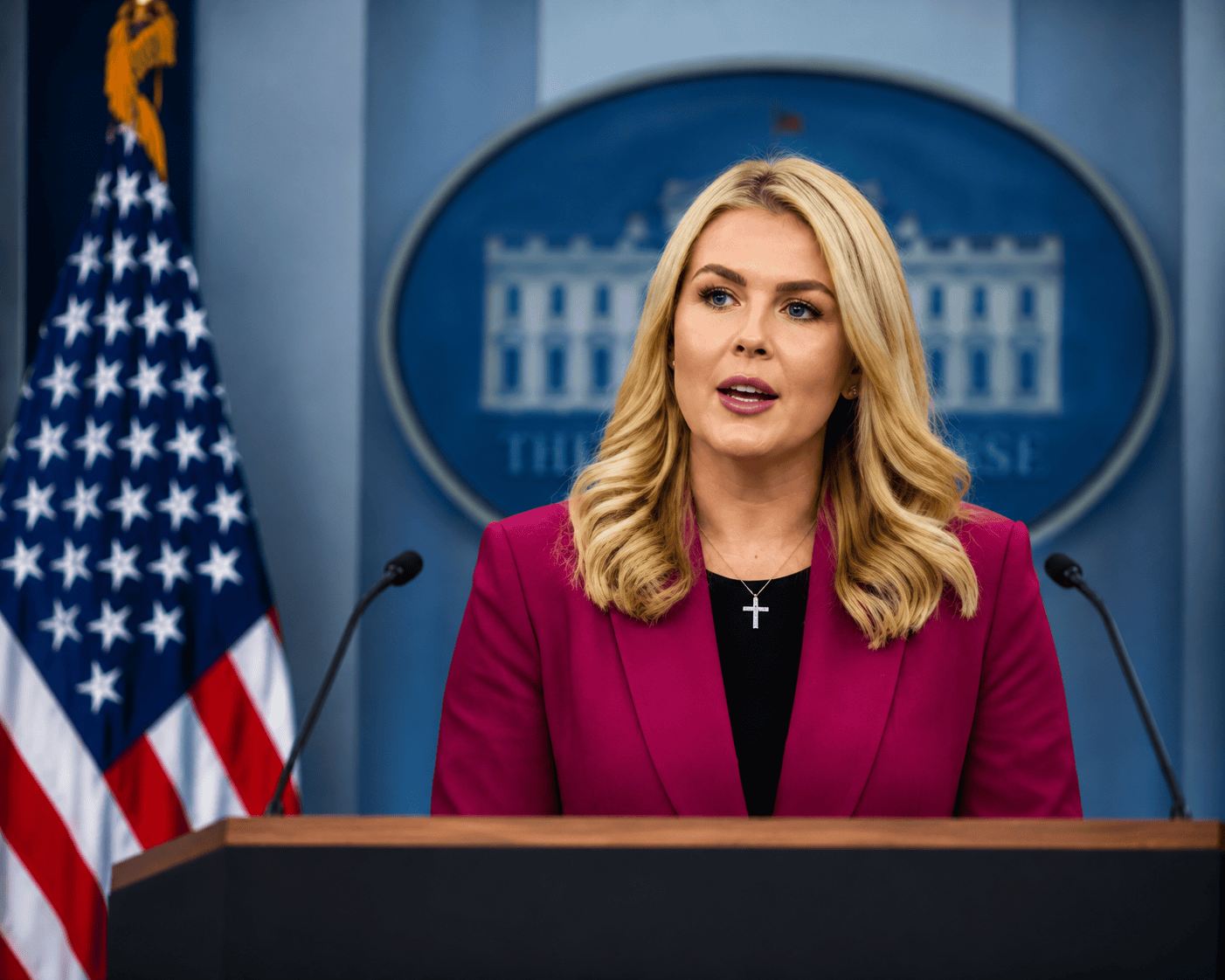
WASHINGTON – White House Press Secretary Karoline Leavitt is set to leave her position at the end of August, with US President Donald Trump announcing that she will step down to spend more time with her family after the birth of her second child.
Leavitt’s departure marks a significant change in President Trump’s communications team as she had become one of the most visible and influential figures in the administration. Trump said she would continue serving as an outside adviser and remain an important voice within the Republican Party.
The White House has not described the move as a political disagreement or dismissal. Instead, officials have presented the decision as a personal choice linked to family priorities following the arrival of Leavitt’s daughter, Viviana, in May.
At 27, Leavitt made history by becoming the youngest person ever to serve as White House press secretary when she assumed the role after Trump returned to office in 2025. Her tenure was marked by a highly energetic communication style, frequent media briefings and a close alignment with Trump’s political messaging.
Leavitt’s rise inside Trump’s political circle began during his first presidency. She started her career as an intern in the White House Office of Presidential Correspondence before becoming an assistant press secretary during Trump’s first term.
After Trump left office in 2021, Leavitt continued working in conservative political communications. She later launched a campaign for Congress in New Hampshire, winning the Republican primary for the state’s first congressional district but losing the general election in 2022.
When Trump launched his 2024 presidential campaign, Leavitt became one of his leading communication representatives. Her strong defence of Trump’s policies and ability to deliver the campaign’s message helped strengthen her position within his political team.
After Trump’s inauguration in 2025, she was appointed White House press secretary and quickly became a central figure in the administration’s relationship with the media.
During her time at the podium, Leavitt developed a reputation for a direct and sometimes confrontational approach with journalists. She frequently defended Trump’s policies while accusing parts of the media of unfair coverage of the administration.
Her briefings also reflected the Trump administration’s effort to expand access beyond traditional news organisations. The White House opened opportunities for bloggers, online commentators and social media personalities to participate in press briefings, arguing that modern audiences consume news through a wider range of platforms.
Supporters praised Leavitt for challenging what they considered a biased mainstream media environment. Critics, however, argued that the administration’s approach weakened traditional press access and raised concerns about government transparency.
Leavitt’s departure comes at a time when the Trump administration is preparing for major political challenges, including the upcoming midterm elections. Trump said she would continue supporting his administration’s goals and efforts to help Republicans achieve success in future elections.
Political analysts say replacing a high-profile press secretary could affect the administration’s communication strategy. The White House press secretary plays a key role in explaining government decisions, responding to criticism and shaping public perception.
Unlike previous departures of senior Trump officials, Leavitt’s exit appears to be driven by personal circumstances rather than controversy. Her decision follows a period in which she balanced one of Washington’s most demanding positions with motherhood.
The role of White House press secretary requires long working hours, constant media attention and daily management of political messaging. For many officials, maintaining that responsibility while raising young children presents significant personal challenges.
Trump has praised Leavitt’s performance, describing her as one of the best press secretaries in the history of the office. He also indicated that she would remain connected to his political movement, suggesting her influence within Republican circles is likely to continue.
The White House is expected to announce a replacement for Leavitt in the coming weeks. The new press secretary will inherit the responsibility of communicating the administration’s policies during a politically important period.
For Leavitt, the next chapter may involve a less public but still influential role. Her departure from the briefing room does not signal an end to her political career. Instead, it could mark a transition from daily media battles toward a broader advisory position within Trump’s political network.
Her short but highly visible tenure has already made her one of the most recognised figures in modern White House communications. Whether she returns to government service in the future or continues influencing Republican politics from outside, Leavitt’s impact on Trump’s second administration is likely to remain significant.


