


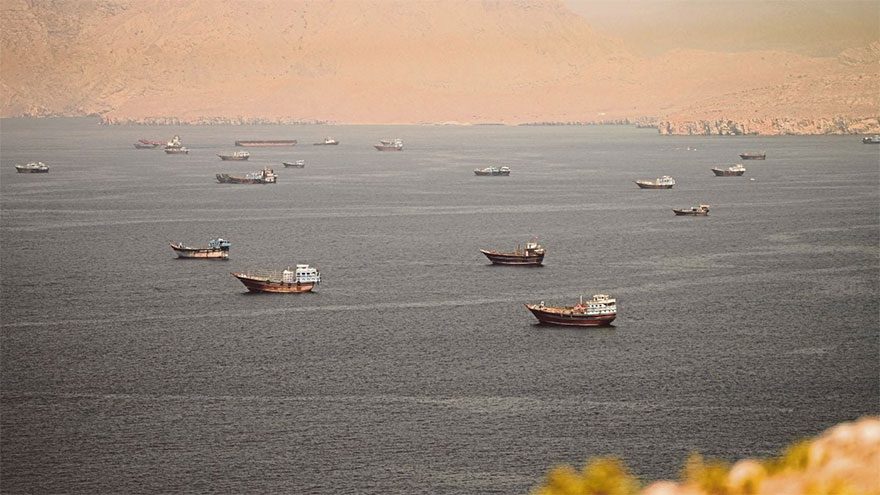
TEHRAN (Web Desk) – Iran’s Islamic Revolutionary Guard Corps (IRGC) claimed on Friday that it intercepted two oil tankers in the Strait of Hormuz, further escalating tensions in one of the world’s most strategically important shipping lanes as the standoff between Tehran and Washington continues to intensify.
According to a statement issued by the IRGC, the two vessels were attempting to pass through the Strait of Hormuz while allegedly operating under the protection of US aerial surveillance. Iranian authorities claimed the ships violated maritime regulations, prompting naval units to intercept and halt their movement.
The IRGC did not disclose the identities, ownership or destinations of the two tankers, nor did it specify the nature of the alleged violations. The claims could not be independently verified, and there was no immediate response from the United States or the operators of the vessels.
Iranian officials further claimed that four additional oil tankers changed course and returned to their previous positions shortly after the interception, describing the move as evidence of the effectiveness of Iran’s maritime security operations in the region.
The Strait of Hormuz remains one of the world’s busiest energy corridors, carrying a significant share of global crude oil and liquefied natural gas exports. Any disruption in the waterway has the potential to affect international energy markets and shipping operations.
RelatedPosts
Shipping analysts have repeatedly warned that increased military activity in the Gulf could raise insurance costs, delay cargo movements and create uncertainty for international trade. The latest Iranian claims are expected to draw close attention from governments and commercial shipping companies operating in the region.
The reported incident comes amid heightened tensions following recent military confrontations involving Iran, the United States and regional allies. Tehran has repeatedly accused Washington of increasing its military presence around the Gulf, while the US has maintained that its deployments are intended to safeguard international shipping and regional stability.
Separately, Iranian Foreign Minister Abbas Araqchi held diplomatic discussions with several European counterparts regarding military developments involving US forces.
During a telephone conversation with Bulgarian Foreign Minister Velislava Petrova-Chamova, Araqchi urged Sofia to reconsider its reported decision to permit the temporary deployment of US military aircraft at the Bezmer Air Base.
According to Iran’s Foreign Ministry, Araqchi argued that allowing the facility to support US military operations would amount to facilitating aggression against Iran. He said such a move would be inconsistent with the traditionally friendly relations between Tehran and Sofia.
The Iranian foreign minister also reiterated Tehran’s longstanding position that countries permitting their territory to be used for military operations against Iran could face consequences. Iranian officials have issued similar warnings on multiple occasions during periods of heightened regional tensions.
Araqchi also spoke with Cypriot Foreign Minister Constantinos Kombos, emphasizing the importance of ensuring that foreign military facilities on the island are not used in operations targeting Iran.
The diplomatic outreach reflects Tehran’s broader effort to discourage regional and European states from supporting military activities that Iran considers hostile to its national security interests.
Military analysts say the latest developments highlight the growing strategic importance of the Gulf region, where commercial shipping, energy exports and military deployments increasingly intersect.
The Strait of Hormuz has long been regarded as one of the world’s most sensitive maritime chokepoints. Any confrontation involving commercial vessels or military forces operating in the area could have significant consequences for global energy supplies and international markets.
Energy traders are closely monitoring developments as concerns over maritime security continue to influence oil prices. Previous incidents involving tankers in the Gulf have resulted in temporary price spikes and increased market volatility.
Despite the latest claims by Iran, commercial shipping through the Strait of Hormuz has continued, although several shipping companies are reportedly reviewing operational risks and security arrangements for vessels transiting the area.
International observers have urged all parties to exercise restraint and avoid actions that could further escalate tensions in the Gulf. Diplomatic efforts aimed at reducing the risk of confrontation remain ongoing, although prospects for immediate de-escalation remain uncertain.
As regional security challenges persist, the Strait of Hormuz is expected to remain under intense international scrutiny, with governments, shipping operators and energy markets closely watching every development that could affect one of the world’s most critical maritime trade routes.


