


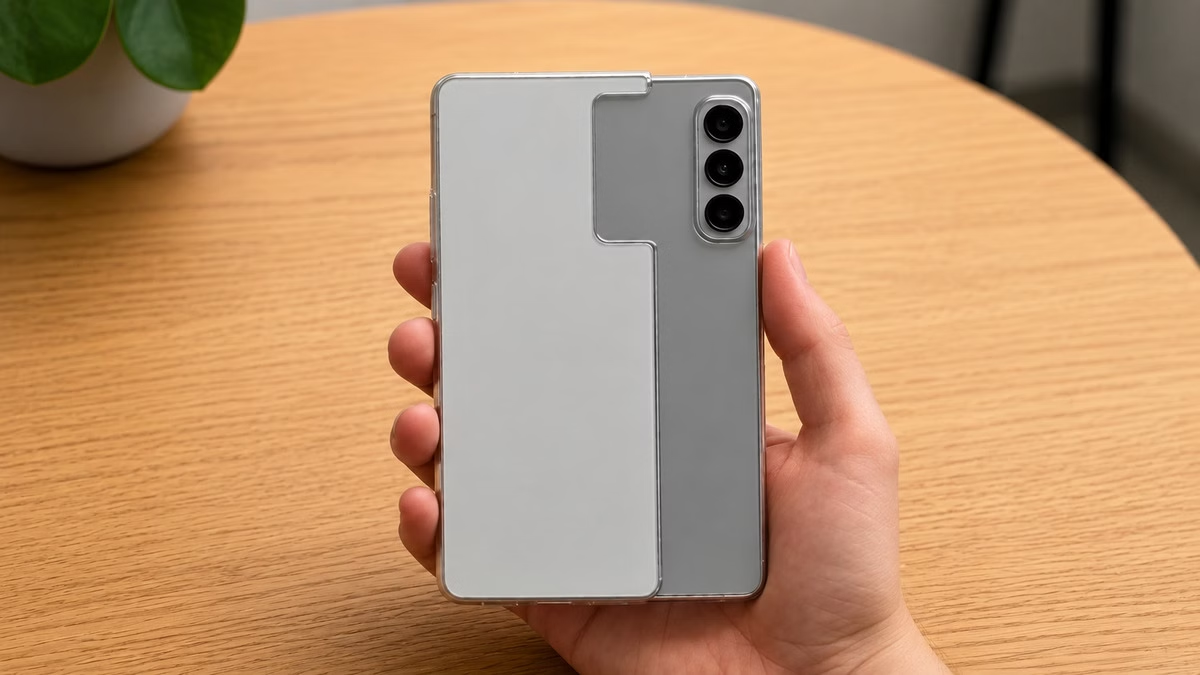
SEOUL (Tech Desk) – Samsung is reportedly accelerating development of its first commercially available rollable smartphone, signaling the company’s next major step in mobile innovation beyond foldable devices. Industry reports suggest the South Korean technology giant is preparing a new Galaxy model that expands through a rolling mechanism instead of folding, potentially introducing an entirely new category of premium smartphones.
According to reports from South Korea, Samsung Display is targeting the first half of 2028 for the commercial launch of its rollable smartphone. Although Samsung has not officially confirmed the project, supply chain sources indicate the device could debut alongside the Galaxy S28 series or become a separate flagship model within the company’s premium smartphone portfolio.
The reported device is expected to carry the name Galaxy Z Slide, continuing Samsung’s established “Galaxy Z” branding for innovative display technologies. While the name remains unconfirmed, it reflects the phone’s defining feature—a display that slides outward from the body to provide a significantly larger viewing area without the visible crease associated with foldable screens.
Unlike conventional foldable smartphones that rely on hinges, the rollable concept uses an internal mechanism allowing the flexible OLED display to extend smoothly from within the device. When closed, the smartphone would remain compact enough for everyday use, but users could expand it into an almost tablet-sized screen whenever additional display space is needed.
Reports suggest the expandable display could measure approximately 10 inches with a 16:9 aspect ratio and a pixel density of around 440 pixels per inch. Such specifications would make the device suitable for video streaming, gaming, multitasking, document editing, and productivity applications while preserving the portability of a standard smartphone.
Samsung has been researching flexible display technologies for several years through its display division. During major technology exhibitions, including CES and SID Display Week, the company demonstrated multiple prototype concepts featuring foldable, slidable, and rollable OLED panels. These experimental devices showcased the potential of displays capable of expanding dramatically while maintaining image quality and structural stability.
One notable prototype, known as Rollable Flex, demonstrated a display capable of extending more than five times its original length. While the concept highlighted Samsung’s engineering progress, transforming such technology into a durable consumer product presents significant manufacturing challenges.
Engineers must ensure that the flexible OLED panel can withstand thousands of expansion and retraction cycles without developing wrinkles, visible creases, uneven surfaces, or display defects. The internal rollers, support structures, protective layers, and precision mechanical components must also operate reliably while keeping the device slim, lightweight, and resistant to daily wear.
Industry analysts believe Samsung’s renewed focus on rollable smartphones comes as competition within the foldable market continues to intensify. Although Samsung remains one of the leading manufacturers of foldable devices, increased competition from rival smartphone brands has gradually reduced its share of the global foldable display market. Introducing a commercially viable rollable phone could once again place Samsung at the forefront of premium smartphone innovation.
The company is also expected to continue expanding its foldable lineup alongside future rollable products. Reports indicate Samsung may eventually develop multiple rollable models, with a possible second-generation device arriving around 2030 if the initial launch proves commercially successful.
Despite growing excitement surrounding the technology, experts expect the first rollable Galaxy smartphone to command a premium price. The sophisticated display system, precision engineering, and limited production volumes are likely to position the device above current flagship smartphones in terms of cost.
Consumers are also expected to closely examine the durability of the rolling mechanism before embracing the new form factor. Long-term reliability, display performance, and battery life will likely determine whether rollable smartphones become a mainstream alternative to today’s foldable devices.
Samsung has yet to officially announce the Galaxy Z Slide or confirm any launch timeline. Until then, reports surrounding the device remain based on supply chain information and industry analysis. Nevertheless, continued investment in rollable display technology suggests Samsung is preparing for the next evolution of mobile devices, aiming to deliver larger screens without compromising portability or everyday usability.


