


By Commerce Reporter
LAHORE: The Lahore Chamber of Commerce & Industry (LCCI) organized an important session on “The Role of Academia in the Second Phase of CPEC” at its premises, aimed at strengthening collaboration between academia and industry to fully benefit from emerging opportunities under CPEC Phase-II.
Read also: Kashgar set to become the corridor of the future under BRI and CPEC linkages
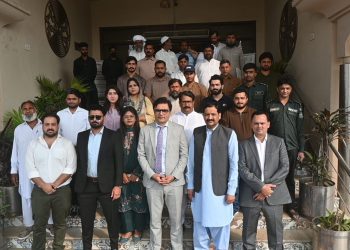
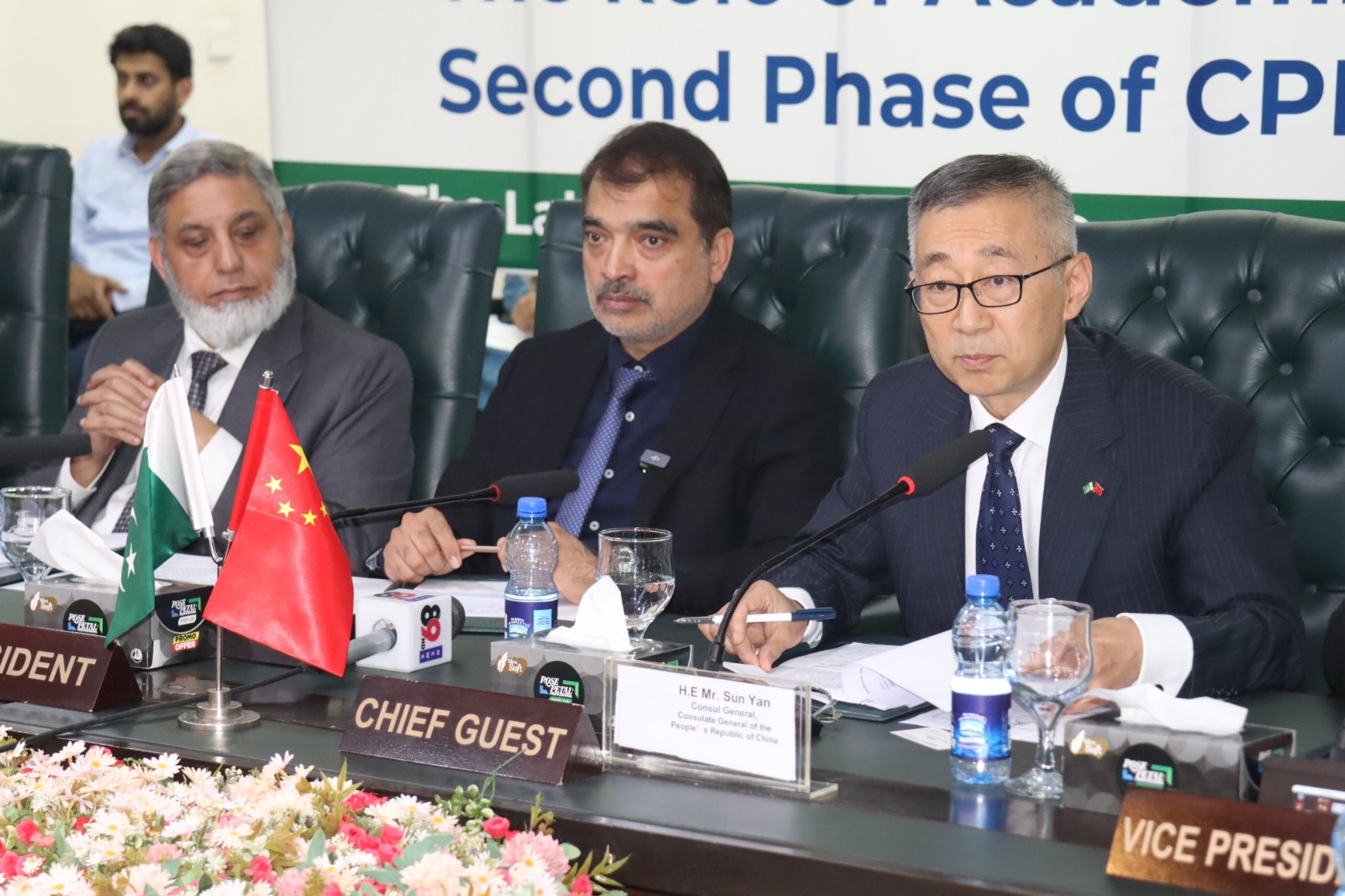
The session was graced by Excellency Mr. Sun Yan, Consul General of China in Lahore, as the Chief Guest, while a large number of representatives from academia, industry, and other stakeholders attended the event.
Speaking on the occasion, the President LCCI Faheem Ur Rehman Saigol said that the China-Pakistan Economic Corridor has now entered its second phase, which focuses on industrial cooperation, Special Economic Zones (SEZs), agriculture, technology transfer, and human resource development. He emphasized that this phase requires a strong role of academia, as universities must evolve from traditional institutions into centers of innovation, research, and economic development.
He stated that universities can play a key role by aligning their curricula with industry needs, producing a skilled workforce, promoting research and development, and encouraging entrepreneurship through incubation centers and business accelerators. He further highlighted that strong industry-academia linkages are essential to ensure productivity, innovation, and global competitiveness, particularly in Special Economic Zones.
The LCCI President also stressed the importance of collaboration between Pakistani and Chinese academic institutions, noting that joint research programs, student exchanges, and faculty-level cooperation can significantly enhance knowledge sharing and technology transfer, thereby strengthening the overall impact of CPEC Phase-II.
Excellency Mr. Sun Yan, Consul General of China, in his remarks, reaffirmed China’s full support for strengthening academic cooperation with Pakistan. He highlighted that China is ready to extend cooperation in establishing modern laboratories, research centers, and technology transfer programs in Pakistani universities. He emphasized that universities should be transformed into solution providers for industry so that academic collaboration can translate into tangible economic outcomes, innovation, and industrial growth.
He further stated that enhanced collaboration between academia and industry will not only support industrial development under CPEC but will also contribute to building a skilled workforce capable of meeting future challenges.
The session concluded with a consensus on the need to build strong and sustainable linkages between academia, industry, and policymakers to maximize the benefits of CPEC Phase-II and promote economic growth in Pakistan.
The LCCI reiterated its commitment to continue organizing such sessions to facilitate dialogue among stakeholders and to promote practical collaboration for national development.