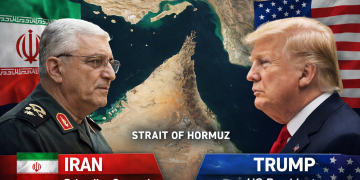



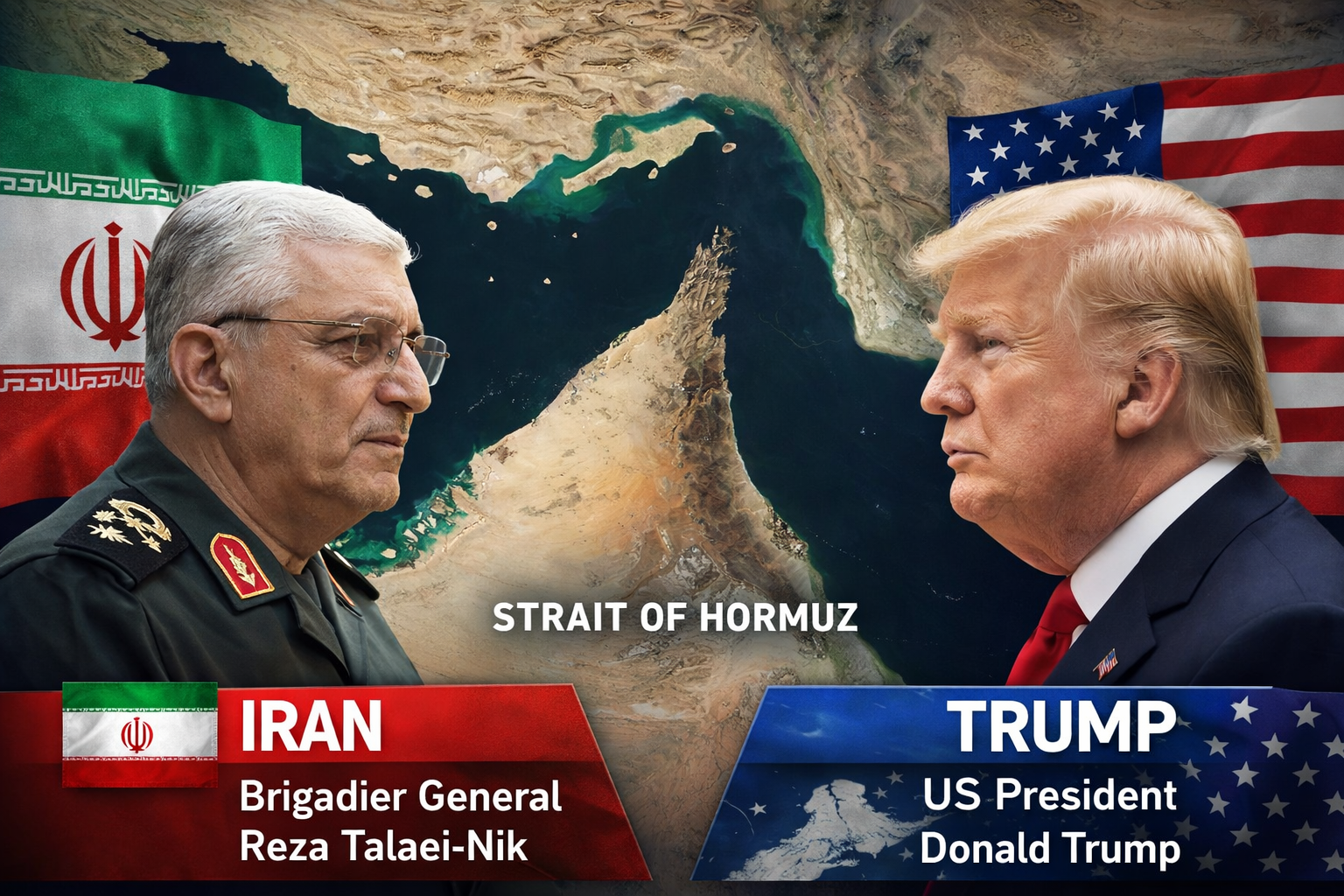
TEHRAN/WASHINGTON/ROME (News Desk) – Iran has cautioned against any military interference in the Strait of Hormuz, warning of serious consequences as the United States enforces a naval blockade and tensions deepen.
Read also: Ghalibaf declares Iran will not yield to pressure tactics
Iran warns against intervention in Hormuz as Trump enforces blockade and issues threats, while Pope controversy adds political dimension to escalating US-Iran tensions.
Iran’s Defence Ministry spokesperson Reza Talaei-Nik said any foreign military presence in the strategic waterway would heighten instability and threaten global energy security.
He stressed that Tehran retains responsibility for managing the Strait of Hormuz and warned that any aggression would be met with a firm and decisive response.
Meanwhile, US President Donald Trump confirmed that a naval blockade on Iranian ports has taken effect, warning that Iranian vessels approaching US forces would be destroyed.
Trump also claimed Iran is eager for negotiations, despite the collapse of recent talks over disagreements on nuclear issues.
The situation has further widened diplomatic rifts, with Italy’s Prime Minister Giorgia Meloni condemning Trump’s remarks about Pope Leo XIV as “unacceptable,” defending the pontiff’s calls for peace.
The developments follow failed negotiations and mark a sharp escalation in the ongoing crisis surrounding the vital oil transit route, raising fears of broader regional conflict and economic disruption.
Regional tensions intensified sharply after Iran announced new toll charges on vessels crossing the Strait of Hormuz, while US President Donald Trump responded by ordering an immediate naval blockade following failed negotiations.
Read also: Iran announces toll fee for all vessels passing through Strait of Hormuz
A volatile new phase in US-Iran relations has emerged, with Tehran asserting greater control over the strategic waterway and Washington escalating with military action.
Iran unveiled a contentious policy requiring all ships transiting the Strait of Hormuz to pay fees under a newly introduced control system — a move widely viewed as an attempt to strengthen its authority over one of the world’s most critical maritime routes.
Ebrahim Azizi, head of Iran’s parliamentary national security committee, said the measure is part of efforts to ensure full management of the passage in line with national interests. He also voiced continued distrust of the United States, framing the decision as both a sovereign right and strategic necessity.
At the same time, Iran is working to recover from recent US and Israeli strikes. Deputy Oil Minister Mohammad Sadegh stated that up to 70–80% of refining capacity could be restored within two months, with partial operations at the Lavan refinery expected to resume within 10 days.
Meanwhile, Washington has taken a hardline stance.
After Islamabad-mediated talks collapsed without agreement, President Trump directed the US Navy to begin an immediate blockade of the Strait of Hormuz, escalating tensions into a direct confrontation over the vital shipping corridor.
These rapid developments have pushed the region toward a critical tipping point, as both sides remain divided on key issues including nuclear policy, sanctions relief, and control of the waterway.
Experts warn that the Strait of Hormuz — a crucial artery for global oil supply — could become the center of a wider economic and military crisis if the situation deteriorates further.
With Iran tightening its grip and the US projecting military power, the unfolding standoff poses serious risks to global energy security and regional stability.