


By Dr Alamdar Hussain Malik
The recent decision by the federal government to replace Kamran Tessori with Nihal Hashmi as Governor of Sindh has sparked widespread debate across the country.
Read also: An ignored engine of economic growth
The development did not occur in isolation; it came amid visible tensions within coalition politics and growing criticism from the Muttahida Qaumi Movement (MQM), which has long sought recognition and inclusion in key federal decisions affecting urban Sindh. Importantly, MQM leadership has made it clear that the party was not consulted before the change, a decision that many observers see as a serious oversight given the party’s role as a federal ally and primary stakeholder in Karachi. This lack of consultation has intensified political reactions and raised questions about the timing and political sensitivity of the move, particularly as Pakistan navigates one of its most challenging periods of economic fragility, political polarization, and security concerns.
Pakistan today is experiencing one of the deepest political divides in its recent history. The political environment is marked by intense polarisation, confrontation, and a widening trust deficit among major political actors. Instead of dialogue and reconciliation, the national discourse is increasingly dominated by accusations and counter-accusations. In such an environment, even routine administrative decisions are closely scrutinized, and ignoring the voice of a key coalition partner like MQM risks sending a signal of political disregard, which could destabilise both provincial and federal governance.
The economic situation further compounds the challenge. Pakistan’s economy remains fragile, struggling with high inflation, slow economic growth, and rising unemployment. For ordinary citizens, the cost of living continues to rise while economic opportunities remain limited. Businesses operate in an atmosphere of uncertainty, investors remain cautious, and policymakers face enormous pressure to stabilise the economy and restore confidence.
At the same time, security concerns continue to demand national focus. The country has witnessed renewed security challenges in several regions, placing additional pressure on law enforcement agencies and security institutions. In such circumstances, political stability and national cohesion become indispensable for effective governance and for confronting security threats.
It is within this broader national context that the timing of the change in Sindh’s governorship assumes particular significance. Constitutionally, the governor serves as the representative of the federation in the province, expected to maintain institutional balance and facilitate coordination between federal and provincial governments. While the replacement of Kamran Tessori with Nihal Hashmi may be routine in formal terms, the failure to consult MQM—a key political stakeholder—has amplified political sensitivities and risked undermining coalition cohesion at a critical juncture.
The outgoing governor, Tessori, maintained a highly visible and outreach-oriented presence during his tenure. Through frequent public engagements, welfare initiatives, and youth-oriented programmes, he attempted to project the Governor House as an accessible institution. His style was energetic and media-driven, giving the office a strong public presence particularly in Karachi.
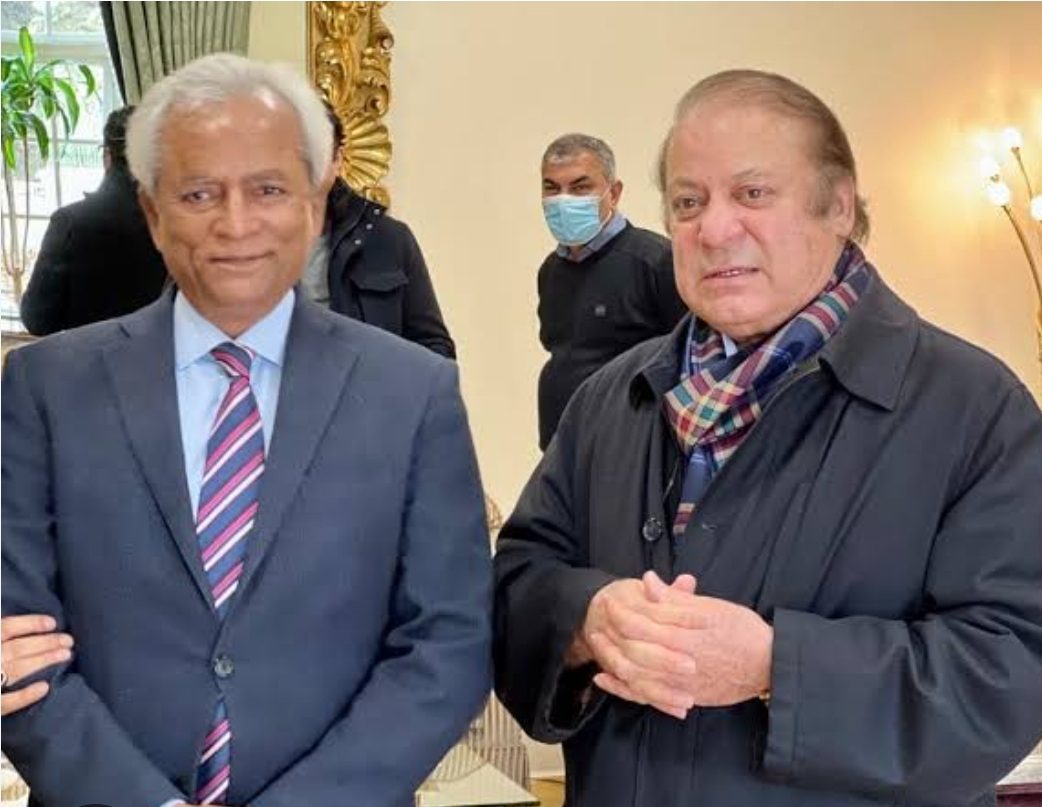
The incoming governor, Nihal Hashmi, brings a different political profile. A senior leader of the Pakistan Muslim League (N) and a former senator, Hashmi has long been associated with parliamentary politics and party organisation. His political career reflects a more conventional approach rooted in party structure and political advocacy.
MQM’s reaction underscores the seriousness of the issue. The party has strongly criticised the decision, highlighting not only the timing but also the complete exclusion from consultation. As an important federal ally and the primary representative of urban Sindh, MQM’s marginalisation in this decision risks weakening the federal coalition’s stability, undermining policy implementation, and creating political friction at a time when the nation cannot afford further distraction.
Such a decision also carries direct implications for Development Finance Institutions (DFIs) and federally-backed projects in Sindh. The governor’s office often plays a crucial role in facilitating approvals, monitoring implementation, and coordinating between federal authorities and provincial departments. Any friction with MQM or other local stakeholders could slow decision-making, delay project execution, and reduce investor confidence, particularly in urban development, industrial financing, and infrastructure initiatives. In practical terms, this could translate into slowed economic activity and inefficiency in key projects aimed at stabilizing both the local and national economy.
Karachi, the country’s principal financial and commercial hub, contributes a major share to national revenue through its ports, financial institutions, industrial zones, and commercial markets. Political stability in the city is therefore not merely a provincial concern but a national economic necessity.
Unrest or political tension in Karachi in any form is simply not affordable at this decisive juncture, and sidelining key partners like MQM increases the risk of unintended instability.
Pakistan’s political history demonstrates that the office of Governor Sindh has occasionally played an important role in maintaining political equilibrium in Karachi’s complex environment. Governors such as Ishrat-ul-Ibad Khan held the office for extended periods, contributing to the delicate balance among competing political forces in the province.
At a time when Pakistan urgently requires political stability to address economic challenges, unemployment, inflation, and security threats, political decisions that risk widening existing divisions appear ill-timed. The present moment demands unity, dialogue, and inclusive decision-making rather than moves that could alienate key coalition partners.
At this critical moment in Pakistan’s history, political leadership is judged not only by the authority it exercises but also by the wisdom, timing, and inclusivity of its decisions. Pakistan today requires stability in its economic centres, cooperation among coalition partners, and a shared commitment to national priorities. The country simply cannot afford political turbulence in its economic heart. For the federal government, maintaining the support of allied parties like MQM is not optional—it is central to ensuring effective governance in Sindh and the nation at large.