
• Latest
  • Trending
  • All
  • Pakistan
  • Business
  • World
  • Epaper
  • Opinion
  • Interview
  • Entertainment
  • News Analysis
  • Sports
  • FBR & Customs
  • Health
  • NGOs
  • Crime
Dairy expos — Sectoral reforms or just photo sessions?

Pakistan’s economy in shadow of political division

2 months ago
Iran Supreme Leader vows to protect nuclear, missile programs as Gulf tensions test ceasefire

Iran Supreme Leader vows to protect nuclear, missile programs as Gulf tensions test ceasefire

8 hours ago
ADVERTISEMENT
Oil prices drop and global markets recover after Trump signals talks to end Iran war

Govt raised petrol by Rs6.51 and diesel by Rs19.39 per litre, pushing prices near Rs400

19 hours ago
Pakistan’s economic future hinges on productivity-led reforms: IMF findings raise alarm; Lahore Chamber voices serious concern

Pakistan’s economic future hinges on productivity-led reforms: IMF findings raise alarm; Lahore Chamber voices serious concern

20 hours ago
Exports fall, foreign investment declines in latest economic outlook

Exports fall, foreign investment declines in latest economic outlook

20 hours ago
Epaper April 30, 2026

Epaper April 30, 2026

24 hours ago
CSS exam 2025 results announced, 355 candidates pass

CSS exam 2025 results announced, 355 candidates pass

1 day ago
Meesha Shafi challenges defamation ruling in Lahore High Court over Ali Zafar case

Meesha Shafi challenges defamation ruling in Lahore High Court over Ali Zafar case

1 day ago
Putin warns of ‘dire consequences’ if Iran fighting resumes after Putin–Trump call

Putin warns of ‘dire consequences’ if Iran fighting resumes after Putin–Trump call

1 day ago
LCCI urges review of infrastructure cess, stronger govt-business coordination

LCCI urges review of infrastructure cess, stronger govt-business coordination

2 days ago
CM Maryam Nawaz meets Oscar-Winning Filmmaker Sharmeen Obaid-Chinoy, agrees on Punjab Film City collaboration

CM Maryam Nawaz meets Oscar-Winning Filmmaker Sharmeen Obaid-Chinoy, agrees on Punjab Film City collaboration

2 days ago
Man carries sister’s skeleton to bank in Odisha, sparking outrage over bureaucratic hurdles

Man carries sister’s skeleton to bank in Odisha, sparking outrage over bureaucratic hurdles

2 days ago
Trump shares private talk with King Charles, raising protocol questions

Trump shares private talk with King Charles, raising protocol questions

2 days ago
Your text
  • Home
  • Top News
  • World
    • Interview
  • Pakistan
    • Politics
    • Crime
  • Iran-US-Israel war
  • Epaper
  • Opinion
  • Sports
    • Cricket
  • Business
    • Business
  • Entertainment
  • History in focus
    • Tech
    • Event News
    • Event Reporting
    • NGOs
  • Blog
Friday, May 1, 2026
The Tribune
  • Login
  • Home
  • Top News
  • World
    • Interview
  • Pakistan
    • Politics
    • Crime
  • Iran-US-Israel war
  • Epaper
  • Opinion
  • Sports
    • Cricket
  • Business
    • Business
  • Entertainment
  • History in focus
    • Tech
    • Event News
    • Event Reporting
    • NGOs
  • Blog
  • Weird
  • FBR & Customs
  • News Analysis
  • Health
  • Fake News
No Result
View All Result
  • Home
  • Top News
  • World
    • Interview
  • Pakistan
    • Politics
    • Crime
  • Iran-US-Israel war
  • Epaper
  • Opinion
  • Sports
    • Cricket
  • Business
    • Business
  • Entertainment
  • History in focus
    • Tech
    • Event News
    • Event Reporting
    • NGOs
  • Blog
  • Weird
  • FBR & Customs
  • News Analysis
  • Health
  • Fake News
No Result
View All Result
The Tribune
No Result
View All Result
  • Home
  • Top News
  • World
  • Pakistan
  • Iran-US-Israel war
  • Epaper
  • Opinion
  • Sports
  • Business
  • Entertainment
  • History in focus
  • Blog

Pakistan’s economy in shadow of political division

The Tribune International by The Tribune International
2 months ago
in Opinion
0 0
A A
0
0
SHARES
2
VIEWS
Share on FacebookShare on Twitter

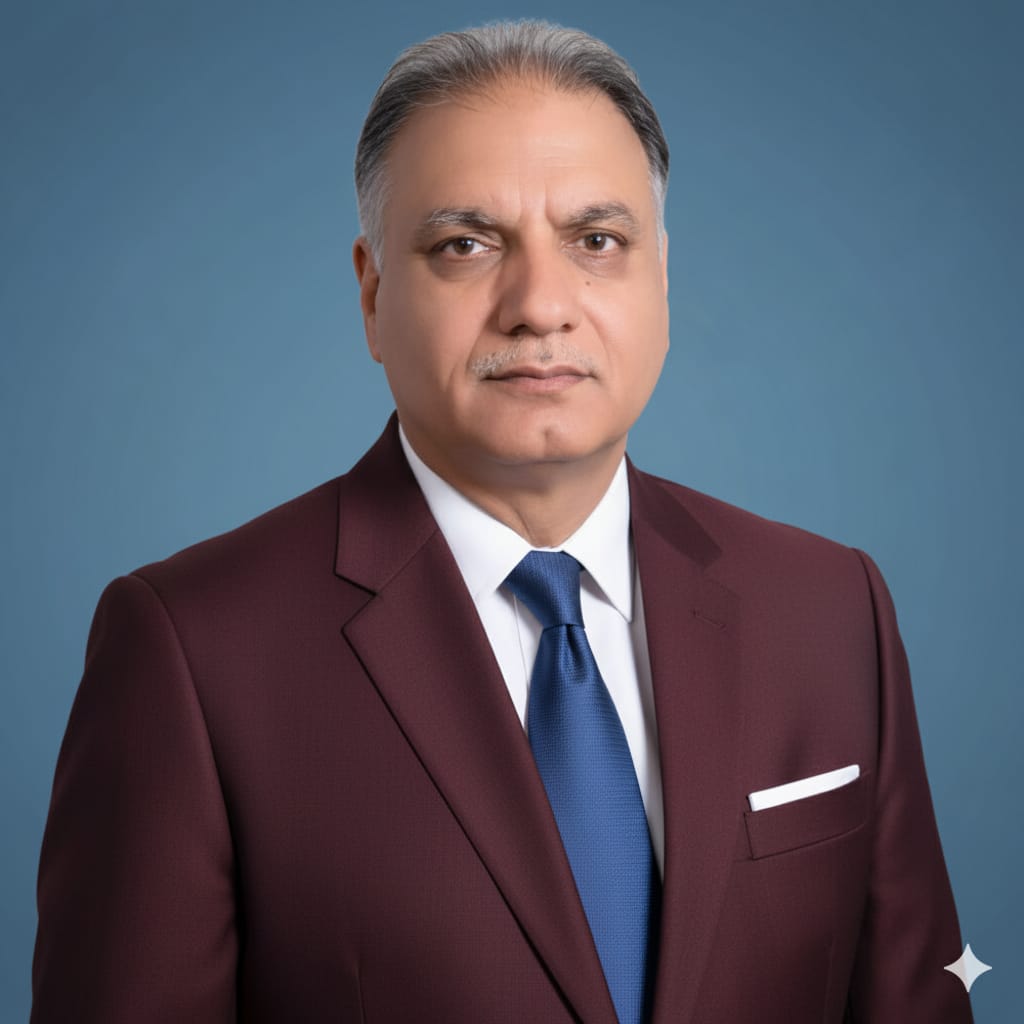
Dr Alamdar Hussain Malik


Pakistan’s economy has long struggled with structural weaknesses, but in recent years these challenges have been compounded by deep, corrosive political divisions that undermine governance and economic stability. Over the past decade, the country has witnessed repeated cycles of political confrontation, contested elections, mass protests, and frequent changes in government. Instead of fostering national consensus, major political parties have increasingly adopted adversarial and obstructive tactics, turning parliaments, media platforms, and public spaces into arenas of relentless conflict. Street protests, sit-ins, and politically motivated campaigns have become routine, often paralysing government functioning and blocking essential policy decisions. Political actors frequently prioritise short-term partisan gains over long-term national interests, leaving critical economic and social reforms in limbo. This unchecked, toxic rivalry fosters chaos, erodes public trust, corrodes democratic institutions, and disfigures the political landscape, making it nearly impossible to implement coherent and sustained economic strategies.

Read also: Unemployment threatens Pakistan’s veterinary profession

Under these circumstances, the apex courts of Pakistan play a pivotal role in maintaining political stability and upholding the rule of law.

Timely and impartial adjudication of political and election-related disputes can prevent prolonged crises, reduce uncertainty, and ensure that governance continues without disruption. Quick disposal of politically charged cases not only reinforces public confidence in democratic institutions but also provides the economic environment with much-needed predictability. In the absence of such judicial oversight, political rivalries often drag on, paralyse policy implementation, and exacerbate economic instability, further undermining national development.

In the face of ongoing regional and global tensions, including the conflicts involving Iran, Israel, and the United States, Pakistan cannot afford the luxury of internal political divisions. Endless partisan confrontations, governance paralysis, and delays in judicial resolution not only undermine economic stability but also weaken the country’s ability to respond effectively to external pressures. Every day of political chaos translates into lost investment, slowed industrial growth, and heightened vulnerability in a volatile region. Political maturity, swift decision-making, and national consensus are no longer optional—they are indispensable for safeguarding Pakistan’s economy, national security, and long-term prosperity.

RelatedPosts

Cheap water is not cheap

Attempt to hijack PVMC Act 1996: A direct assault on veterinary profession in Pakistan

A flood of degrees, a drought of jobs

The persistent political divide and delays in judicial resolution directly undermine investor confidence and foreign direct investment (FDI). When governments are unable to ensure policy continuity due to partisan conflict, investors perceive Pakistan as a high-risk environment. Decisions on industrial projects, infrastructure development, and export-oriented initiatives are often delayed or reversed, increasing costs and reducing expected returns. Judicial bottlenecks in politically sensitive cases further exacerbate uncertainty, leaving investors unsure about the enforceability of contracts and property rights. Political crises also create currency and market volatility, which raises the cost of capital and discourages both domestic and foreign investment. Historical evidence shows that periods of intense political confrontation, such as the crises surrounding the 2013 and 2018 elections, led to significant drops in investor inflows and slowed GDP growth.

Compared to neighbouring countries like India and Bangladesh, Pakistan’s tax-to-GDP ratio and FDI inflows remain far below potential, reflecting the high political risk premium investors perceive. As a result, Pakistan’s economic potential remains underutilised, and sustainable growth is repeatedly postponed.

The consequences of political turmoil extend far beyond governance. Long-term economic planning suffers as successive governments replace or reverse the policies of their predecessors, creating a cycle of uncertainty that undermines national growth. Critical sectors such as energy, industrial production, and agriculture require continuity of policy, yet the toxic political divide continually obstructs progress, leaving the country trapped in repetitive cycles of instability and reform delays. Frequent energy shortages and disruptions in industrial and export hubs illustrate how political instability translates directly into lost economic output and reduced employment opportunities.

Over the past few years, Pakistan has faced persistent macroeconomic pressures alongside this political chaos. Public debt has surged to alarming levels, now close to 70 percent of GDP, and a substantial portion of government revenues is consumed by debt servicing, leaving limited fiscal space for development spending in key sectors such as health, education, and infrastructure. Inflation, which exceeded 20 percent in previous years, has recently declined to 4–5 percent, but the earlier surge in prices significantly eroded household purchasing power and increased the cost of doing business. Pakistan’s tax-to-GDP ratio remains around 10–11 percent, well below the regional average, while the trade deficit continues to widen, with imports exceeding $80 billion against exports of just $35 billion, placing further strain on foreign exchange reserves.

One of the most critical aspects of Pakistan’s economic vulnerability is its continued reliance on international financial assistance, particularly from institutions such as the International Monetary Fund. Pakistan is currently operating under a financial support programme of around $7 billion, which has helped stabilise foreign exchange reserves and avoid a potential default. However, such programmes require difficult structural reforms, fiscal discipline, and policy continuity. Unfortunately, the implementation of these reforms frequently becomes entangled in domestic political disputes, delaying necessary economic adjustments.

The uncertainty created by political instability also places additional pressure on financial markets and the national currency.

Market sentiment is highly sensitive to political developments, and frequent crises can trigger volatility in currency exchange rates and investment flows. Such instability discourages long-term investment and increases borrowing costs for both the government and private sector. Ultimately, the burden of these economic disruptions falls on ordinary citizens through rising prices, reduced employment opportunities, and declining public services.

Pakistan’s experience clearly demonstrates that economic reforms cannot succeed in an environment of constant political confrontation. Sustainable economic development requires political maturity, institutional stability, and a shared commitment to national priorities. Many economists and policy experts have repeatedly emphasised the need for a “Charter of Economy,” a broad agreement among major political parties to support core economic policies regardless of which party is in power.

A national economic consensus could focus on critical areas such as fiscal discipline, export promotion, energy sector reforms, tax system improvement, and industrial development.

These reforms require consistent implementation over many years, which is only possible when political leadership across party lines agrees to place national economic stability above partisan competition. Without such consensus, Pakistan risks repeating cycles of economic crisis followed by temporary stabilisation and renewed instability.

Ultimately, the strength of any economy depends not only on financial resources or economic policies but also on the political environment in which those policies are implemented. Pakistan possesses significant economic potential, including a large domestic market, strategic geographic location, and a young workforce. However, this potential can only be realised if political divisions are managed responsibly and national interests take precedence over political rivalries.

Pakistan’s economic future hinges as much on political maturity as on sound economic policy.

Persistent political polarisation erodes investor confidence, delays reforms, and perpetuates uncertainty, leaving the country trapped in cycles of stagnation. While Pakistan possesses enormous potential — a large domestic market, strategic geographic location, abundant natural resources, and a young, dynamic workforce — this potential will remain unrealised unless political leadership rises above partisan rivalry and prioritises national interests. Sustainable economic prosperity is not merely a function of budgets, policies, or foreign aid; it is intrinsically linked to the ability of political institutions to operate responsibly, uphold the rule of law, and implement long-term reforms without obstruction. Every day of political chaos translates into lost investment, slower industrial growth, declining exports, and a heavier burden on ordinary citizens. In short, political stability is not optional — it is the indispensable foundation upon which Pakistan’s economic revival and long-term development must be built.

Only through a shared commitment to national priorities and constructive political engagement can Pakistan finally transform its potential into sustained economic progress for all its citizens.


ShareShareTweetShareSendSendShare

Get real time update about this post categories directly on your device, subscribe now.

Unsubscribe

Related Posts

Pakistan’s water crisis is not unique — How others fixed theirs
Opinion

Cheap water is not cheap

April 27, 2026
Attempt to hijack PVMC Act 1996: A direct assault on veterinary profession in Pakistan
Opinion

Attempt to hijack PVMC Act 1996: A direct assault on veterinary profession in Pakistan

April 26, 2026
A flood of degrees, a drought of jobs
Opinion

A flood of degrees, a drought of jobs

April 23, 2026 - Updated on April 24, 2026
Energy crisis and temporary measures: Where Pakistan stands and how long can it sustain 
Opinion

Governance gap: Why Pakistan trails despite vast resources

April 20, 2026
Pakistan calls for justice and dialogue at global parliamentary forum
Opinion

Pakistan calls for justice and dialogue at global parliamentary forum

April 20, 2026
Energy crisis and temporary measures: Where Pakistan stands and how long can it sustain 
Opinion

Transport shutdown in twin cities: Security imperatives vs public suffering

April 19, 2026
Iran Supreme Leader vows to protect nuclear, missile programs as Gulf tensions test ceasefire
Top News

Iran Supreme Leader vows to protect nuclear, missile programs as Gulf tensions test ceasefire

by The Tribune International
May 1, 2026
0

DUBAI, United Arab Emirates (Web Desk)  — Iran’s Supreme Leader Mojtaba Khamenei has issued a firm and defiant message, declaring...

Read moreDetails
Oil prices drop and global markets recover after Trump signals talks to end Iran war

Govt raised petrol by Rs6.51 and diesel by Rs19.39 per litre, pushing prices near Rs400

April 30, 2026
Pakistan’s economic future hinges on productivity-led reforms: IMF findings raise alarm; Lahore Chamber voices serious concern

Pakistan’s economic future hinges on productivity-led reforms: IMF findings raise alarm; Lahore Chamber voices serious concern

April 30, 2026
Exports fall, foreign investment declines in latest economic outlook

Exports fall, foreign investment declines in latest economic outlook

April 30, 2026
Epaper April 30, 2026

Epaper April 30, 2026

April 30, 2026
  • Trending
  • Comments
  • Latest
Pioneers Businessmen Group hosts grand iftar dinner in honour of Chairman Ali Hussam Asghar

Pioneers Businessmen Group hosts grand iftar dinner in honour of Chairman Ali Hussam Asghar

March 17, 2026 - Updated on March 21, 2026
Upgradation work at Badshahi Mosque to be completed after Eid: Dr Ehsan Bhutta

Upgradation work at Badshahi Mosque to be completed after Eid: Dr Ehsan Bhutta

March 18, 2026 - Updated on March 19, 2026
Business leaders attend Iftar dinner held in honour of Ali Hussam Asghar in Lahore

Business leaders attend Iftar dinner held in honour of Ali Hussam Asghar in Lahore

March 16, 2026 - Updated on March 18, 2026
Eid ul Fitr amid global conflict: A call for unity and humanitarian leadership in the Muslim World

Eid ul Fitr amid global conflict: A call for unity and humanitarian leadership in the Muslim World

March 18, 2026
Unrest in Iran kills at least 2,000 activists say

Unrest in Iran kills at least 2,000 activists say

4
High-alert security arrangements ensured across city during Eid-ul-Adha

CCPO Kamyana reviews police performance, orders crackdown on gambling and better security for Chinese nationals

2
CM Maryam launches PERA to curb hoarding, land grabbing across Punjab

CM Maryam launches PERA to curb hoarding, land grabbing across Punjab

2
CM Maryam Nawaz Sharif to start latest SRT Train in Lahore

CM Maryam Nawaz Sharif to start latest SRT Train in Lahore

2
Iran Supreme Leader vows to protect nuclear, missile programs as Gulf tensions test ceasefire

Iran Supreme Leader vows to protect nuclear, missile programs as Gulf tensions test ceasefire

May 1, 2026
Oil prices drop and global markets recover after Trump signals talks to end Iran war

Govt raised petrol by Rs6.51 and diesel by Rs19.39 per litre, pushing prices near Rs400

April 30, 2026
Pakistan’s economic future hinges on productivity-led reforms: IMF findings raise alarm; Lahore Chamber voices serious concern

Pakistan’s economic future hinges on productivity-led reforms: IMF findings raise alarm; Lahore Chamber voices serious concern

April 30, 2026
Exports fall, foreign investment declines in latest economic outlook

Exports fall, foreign investment declines in latest economic outlook

April 30, 2026
May 2026
MTWTFSS
 123
45678910
11121314151617
18192021222324
25262728293031
« Apr    

History

Categories

Newsletter

Iran Supreme Leader vows to protect nuclear, missile programs as Gulf tensions test ceasefire

Iran Supreme Leader vows to protect nuclear, missile programs as Gulf tensions test ceasefire

May 1, 2026
Oil prices drop and global markets recover after Trump signals talks to end Iran war

Govt raised petrol by Rs6.51 and diesel by Rs19.39 per litre, pushing prices near Rs400

April 30, 2026
Pakistan’s economic future hinges on productivity-led reforms: IMF findings raise alarm; Lahore Chamber voices serious concern

Pakistan’s economic future hinges on productivity-led reforms: IMF findings raise alarm; Lahore Chamber voices serious concern

April 30, 2026

Browse by Category

  • Business
  • Business
  • Cricket
  • Crime
  • Entertainment
  • Epaper
  • Event News
  • Event Reporting
  • Fake News
  • FBR & Customs
  • Health
  • History in focus
  • Interview
  • Iran-US-Israel war
  • Letter to Editor
  • Mobile
  • News Analysis
  • NGOs
  • Opinion
  • Pakistan
  • Politics
  • Sports
  • Tech
  • Top News
  • Weird
  • World
Currently Playing
Top News

Iran Supreme Leader vows to protect nuclear, missile programs as Gulf tensions test ceasefire

May 1, 2026
Iran Supreme Leader vows to protect nuclear, missile programs as Gulf tensions test ceasefire

DUBAI, United Arab Emirates (Web Desk)  — Iran’s Supreme Leader Mojtaba Khamenei has issued a firm and defiant message, declaring...

Read moreDetails
by The Tribune International
0 Comments
Business

Govt raised petrol by Rs6.51 and diesel by Rs19.39 per litre, pushing prices near Rs400

April 30, 2026
Oil prices drop and global markets recover after Trump signals talks to end Iran war

ISLAMABAD (News Desk) – The federal government has announced a significant increase in petroleum product prices, issuing a formal notification...

Read moreDetails
by The Tribune International
0 Comments
Business

Pakistan’s economic future hinges on productivity-led reforms: IMF findings raise alarm; Lahore Chamber voices serious concern

April 30, 2026
Pakistan’s economic future hinges on productivity-led reforms: IMF findings raise alarm; Lahore Chamber voices serious concern

By Commerce Reporter LAHORE — Recent findings from the International Monetary Fund present a stark assessment of Pakistan’s economic trajectory,...

Read moreDetails
by The Tribune International
0 Comments
  • #21289 (no title)
  • About Us
  • Blog
  • Blog
  • Cart
  • Checkout
  • Contact Us
  • Disclaimer
  • My account
  • Privacy Policy
  • Shop
  • Terms and Conditions
  • 📰 Advertise With Us

© 2026 The Tribune International. All rights reserved. | Powered by JNews
Disclaimer: The Tribune International is an independent platform and is not affiliated with any other organisation.
Reach us: Thetribuneintl@gmail.com

Welcome Back!

Sign In with Facebook
Sign In with Google
Sign In with Linked In
OR

Login to your account below

Forgotten Password?

Retrieve your password

Please enter your username or email address to reset your password.

Log In
Translate »

Add New Playlist

No Result
View All Result
  • Home
  • Top News
  • World
    • Interview
  • Pakistan
    • Politics
    • Crime
  • Iran-US-Israel war
  • Epaper
  • Opinion
  • Sports
    • Cricket
  • Business
    • Business
  • Entertainment
  • History in focus
    • Tech
    • Event News
    • Event Reporting
    • NGOs
  • Blog

© 2026 The Tribune International. All rights reserved. | Powered by JNews
Disclaimer: The Tribune International is an independent platform and is not affiliated with any other organisation.
Reach us: Thetribuneintl@gmail.com

This website uses cookies. By continuing to use this website you are giving consent to cookies being used. Visit our Privacy and Cookie Policy.