
• Latest
  • All
  • Pakistan
Dairy expos — Sectoral reforms or just photo sessions?

One exam for all services: An out dated model

February 19, 2026
Court extends interim bail of Dr Fazeela Abbasi in money laundering case

Dr Fazeela Abbasi granted extension in interim bail, arrest barred until May 5

April 20, 2026
ADVERTISEMENT
Dulha Dress House expands retail footprint with new outlet on Mall Road

Dulha Dress House expands retail footprint with new outlet on Mall Road

April 20, 2026
Alarm raised as trade deficit surges 23pc to $28billion

Alarm raised as trade deficit surges 23pc to $28billion

April 20, 2026
10-day ceasefire agreement between Israel and Lebanon announced

Israel vows ‘full force’ action in Lebanon despite truce, orders demolition of suspected Hezbollah sites

April 19, 2026
KP governor visits residence of  Punjab Assembly speaker, expressed condolences

KP governor visits residence of  Punjab Assembly speaker, expressed condolences

April 19, 2026
LCCI Progressive Group gains momentum as Ferozepur Road traders join associate class

LCCI Progressive Group gains momentum as Ferozepur Road traders join associate class

April 19, 2026
Quetta Gladiators choose to field after winning toss against Peshawar Zalmi

Quetta Gladiators choose to field after winning toss against Peshawar Zalmi

April 19, 2026
US and Iran set for second round of talks in Islamabad amid rising tensions

US and Iran set for second round of talks in Islamabad amid rising tensions

April 19, 2026 - Updated on April 20, 2026
Punjab hosts national marathon and cycling race in Lahore

Punjab hosts national marathon and cycling race in Lahore

April 19, 2026
Iran strongly repeated its promise to limit ships passing through area

Iran strongly repeated its promise to limit ships passing through area

April 19, 2026
Scholarship test 2026 held in Nankana Sahib attracts over 600 students

Scholarship test 2026 held in Nankana Sahib attracts over 600 students

April 19, 2026
Sikh pilgrims conclude Baisakhi visit, depart Pakistan via Wagah Border

Sikh pilgrims conclude Baisakhi visit, depart Pakistan via Wagah Border

April 19, 2026
Your text
Plugin Install : Cart Detail need WooCommerce plugin to be installed.
Monday, April 20, 2026
The Tribune
  • Login
  • Home
  • Top News
  • World
    • Interview
  • Pakistan
    • Politics
    • Crime
  • Iran-US-Israel war
  • Epaper
  • Opinion
  • Sports
    • Cricket
  • Business
    • Business
    • Science
      • Weird
        • News Analysis
      • FBR & Customs
  • Entertainment
  • History in focus
    • Tech
    • Event News
    • Event Reporting
    • NGOs
  • Health
  • Fake News
No Result
View All Result
  • Home
  • Top News
  • World
    • Interview
  • Pakistan
    • Politics
    • Crime
  • Iran-US-Israel war
  • Epaper
  • Opinion
  • Sports
    • Cricket
  • Business
    • Business
    • Science
      • Weird
        • News Analysis
      • FBR & Customs
  • Entertainment
  • History in focus
    • Tech
    • Event News
    • Event Reporting
    • NGOs
  • Health
  • Fake News
No Result
View All Result
The Tribune
No Result
View All Result
  • Home
  • Top News
  • World
  • Pakistan
  • Iran-US-Israel war
  • Epaper
  • Opinion
  • Sports
  • Business
  • Entertainment
  • History in focus

One exam for all services: An out dated model

The Tribune International by The Tribune International
2 months ago
in Opinion
0 0
A A
0
0
SHARES
0
VIEWS
Share on FacebookShare on Twitter

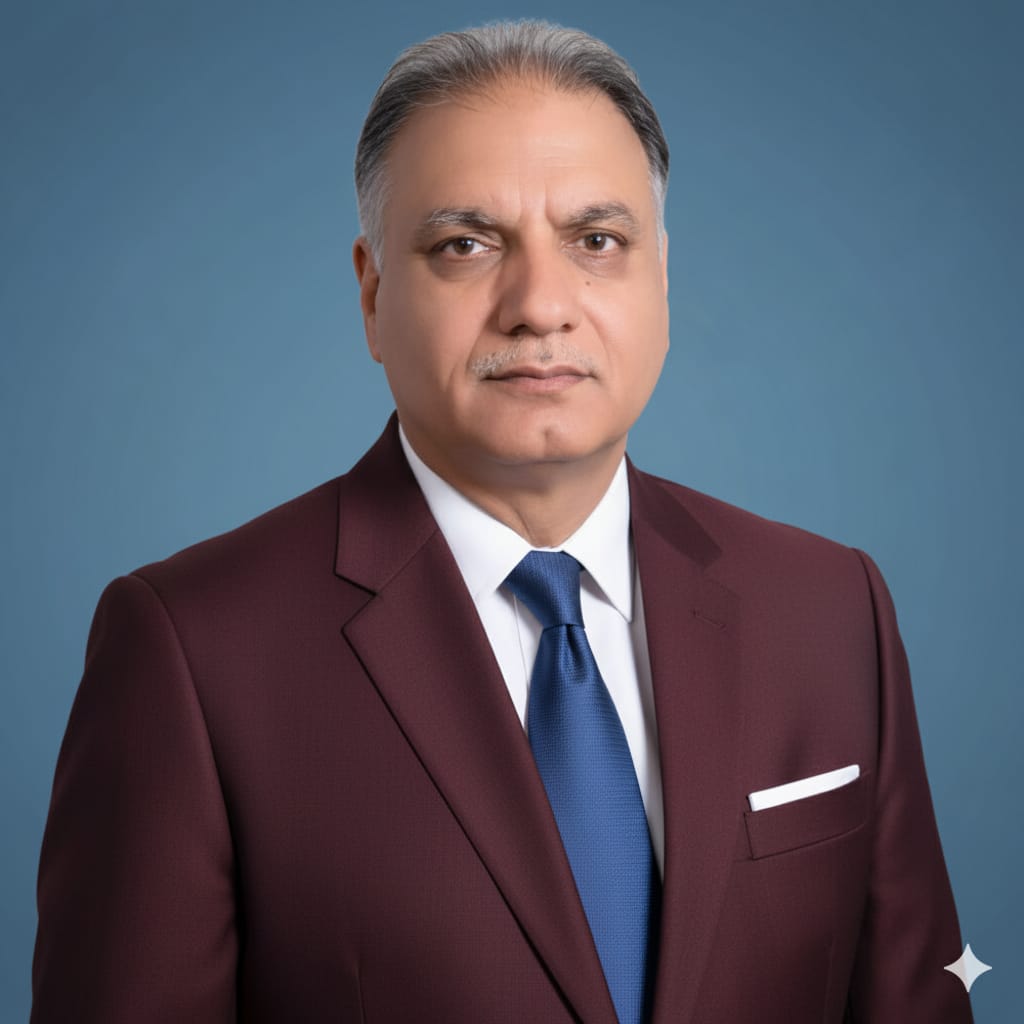
Dr Alamdar Hussain Malik


For decades, Pakistan has relied on a single centralized competitive examination as the primary gateway to its higher civil services. Conceived during the colonial administrative framework, the system was originally meant to produce a small group of generalist officers who would maintain law and order and manage routine revenue administration. At that time the state was limited in scope, technology was minimal, and governance required administrative supervision more than technical expertise. However, the responsibilities of a modern welfare and regulatory state are entirely different. Today the government manages economic planning, international trade, taxation systems, digital regulation, public health, climate policy, food security, energy markets, and financial oversight. Expecting one general examination to identify suitable officers for all these specialized functions is no longer realistic. What once worked for a simple administrative state now struggles to serve a complex modern nation.

Read also: Tit for tat in politics: Lethal for Pakistan’s economy

ADVERTISEMENT

Every year more than 20,000 candidates appear in the competitive examination. Their educational backgrounds are vastly diverse — medicine, engineering, economics, agriculture, veterinary sciences, English literature, Islamiat, Urdu, law, and accountancy. After months of preparation and a long selection process, only around 300 candidates succeed. Yet the real problem begins after success: allocation. On the basis of overall merit ranking, these candidates are placed into groups such as the Police Service, Foreign Service, Audit and Accounts, District Management, and Secretariat Service — regardless of whether their academic qualifications match the technical requirements of those services.

A medical graduate may be posted to foreign diplomacy. An engineer may enter district administration. A literature graduate may handle national financial audits. An agriculture or veterinary specialist may be posted to taxation, while an accounts professional may be placed in general administration. This mismatch between academic specialization and professional responsibility has quietly become one of the most serious structural weaknesses of Pakistan’s governance system.

Modern governance is no longer generalist governance. The state today manages complex domains: international trade negotiations, digital taxation, public finance, counter-terrorism, health systems, climate change, food security, infrastructure development, and technological regulation. Each of these areas demands technical knowledge. Administration alone is not enough; expertise is essential.

When an officer spends the first ten to fifteen years of service merely trying to understand the technical nature of the department, institutional efficiency naturally suffers.

Decision-making becomes slow, risk-averse, and heavily dependent on consultants. Files move, but problems remain unresolved. Policies are written, but implementation fails. The state then appears weak — not because officers lack intelligence, but because they lack relevant professional training.

This misallocation also wastes national educational investment. Pakistan spends enormous resources producing doctors, engineers, accountants, and scientists. Yet many of them, after entering civil services, never again use their professional knowledge. The country faces shortage of specialists in hospitals, industries, research, and regulatory bodies, while highly trained professionals sit in offices performing unrelated administrative duties. The nation loses twice: the department loses technical competence, and the profession loses trained manpower.

Furthermore, organisational failure often blamed on corruption or inefficiency is actually rooted in structural design. Institutions cannot perform better than the expertise they contain. A financial regulatory body requires financial experts. A diplomatic service requires international relations specialists and economists. Police leadership requires criminology, psychology, and security studies. Public health administration requires medical and epidemiological knowledge. When leadership lacks subject knowledge, policy decisions rely on guesswork rather than analysis.

The solution therefore is clear: each occupational group should have its own separate, specialized examination and recruitment process.

Candidates should apply directly to the service they intend to join. The Police Service should recruit candidates trained in criminology, law, psychology, and security studies. The Foreign Service should recruit graduates of international relations, economics, languages, and diplomacy. Audit and Accounts should recruit accounting and finance professionals. Administrative and secretariat services should recruit candidates educated in public administration, management, and governance.

Nature itself offers a simple illustration — birds of the same feathers fly together. In every organized system, similarity of training and purpose produces coordination and effectiveness. When professionals of similar academic background and aptitude work within the same service, they understand the technical language of their institution, share a common professional outlook, and solve problems more efficiently. Governance, like any complex organization, functions best when expertise aligns with responsibility.

Such a reform would immediately improve institutional performance.

An officer entering service with appropriate academic preparation would be in a position to understand departmental work from the very first day. Instead of spending years learning the basics, the officer could focus on policy improvement, innovation, and service delivery. Training academies would refine skills rather than compensate for knowledge gaps. Government organisations would begin functioning as professional institutions rather than learning centres.

This approach does not abolish merit; it strengthens merit. Merit is not merely scoring high in general papers. True merit is the alignment of ability, education, and responsibility. A person best suited for diplomacy should serve in diplomacy. A financial expert should manage national accounts. A technically trained officer should manage technical departments. The right placement converts intelligence into productivity.

Another benefit would be improved motivation. Officers serving in fields aligned with their education and interest demonstrate higher commitment, professional pride, and accountability. They see their service not merely as employment but as a career of expertise. Consequently, decision-making becomes confident and evidence-based rather than cautious and procedural.

Pakistan today faces economic pressures, administrative inefficiencies, and weak service delivery. Much discussion focuses on accountability, training, and structural reorganization, yet the most fundamental issue — recruitment design — remains ignored. If selection itself is misaligned, no amount of training courses, seminars, or monitoring mechanisms can fully correct the institutional weakness. Reform must begin at the point of entry.

The era when a single examination could produce every type of public servant has ended. A modern state requires specialized recruitment, professional competence, and purposeful allocation. Separate examinations for each occupational group will ensure that candidates possessing compatible education and aptitude enter the appropriate service and are ready to contribute from their first day in office. Such officers will not spend years learning what they should already know; they will spend those years solving problems the nation urgently needs resolved. Without aligning expertise with responsibility, administrative reform will remain incomplete and governance performance will continue to lag.

At the heart of governance lies a simple principle: effective government begins when the right person is appointed to the right job — and is capable of delivering from the very first day in service.



ShareShareTweetShareSendSendShare

Get real time update about this post categories directly on your device, subscribe now.

Unsubscribe
ADVERTISEMENT

Related Posts

Energy crisis and temporary measures: Where Pakistan stands and how long can it sustain 
Opinion

Transport shutdown in twin cities: Security imperatives vs public suffering

April 19, 2026
Historic visit to Tehran reflects strategic signaling and echoes past diplomacy
Opinion

Historic visit to Tehran reflects strategic signaling and echoes past diplomacy

April 17, 2026
Electricity crisis threatens Pakistan’s economy, industry and livelihoods
Opinion

Electricity crisis threatens Pakistan’s economy, industry and livelihoods

April 15, 2026
Faith, strategy and Pakistan’s evolving military role in the Muslim world
Opinion

Faith, strategy and Pakistan’s evolving military role in the Muslim world

April 15, 2026
Islamabad emerges as global diplomatic hub in high-stakes US–Iran Talks
Opinion

A step towards peace: Iran–US talks in Islamabad

April 13, 2026
Islamabad emerges as global diplomatic hub in high-stakes US–Iran Talks
Opinion

Islamabad emerges as global diplomatic hub in high-stakes US–Iran Talks

April 11, 2026
  • Trending
  • Comments
  • Latest
Pioneers Businessmen Group hosts grand iftar dinner in honour of Chairman Ali Hussam Asghar

Pioneers Businessmen Group hosts grand iftar dinner in honour of Chairman Ali Hussam Asghar

March 17, 2026 - Updated on March 21, 2026
Upgradation work at Badshahi Mosque to be completed after Eid: Dr Ehsan Bhutta

Upgradation work at Badshahi Mosque to be completed after Eid: Dr Ehsan Bhutta

March 18, 2026 - Updated on March 19, 2026
Business leaders attend Iftar dinner held in honour of Ali Hussam Asghar in Lahore

Business leaders attend Iftar dinner held in honour of Ali Hussam Asghar in Lahore

March 16, 2026 - Updated on March 18, 2026
Eid ul Fitr amid global conflict: A call for unity and humanitarian leadership in the Muslim World

Eid ul Fitr amid global conflict: A call for unity and humanitarian leadership in the Muslim World

March 18, 2026
Unrest in Iran kills at least 2,000 activists say

Unrest in Iran kills at least 2,000 activists say

4
High-alert security arrangements ensured across city during Eid-ul-Adha

CCPO Kamyana reviews police performance, orders crackdown on gambling and better security for Chinese nationals

2
CM Maryam launches PERA to curb hoarding, land grabbing across Punjab

CM Maryam launches PERA to curb hoarding, land grabbing across Punjab

2
CM Maryam Nawaz Sharif to start latest SRT Train in Lahore

CM Maryam Nawaz Sharif to start latest SRT Train in Lahore

2
Court extends interim bail of Dr Fazeela Abbasi in money laundering case

Dr Fazeela Abbasi granted extension in interim bail, arrest barred until May 5

April 20, 2026
Dulha Dress House expands retail footprint with new outlet on Mall Road

Dulha Dress House expands retail footprint with new outlet on Mall Road

April 20, 2026
Alarm raised as trade deficit surges 23pc to $28billion

Alarm raised as trade deficit surges 23pc to $28billion

April 20, 2026
10-day ceasefire agreement between Israel and Lebanon announced

Israel vows ‘full force’ action in Lebanon despite truce, orders demolition of suspected Hezbollah sites

April 19, 2026
April 2026
MTWTFSS
 12345
6789101112
13141516171819
20212223242526
27282930 
« Mar    
ADVERTISEMENT

Browse by Category

  • Apps
  • Business
  • Business
  • Cricket
  • Crime
  • Entertainment
  • Epaper
  • Event News
  • Event Reporting
  • Fake News
  • Fashion
  • FBR & Customs
  • Food
  • Gadget
  • Gaming
  • Health
  • History in focus
  • Interview
  • Iran-US-Israel war
  • Mobile
  • Movie
  • Music
  • News Analysis
  • NGOs
  • Opinion
  • Pakistan
  • Politics
  • Politics
  • Review
  • Science
  • Science
  • Sports
  • Startup
  • Tech
  • Top News
  • Travel
  • Weird
  • World
  • #21289 (no title)
  • About Us
  • Blog
  • Cart
  • Checkout
  • Contact Us
  • Disclaimer
  • My account
  • Privacy Policy
  • Shop
  • Terms and Conditions
  • 📰 Advertise With Us

© 2026 The Tribune International. All rights reserved. | Powered by JNews
Disclaimer: The Tribune International is an independent platform and is not affiliated with any other organisation.
Reach us: Thetribuneintl@gmail.com

Welcome Back!

Sign In with Facebook
Sign In with Google
Sign In with Linked In
OR

Login to your account below

Forgotten Password?

Retrieve your password

Please enter your username or email address to reset your password.

Log In
Translate »

Add New Playlist

No Result
View All Result
  • Home
  • Top News
  • World
    • Interview
  • Pakistan
    • Politics
    • Crime
  • Iran-US-Israel war
  • Epaper
  • Opinion
  • Sports
    • Cricket
  • Business
    • Business
    • Science
      • Weird
      • FBR & Customs
  • Entertainment
  • History in focus
    • Tech
    • Event News
    • Event Reporting
    • NGOs

© 2026 The Tribune International. All rights reserved. | Powered by JNews
Disclaimer: The Tribune International is an independent platform and is not affiliated with any other organisation.
Reach us: Thetribuneintl@gmail.com