
• Latest
  • All
  • Pakistan
Pakistan’s water crisis is not unique — How others fixed theirs

Pakistan’s water crisis: Stop writing, start enforcing

December 14, 2025
Sikh pilgrims conclude Baisakhi visit, depart Pakistan via Wagah Border

Sikh pilgrims conclude Baisakhi visit, depart Pakistan via Wagah Border

April 19, 2026
ADVERTISEMENT
Energy crisis and temporary measures: Where Pakistan stands and how long can it sustain 

Transport shutdown in twin cities: Security imperatives vs public suffering

April 19, 2026
Iran-India tensions escalate after vessel attack in Strait of Hormuz

Iran-India tensions escalate after vessel attack in Strait of Hormuz

April 18, 2026
Iran shuts Strait of Hormuz again amid US blockade tensions

Iran shuts Strait of Hormuz again amid US blockade tensions

April 18, 2026
Customs claims progress as LCCI warns of rising costs and system flaws

Customs claims progress as LCCI warns of rising costs and system flaws

April 18, 2026
‘Let businesses breathe’: LCCI urges end to load-shedding, PERA crackdown businesses

‘Let businesses breathe’: LCCI urges end to load-shedding, PERA crackdown businesses

April 18, 2026
New policy aims to unlock women’s economic power, SMEDA tells journalists

New policy aims to unlock women’s economic power, SMEDA tells journalists

April 18, 2026
Youth mental health takes centre stage at anti-drug campaign seminar

Youth mental health takes centre stage at anti-drug campaign seminar

April 18, 2026
US, Iran advance talks in Islamabad as expert teams exchange draft texts

Iran refutes US claim over nuclear material transfer

April 18, 2026
Hormuz Strait reopened for trade after ceasefire, says Iran’s Foreign Minister Abbas Araqchi

Hormuz Strait reopened for trade after ceasefire, says Iran’s Foreign Minister Abbas Araqchi

April 17, 2026 - Updated on April 18, 2026
Historic visit to Tehran reflects strategic signaling and echoes past diplomacy

Historic visit to Tehran reflects strategic signaling and echoes past diplomacy

April 17, 2026
Pope Leo XIV calls for peace, condemns ‘tyrants’

Pope Leo XIV calls for peace, condemns ‘tyrants’

April 16, 2026 - Updated on April 18, 2026
ADVERTISEMENT
Your text
Plugin Install : Cart Detail need WooCommerce plugin to be installed.
Sunday, April 19, 2026
The Tribune
  • Login
  • Home
  • Top News
  • World
    • Interview
  • Pakistan
    • Politics
    • Crime
  • Iran-US-Israel war
  • Epaper
  • Opinion
  • Sports
    • Cricket
  • Business
    • Business
    • Science
      • Weird
        • News Analysis
      • FBR & Customs
  • Entertainment
  • History in focus
    • Tech
    • Event News
    • Event Reporting
    • NGOs
  • Health
  • Fake News
No Result
View All Result
  • Home
  • Top News
  • World
    • Interview
  • Pakistan
    • Politics
    • Crime
  • Iran-US-Israel war
  • Epaper
  • Opinion
  • Sports
    • Cricket
  • Business
    • Business
    • Science
      • Weird
        • News Analysis
      • FBR & Customs
  • Entertainment
  • History in focus
    • Tech
    • Event News
    • Event Reporting
    • NGOs
  • Health
  • Fake News
No Result
View All Result
The Tribune
No Result
View All Result
  • Home
  • Top News
  • World
  • Pakistan
  • Iran-US-Israel war
  • Epaper
  • Opinion
  • Sports
  • Business
  • Entertainment
  • History in focus

Pakistan’s water crisis: Stop writing, start enforcing

The Tribune International by The Tribune International
4 months ago
in Opinion
0 0
A A
0
0
SHARES
0
VIEWS
Share on FacebookShare on Twitter


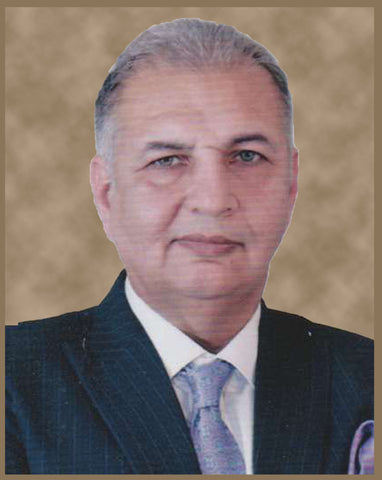
By Mohsin Leghari

When a country’s central bank devotes a full chapter to water, the crisis has moved beyond rainfall. In its 2016–17 Annual Report, the State Bank of Pakistan treated water sustainability as macroeconomic risk and pointed quietly but unmistakably towards the real fault line: distorted pricing, weak regulation, poor enforcement, and the absence of credible measurement.

Read also: Pakistan’s water crisis is not unique — How others fixed theirs

ADVERTISEMENT

Pakistan has achieved something rare twice in three decades: it forged genuine cross-provincial consensus on water. The 1991 Water Apportionment Accord pulled the federation back from a paralysing dispute and created a rules-based framework for sharing the Indus. In 2018, the National Water Policy (NWP) went further, setting Pakistan’s first integrated national framework for irrigation, cities, environment, hydropower and climate risk.

Both were celebrated as turning points. Both documents are, on paper, world-class, yet the lived reality keeps mocking the promise.
Today, Pakistan is already below, or hovering around, the conventional “scarcity” threshold of 1,000 cubic metres per person per year and still falling Yet even in years of “full reservoirs”, tail-end farmers watch canals die before the last outlets, aquifers continue to drop, and the delta continues to weaken. The focus has to shift from “not enough water” to “not enough governance”.

The NWP’s own baseline remains the most devastating diagnosis we have ever published. The Indus system receives about 138.4 million acre-feet (MAF) annually. Roughly 104 MAF is diverted at canal headworks, but only 58.3 MAF reaches the farm gate. The remaining 46.7 MAF nearly half of what is diverted disappears within the delivery system through seepage, operational spills, and unauthorised withdrawals.

Pakistan’s live storage buffer under 14 MAF, amounts to roughly one-tenth of average annual flows, compared to Global Average of about 35%, leaving the country exposed to droughts, heatwaves, and sudden variability. Meanwhile, the policy recorded what every citizen already sees: very low wastewater treatment, with cities discharging untreated effluent into rivers and drains. Add the unregulated mining of groundwater across much of the basin, and the picture is clear: this is not a “scarcity surprise”.

It is a governance choice repeated daily.
The policy did more than lament. It set yardsticks: reduce canal losses, add storage, strengthen institutions, install real-time telemetry for credible measurement, and move progressively towards cost recovery at least for operation and maintenance in productive uses.

Seven years later, the scorecard shows movement, but not transformation. Financing illustrates the pattern. For PSDP 2025–26, the government specified Rs 133.424 billion for ongoing hydel and water sector projects. At the same time, the water sector’s throw-forward has been reported around Rs 1.27 trillion—meaning annual allocations cover only a fraction of what is already in the pipeline.

This is exactly how long-gestation water portfolios stall: commitments pile up, allocations swing year to year, execution slows, costs rise, and the public is told to blame “nature”.
On storages, the story is more encouraging but still incomplete. Diamer-Basha and Mohmand are finally under construction. Their published project features show live storage of 6.40 MAF for Diamer-Basha and 0.676 MAF for Mohmand—together roughly 7 MAF of added live storage once commissioned This matters. But storages alone cannot substitute for fixing a delivery system that loses tens of MAF after diversion.

On measurement, the basis of inter-provincial trust, the gap is more corrosive. Telemetry was meant to end the age of “my gauge versus your gauge”. Instead, a revamped 27-site Indus telemetry system contract was awarded in 2024 with commissioning planned for December 2026. In a federation built on mistrust, delayed measurement is not a technical delay; it is a political accelerant.

And on the hardest reforms, pricing, groundwater regulation, and loss reduction progress remains minimal. Canal charges are still too low in real terms to fund proper maintenance. Groundwater licensing and metering remains absent across most of the basin. Urban utilities still struggle with revenue, leakages and enforcement. These are precisely the reforms that carry the highest political cost, and they remain the most deferred.
Why does paper keep losing to politics?
First, soft instruments lose to hard politics. The Accord is a political agreement; the Policy is policy. When short-term posturing collides with long-term national interest, paper loses. Second, authority is scattered across federal and provincial actors who seldom operate as one system. Third, there are no consequences: targets exist, but there are few binding timelines, penalties, or performance accountability. Fourth, money flows to ribbon-cutting projects more easily than to the unglamorous fundamentals like measurement, maintenance, drainage, wastewater treatment, and enforcement. Fifth, mistrust never went away: every dry season resurrects accusations, disputes over gauges, and competing “facts”.
Pakistan does not need a new grand document. It needs to give teeth to the two it already has.

Federally, the core inter-provincial rulebook, shares, shortage-sharing, transparent measurement, minimum environmental protections, and clear operating rules for storages—should be anchored in enforceable statute and procedures, not reopened as a political argument every season. IRSA’s authority should be clarified and strengthened, backed by credible measurement, independent audits, and time-bound dispute resolution.

Provincially, autonomy must stop being a slogan and become accountability. Within their shares, provinces should enforce groundwater regulation, realistic charging and collections for O&M, and incentives that reward efficiency rather than volume. Provinces can innovate differently. Punjab, Sindh, KP, Balochistan do not need identical instruments, but minimum standards should be common on transparency, environment, and basic rights.
Everything must rest on one set of numbers everyone can see. Real-time telemetry at every inter-provincial control point, tamper-resistant, independently audited, should be treated as foundational infrastructure, not optional technology. Data should be published live and summarised annually as “water accounts” laid before Parliament and all four provincial assemblies: who took how much, how it was used, what was invested, what improved, what deteriorated.
Then financing can finally follow performance. A modest slice of federal development funds and concessional finance can be tied to measurable benchmarks: functioning telemetry, notified and enforced groundwater rules in critical zones, treated effluent in major cities, verified environmental flows where mandated, and demonstrable improvement in tail-end reliability in selected canals.
In 1991 and again in 2018, Pakistan proved it can rise above parochialism to draft serious water compacts.

What it has never done is live by them. The documents are not the problem. Our refusal to treat them as binding contracts is. Until we match policy with enforcement—law, measurement, steady money, and consequences, Pakistan’s water story will remain what it is today: not a tragedy of nature, but a chronicle of unkept promises.


Tags: climate riskgroundwater depletionIndus Basinirrigation lossesIRSANational Water PolicyPakistan water crisiswater governancewater managementwater scarcity
ShareShareTweetShareSendSendShare

Get real time update about this post categories directly on your device, subscribe now.

Unsubscribe
ADVERTISEMENT

Related Posts

Energy crisis and temporary measures: Where Pakistan stands and how long can it sustain 
Opinion

Transport shutdown in twin cities: Security imperatives vs public suffering

April 19, 2026
Historic visit to Tehran reflects strategic signaling and echoes past diplomacy
Opinion

Historic visit to Tehran reflects strategic signaling and echoes past diplomacy

April 17, 2026
Electricity crisis threatens Pakistan’s economy, industry and livelihoods
Opinion

Electricity crisis threatens Pakistan’s economy, industry and livelihoods

April 15, 2026
Faith, strategy and Pakistan’s evolving military role in the Muslim world
Opinion

Faith, strategy and Pakistan’s evolving military role in the Muslim world

April 15, 2026
Islamabad emerges as global diplomatic hub in high-stakes US–Iran Talks
Opinion

A step towards peace: Iran–US talks in Islamabad

April 13, 2026
Islamabad emerges as global diplomatic hub in high-stakes US–Iran Talks
Opinion

Islamabad emerges as global diplomatic hub in high-stakes US–Iran Talks

April 11, 2026
  • Trending
  • Comments
  • Latest
Pioneers Businessmen Group hosts grand iftar dinner in honour of Chairman Ali Hussam Asghar

Pioneers Businessmen Group hosts grand iftar dinner in honour of Chairman Ali Hussam Asghar

March 17, 2026 - Updated on March 21, 2026
Upgradation work at Badshahi Mosque to be completed after Eid: Dr Ehsan Bhutta

Upgradation work at Badshahi Mosque to be completed after Eid: Dr Ehsan Bhutta

March 18, 2026 - Updated on March 19, 2026
Business leaders attend Iftar dinner held in honour of Ali Hussam Asghar in Lahore

Business leaders attend Iftar dinner held in honour of Ali Hussam Asghar in Lahore

March 16, 2026 - Updated on March 18, 2026
Eid ul Fitr amid global conflict: A call for unity and humanitarian leadership in the Muslim World

Eid ul Fitr amid global conflict: A call for unity and humanitarian leadership in the Muslim World

March 18, 2026
Unrest in Iran kills at least 2,000 activists say

Unrest in Iran kills at least 2,000 activists say

4
High-alert security arrangements ensured across city during Eid-ul-Adha

CCPO Kamyana reviews police performance, orders crackdown on gambling and better security for Chinese nationals

2
CM Maryam launches PERA to curb hoarding, land grabbing across Punjab

CM Maryam launches PERA to curb hoarding, land grabbing across Punjab

2
CM Maryam Nawaz Sharif to start latest SRT Train in Lahore

CM Maryam Nawaz Sharif to start latest SRT Train in Lahore

2
Sikh pilgrims conclude Baisakhi visit, depart Pakistan via Wagah Border

Sikh pilgrims conclude Baisakhi visit, depart Pakistan via Wagah Border

April 19, 2026
Energy crisis and temporary measures: Where Pakistan stands and how long can it sustain 

Transport shutdown in twin cities: Security imperatives vs public suffering

April 19, 2026
Iran-India tensions escalate after vessel attack in Strait of Hormuz

Iran-India tensions escalate after vessel attack in Strait of Hormuz

April 18, 2026
Iran shuts Strait of Hormuz again amid US blockade tensions

Iran shuts Strait of Hormuz again amid US blockade tensions

April 18, 2026
April 2026
MTWTFSS
 12345
6789101112
13141516171819
20212223242526
27282930 
« Mar    
ADVERTISEMENT

Browse by Category

  • Apps
  • Business
  • Business
  • Cricket
  • Crime
  • Entertainment
  • Epaper
  • Event News
  • Event Reporting
  • Fake News
  • Fashion
  • FBR & Customs
  • Food
  • Gadget
  • Gaming
  • Health
  • History in focus
  • Interview
  • Iran-US-Israel war
  • Mobile
  • Movie
  • Music
  • News Analysis
  • NGOs
  • Opinion
  • Pakistan
  • Politics
  • Politics
  • Review
  • Science
  • Science
  • Sports
  • Startup
  • Tech
  • Top News
  • Travel
  • Weird
  • World
  • #21289 (no title)
  • About Us
  • Blog
  • Cart
  • Checkout
  • Contact Us
  • Disclaimer
  • My account
  • Privacy Policy
  • Shop
  • Terms and Conditions
  • 📰 Advertise With Us

© 2026 The Tribune International. All rights reserved. | Powered by JNews
Disclaimer: The Tribune International is an independent platform and is not affiliated with any other organisation.
Reach us: Thetribuneintl@gmail.com

Welcome Back!

Sign In with Facebook
Sign In with Google
Sign In with Linked In
OR

Login to your account below

Forgotten Password?

Retrieve your password

Please enter your username or email address to reset your password.

Log In
Translate »

Add New Playlist

No Result
View All Result
  • Home
  • Top News
  • World
    • Interview
  • Pakistan
    • Politics
    • Crime
  • Iran-US-Israel war
  • Epaper
  • Opinion
  • Sports
    • Cricket
  • Business
    • Business
    • Science
      • Weird
      • FBR & Customs
  • Entertainment
  • History in focus
    • Tech
    • Event News
    • Event Reporting
    • NGOs

© 2026 The Tribune International. All rights reserved. | Powered by JNews
Disclaimer: The Tribune International is an independent platform and is not affiliated with any other organisation.
Reach us: Thetribuneintl@gmail.com