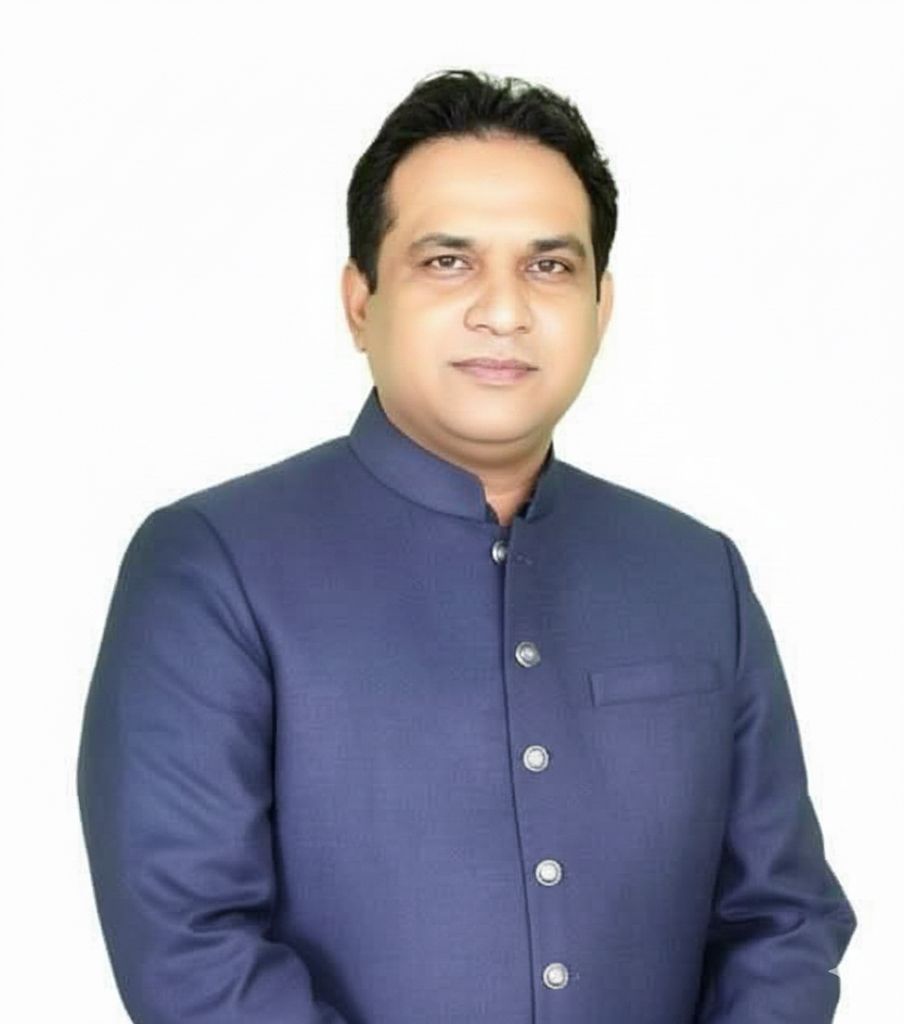



By Rana Farooq Ashraf
Pakistan stands at a critical economic crossroads. Decades of stop-gap policies, excessive taxation, weak industrialisation, and repeated dependence on the International Monetary Fund (IMF) have left the economy fragile and growth-starved. What the country needs today is not another short-term stabilisation package, but a growth-first economic charter — one that empowers industry, supports farmers, broadens the tax base rationally, and gradually frees Pakistan from external financial dependency.
Read also: Steady leadership reinforces democratic stability and political balance in Azad Kashmir
At the heart of economic revival lies access to affordable finance. Pakistan’s industrial and business sectors operate under one of the highest cost-of-capital environments in the region. High interest rates, limited long-term credit, and risk-averse banking practices have strangled entrepreneurship. No economy can grow sustainably when productive sectors borrow at punitive rates. Directed, low-cost financing for industry, SMEs, exporters, and agri-businesses must therefore become a central policy priority.
However, finance alone cannot unlock growth unless accompanied by structural tax reform. Pakistan’s tax regime is simultaneously narrow and oppressive — over-reliant on indirect taxes while burdening the documented sector disproportionately. Excessive sales taxes, withholding regimes, and advance taxes raise production costs, discourage formalisation, and ultimately shrink the tax base. A rational tax system should lower rates, remove cascading taxes, and expand the net through simplicity and predictability rather than coercion.
Indirect taxation, in particular, has become anti-growth. High GST rates, energy surcharges, and multiple levies inflate input costs and erode competitiveness. Export-oriented industries effectively export taxes along with goods. The solution lies in gradually shifting towards direct taxation, reducing exemptions, and ensuring that taxation rewards productivity rather than punishing compliance.
A genuinely industry-friendly environment requires more than slogans. Regulatory overreach, discretionary enforcement, and inconsistent policies have created uncertainty. Investors — domestic and foreign — need long-term visibility. Industrial policy must prioritise scale, value addition, and exports instead of rent-seeking and protectionism. Energy pricing, logistics, and customs procedures must align with global competitors, not against them.
The experience with the Special Investment Facilitation Council (SIFC) offers important lessons. While the intent to fast-track investment is commendable, high taxation within special frameworks, lack of transparency, and overlapping authorities have diluted its effectiveness. Incentives lose credibility when tax burdens remain structurally high. Investment facilitation must be embedded within broader reforms, not treated as an isolated administrative shortcut.
Pakistan’s over-dependence on the IMF is not accidental; it is the outcome of an anti-growth policy mix. IMF programmes focus on short-term fiscal tightening, often at the expense of growth. While stabilisation is necessary, repeated reliance on contractionary measures has weakened productive capacity. Sustainable exit from IMF programmes is only possible through export growth, industrial expansion, and domestic revenue generation rooted in growth rather than taxation shock therapy.
Agriculture, employing a large share of the population, remains under-leveraged. Productivity gaps, outdated practices, weak value chains, and limited agro-processing have kept farm incomes low. Pakistan urgently needs to shift from raw agriculture to agri-based industrialisation. Farmer-friendly schemes — including affordable credit, crop insurance, modern seed access, and assured pricing — can transform rural productivity while feeding downstream industries such as food processing, textiles, and bio-energy.
Industrial zones and export-oriented clusters such as Faisalabad’s industrial estates, Rashakai, Bhalwal, and free trade zones require serious revitalisation. These zones must offer real relief — not just land allotments but reliable utilities, tax rationalisation, logistics support, and regulatory simplicity. Without these fundamentals, zones remain speculative real estate rather than engines of growth.
The rollback and prolonged review of CPEC projects disrupted industrial momentum and investor confidence. Pakistan must now recalibrate CPEC with a clear industrial vision — focused on special economic zones, export manufacturing, technology transfer, and regional connectivity. Long-term planning, not political reversals, determines economic success.
Equally important is the introduction of a new-business tax amnesty framework, designed not to protect illicit wealth but to encourage fresh industrial investment. Such a scheme must be transparent, time-bound, and linked to real economic activity — factories, exports, jobs — rather than speculative assets.
Finally, Pakistan needs what India adopted in the early 1990s: a Business Charter. A national consensus between the state and the private sector on taxation principles, industrial policy, export promotion, and regulatory stability — insulated from political cycles. Growth requires continuity. Investors plan in decades, not election cycles.
Economic sovereignty will not come from austerity alone. It will come from growth, productivity, and confidence. Pakistan must choose policies that reward enterprise, not penalise it — and build an economy strong enough to stand without external crutches.