

• Latest
  • Trending
  • All
  • Pakistan
  • Business
  • World
  • Epaper
  • Opinion
  • Interview
  • Entertainment
  • News Analysis
  • Sports
  • FBR & Customs
  • Health
  • NGOs
  • Crime
Pakistan’s water crisis is not unique — How others fixed theirs

Why Pakistan’s water crisis is a choice, not fate

Empowering your financial journey 7 powerful lessons introverts can learn from Warren Buffett

Empowering your financial journey 7 powerful lessons introverts can learn from Warren Buffett

ADVERTISEMENT
Aaron Hardie’s all-round brilliance powers Peshawar Zalmi to second PSL title

Aaron Hardie’s all-round brilliance powers Peshawar Zalmi to second PSL title

Pakistan records one of largest recent fuel price increases globally, industry sources say

War impact or policy shift? Why fuel is so expensive in Pakistan now

Gamophobia: Word of the day

Gamophobia: Word of the day

Strict action promised against dumping as NTC chief backs tariff reforms to protect local industry

Strict action promised against dumping as NTC chief backs tariff reforms to protect local industry

Pak International Business Forum hails Pakistan-Iran transit trade move as boost to regional connectivity

Pak International Business Forum hails Pakistan-Iran transit trade move as boost to regional connectivity

Punjab’s Sugarcane Dev. Cess should be made equal to other provinces: PSMA

Export surplus sugar to cut trade deficit, says LCCI president

International Vesak Day observed in Pakistan with reverence

International Vesak Day observed in Pakistan with reverence

Iran says it is prepared for both peace talks and escalation

Iran says it is prepared for both peace talks and escalation

Word of the day: Thanatophobia

Word of the day: Thanatophobia

Loadshedding ends as LNG shipments arrive, minister warns of higher electricity costs

Loadshedding ends as LNG shipments arrive, minister warns of higher electricity costs

Labour Day: Workers’ rights and our collective responsibility

Labour Day: Workers’ rights and our collective responsibility

Iran Supreme Leader vows to protect nuclear, missile programs as Gulf tensions test ceasefire

Iran Supreme Leader vows to protect nuclear, missile programs as Gulf tensions test ceasefire

Oil prices drop and global markets recover after Trump signals talks to end Iran war

Govt raised petrol by Rs6.51 and diesel by Rs19.39 per litre, pushing prices near Rs400

Pakistan’s economic future hinges on productivity-led reforms: IMF findings raise alarm; Lahore Chamber voices serious concern

Pakistan’s economic future hinges on productivity-led reforms: IMF findings raise alarm; Lahore Chamber voices serious concern

Exports fall, foreign investment declines in latest economic outlook

Exports fall, foreign investment declines in latest economic outlook

Epaper April 30, 2026

Epaper April 30, 2026

CSS exam 2025 results announced, 355 candidates pass

CSS exam 2025 results announced, 355 candidates pass

Meesha Shafi challenges defamation ruling in Lahore High Court over Ali Zafar case

Meesha Shafi challenges defamation ruling in Lahore High Court over Ali Zafar case

Putin warns of ‘dire consequences’ if Iran fighting resumes after Putin–Trump call

Putin warns of ‘dire consequences’ if Iran fighting resumes after Putin–Trump call

LCCI urges review of infrastructure cess, stronger govt-business coordination

LCCI urges review of infrastructure cess, stronger govt-business coordination

CM Maryam Nawaz meets Oscar-Winning Filmmaker Sharmeen Obaid-Chinoy, agrees on Punjab Film City collaboration

CM Maryam Nawaz meets Oscar-Winning Filmmaker Sharmeen Obaid-Chinoy, agrees on Punjab Film City collaboration

Man carries sister’s skeleton to bank in Odisha, sparking outrage over bureaucratic hurdles

Man carries sister’s skeleton to bank in Odisha, sparking outrage over bureaucratic hurdles

Trump shares private talk with King Charles, raising protocol questions

Trump shares private talk with King Charles, raising protocol questions

Auqaf reforms earn recognition at Punjab Tourism Expo

Auqaf reforms earn recognition at Punjab Tourism Expo

German chancellor says Iran proved stronger than expected in conflict with US

German chancellor says Iran proved stronger than expected in conflict with US

Shahid Khaqan Abbasi says wrong fuel policies, weak governance hurting people and economy

Shahid Khaqan Abbasi says wrong fuel policies, weak governance hurting people and economy

Taylor Swift Vienna concert attack suspect pleads guilty in Austrian court

Taylor Swift Vienna concert attack suspect pleads guilty in Austrian court

PM Shehbaz, EU delegation vow to deepen trade ties, commend peace efforts

PM Shehbaz, EU delegation vow to deepen trade ties, commend peace efforts

  • Home
  • Top News
  • World
    • Interview
  • Pakistan
    • Politics
    • Crime
  • Iran-US-Israel war
  • Epaper
  • Opinion
  • Sports
    • Cricket
  • Business
    • Business
  • Entertainment
  • History in focus
    • Tech
    • Event News
    • Event Reporting
    • NGOs
  • Blog
  • #24159 (no title)
Monday, May 4, 2026
  • Login
The Tribune
  • Home
  • Top News
  • World
    • Interview
  • Pakistan
    • Politics
    • Crime
  • Iran-US-Israel war
  • Epaper
  • Opinion
  • Sports
    • Cricket
  • Business
    • Business
  • Entertainment
  • History in focus
    • Tech
    • Event News
    • Event Reporting
    • NGOs
  • Blog
  • #24159 (no title)
  • Weird
  • FBR & Customs
  • News Analysis
  • Health
  • Fake News
No Result
View All Result
  • Home
  • Top News
  • World
    • Interview
  • Pakistan
    • Politics
    • Crime
  • Iran-US-Israel war
  • Epaper
  • Opinion
  • Sports
    • Cricket
  • Business
    • Business
  • Entertainment
  • History in focus
    • Tech
    • Event News
    • Event Reporting
    • NGOs
  • Blog
  • #24159 (no title)
  • Weird
  • FBR & Customs
  • News Analysis
  • Health
  • Fake News
No Result
View All Result
The Tribune
No Result
View All Result
  • Home
  • Top News
  • World
  • Pakistan
  • Iran-US-Israel war
  • Epaper
  • Opinion
  • Sports
  • Business
  • Entertainment
  • History in focus
  • Blog
  • #24159 (no title)

Why Pakistan’s water crisis is a choice, not fate

The Tribune International by The Tribune International
4 months ago
in Opinion
0 0
A A
0
0
SHARES
0
VIEWS
Share on FacebookShare on Twitter


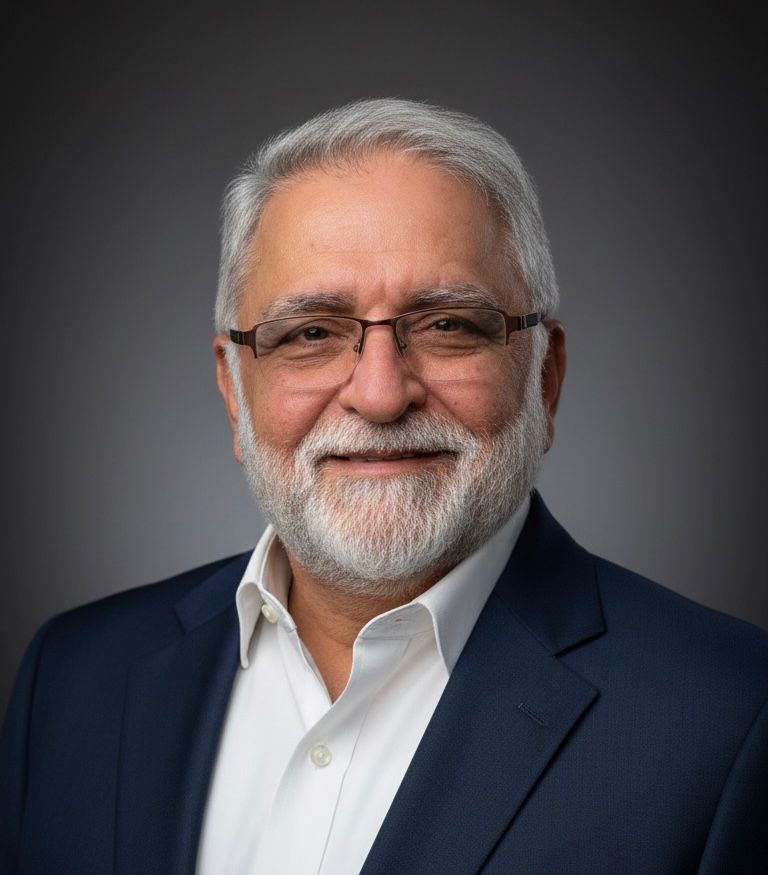
By Mohsin Leghari

On 8 December 2025, the Asian Development Bank’s Asian Water Development Outlook 2025 stripped away any remaining ambiguity. More than 80% of Pakistanis lack access to safe drinking water. Per-capita availability has fallen to around 1,100 cubic metres, well into scarcity territory. Unregulated groundwater extraction is not only depleting aquifers but spreading arsenic contamination across agricultural heartlands.

Read also: Pakistan’s water crisis: Stop writing, start enforcing

Yet the report’s most damning revelation is not physical scarcity; it is the near-stagnation of governance. Pakistan’s economic water security score crawled from 9.1 in 2013 to 10 in 2025 out of 100, while environmental water security regressed. The diagnosis is complete: Pakistan is no longer short of ideas or frameworks on paper; it is short of the institutional muscle to translate them into delivery. The “missing middle” between signed policy and a flowing tap.

That missing middle is visible across the federation. In Quetta, deeper bores each year are an admission that the city is living on borrowed groundwater, literally sinking as aquifers hollow out. In Karachi, water often arrives through a tanker market rather than a utility, and the tanker price becomes the real tariff. In the canal colonies of Punjab and Sindh, the tragedy belongs to the tail-ender: when the state fails to maintain channels or enforce warabandi turns, the farmer at the end replaces public delivery with a private tubewell, migrating his bill underground and trading diesel or subsidised electricity for a receding water table.

These are not separate crises. They are one governance failure wearing different clothes.

Pakistan is not short of institutional architecture. The 1991 Water Apportionment Accord remains a landmark federal bargain. The 2018 National Water Policy, approved by the Council of Common Interests, set out what modern water governance requires: credible accounting, institutional coordination, and groundwater regulation. Provincial instruments followed. Provinces showed legislative headways, Punjab’s Water Act (2019), Khyber Pakhtunkhwa’s Water Act (2020), and Sindh’s Water Policy (2023). But instruments are not operating systems. They do not restrain behaviour unless they produce routine measurement, routine compliance, and enforceable rules for stress years.

Measurement is the clearest example. Real-time telemetry was meant to create a single version of the truth. Khyber Pakhtunkhwa’s canal telemetry shows the technology can work when it is treated as administration, not an existential dispute. Nationally, the federal telemetry project, reported in the range of Rs21.5–23.8 billion and contracted in 2024, now targets commissioning in December 2026–27 amid lingering inter-provincial disagreement on placement and trust. Where data remains contested or delayed, “volume balance errors” become political resources, and trust evaporates first in any drought.

Three accelerating shifts now make this execution gap more dangerous than at any point in our history.

First, climate volatility has deleted the “average year” our infrastructure and political habits were built for. Catastrophic floods now alternate with punishing droughts. Without pre-agreed, transparent shortage-sharing rules accepted in times of plenty and applied automatically in times of want, every dry spell risks mutating into a federal crisis. A volatile climate cannot be governed by ad hoc bargaining.

Second, groundwater, for long Pakistan’s escape hatch has become a trap. When surface systems falter, pumping surges. This buffer kept farms productive and cities functioning, but it is now overdrawn and increasingly contaminated. The response cannot be a moral lecture, and it cannot be a fantasy of overnight shutdowns. It must be practical: stress mapping, protection of drinking-water zones, phased registration and licensing where feasible, and transition support that helps farmers shift to efficiency rather than simply absorb a new punishment.

Third, the solar paradox. The rapid shift to solar-powered pumping is a climate and energy win, yet it removes the only natural brake on extraction by driving marginal pumping costs toward zero. Without conditioning subsidies on measurable water outcomes, efficient irrigation, crop choices aligned with basin realities, and compliance in critical zones, we risk using renewable energy to accelerate permanent aquifer depletion. Energy policy is now water policy.

If the logic is this clear, why do we still stall? Because better governance and transparent accounting threatens those who benefit from opacity. Reliability at the tail threatens discretion and rent-seeking. Pricing threatens subsidies that have become political currency. And political leadership still gain prestige from ribbon-cutting on mega-projects, not the repetitive discipline of maintenance and enforcement. The result is drift: we underfund the basics, then act surprised when failure becomes normal.

The way forward must be one of principled pragmatism: clear outcomes, sequenced reforms, and early wins that build trust.

Make telemetry a national priority. Credible, shared measurement is the only defensible way to protect every province’s rightful share and reduce the politics of suspicion. Agree on standards, calibration, independent verification, and public reporting so that disputes shift from “whose numbers” to “which policy”.

Operationalise the 1991 Accord as an operating system, not a quotation. Publish allocation logic in plain language. Reduce discretion-by-ambiguity. Embed transparent stress-year rules that trigger by agreed thresholds, not political leverage.

Shift irrigation from projects to performance. Ring-fence maintenance budgets, adopt asset management, and publish service scorecards that reward reliability, especially at the tail end of canals. The cheapest “new water” Pakistan can access is the water it already diverts but loses or fails to deliver.

Govern groundwater urgently in critical zones. Use existing provincial laws to pilot controls where the aquifer is most stressed, with farmer engagement and transition support. Link all pumping support, solar finance and electricity relief to measurable efficiency outcomes. Subsidies without conditions are not compassion; they are delayed collapse.

Finally, activate oversight as routine governance, not emergency theatre. National coordination cannot remain ceremonial. The National Water Council must meet regularly, with clear targets, budgets, timelines, public reporting, and consequences for non-performance.

RelatedPosts

War impact or policy shift? Why fuel is so expensive in Pakistan now

Labour Day: Workers’ rights and our collective responsibility

Cheap water is not cheap

Attempt to hijack PVMC Act 1996: A direct assault on veterinary profession in Pakistan

A flood of degrees, a drought of jobs

Pakistan’s water future is not written in melting glaciers or erratic monsoons alone. It is written in institutional meeting minutes and political choices. We have the water, the policies, and examples of provincial progress. The question is whether we summon the courage to govern, to measure honestly, allocate transparently, maintain routinely, and enforce consistently before aquifers pass the point of recovery and the next shock becomes existential.

For the tail-end farmer, another meeting is a wasted hour. He needs the flow of the canal to match the promise of the calendar, and the assurance that his land remains a future for his children. For the urban resident, a policy launch is just noise; they need a utility that renders the water tanker obsolete. Pakistan’s water future will not be decided by hydrology, but by honesty. Governance is a choice, and right now, the choice must be for the people.
Tags: agriculture policyand compliance in critical zonesand early wins that build trust. Make telemetry a national priority. Credibleaquifer managementClimate Changecrop choices aligned with basin realitiesdrinking waterdrought managementefficient irrigationenvironmental policyflood managementgovernance reformshydrologyirrigationirrigation efficiencyNational Water Counciloverdrawn aquifersPakistan agriculturePakistan climatePakistan developmentprovincial coordinationprovincial water lawspublic utilitiessequenced reformssolar-powered pumpingsustainable water usetelemetryurban water supplywater accountabilitywater allocation ruleswater infrastructurewater managementwater monitoringwater planningwater policy reformwater regulationwater securitywater subsidieswater sustainability
SendShareShareTweetShareSendShare

Get real time update about this post categories directly on your device, subscribe now.

Unsubscribe
ADVERTISEMENT

Related Posts

Pakistan records one of largest recent fuel price increases globally, industry sources say
Opinion

War impact or policy shift? Why fuel is so expensive in Pakistan now

Labour Day: Workers’ rights and our collective responsibility
Opinion

Labour Day: Workers’ rights and our collective responsibility

Pakistan’s water crisis is not unique — How others fixed theirs
Opinion

Cheap water is not cheap

Attempt to hijack PVMC Act 1996: A direct assault on veterinary profession in Pakistan
Opinion

Attempt to hijack PVMC Act 1996: A direct assault on veterinary profession in Pakistan

A flood of degrees, a drought of jobs
Opinion

A flood of degrees, a drought of jobs

Energy crisis and temporary measures: Where Pakistan stands and how long can it sustain 
Opinion

Governance gap: Why Pakistan trails despite vast resources

May 2026
M T W T F S S
 123
45678910
11121314151617
18192021222324
25262728293031
« Apr    

History

Categories

Browse by Category

  • Business
  • Business
  • Cricket
  • Crime
  • Entertainment
  • Epaper
  • Event News
  • Event Reporting
  • Fake News
  • FBR & Customs
  • Health
  • History in focus
  • Interview
  • Iran-US-Israel war
  • Letter to Editor
  • Mobile
  • News Analysis
  • NGOs
  • Opinion
  • Pakistan
  • Politics
  • Sports
  • Tech
  • Top News
  • Weird
  • Word of the day
  • World
  • Pioneers Businessmen Group hosts grand iftar dinner in honour of Chairman Ali Hussam Asghar

    Pioneers Businessmen Group hosts grand iftar dinner in honour of Chairman Ali Hussam Asghar

    0 shares
    Share 0 Tweet 0
  • Upgradation work at Badshahi Mosque to be completed after Eid: Dr Ehsan Bhutta

    0 shares
    Share 0 Tweet 0
  • Business leaders attend Iftar dinner held in honour of Ali Hussam Asghar in Lahore

    0 shares
    Share 0 Tweet 0
  • Eid ul Fitr amid global conflict: A call for unity and humanitarian leadership in the Muslim World

    0 shares
    Share 0 Tweet 0
  • From ‘Greater Israel’ to ‘Akhand Bharat’: A dangerous plan faces Pakistan’s iron-clawed defense

    0 shares
    Share 0 Tweet 0
  • About Us
  • Blog
  • Blog
  • Cart
  • Checkout
  • Contact Us
  • Disclaimer
  • My account
  • Privacy Policy
  • Shop
  • Terms and Conditions
  • 📰 Advertise With Us

© 2026 The Tribune International. All rights reserved. | Powered by JNews
Disclaimer: The Tribune International is an independent platform and is not affiliated with any other organisation.
Reach us: Thetribuneintl@gmail.com

Welcome Back!

Sign In with Facebook
Sign In with Google
Sign In with Linked In
OR

Login to your account below

Forgotten Password?

Retrieve your password

Please enter your username or email address to reset your password.

Log In
Translate »

Add New Playlist

No Result
View All Result
  • Home
  • Top News
  • World
    • Interview
  • Pakistan
    • Politics
    • Crime
  • Iran-US-Israel war
  • Epaper
  • Opinion
  • Sports
    • Cricket
  • Business
    • Business
  • Entertainment
  • History in focus
    • Tech
    • Event News
    • Event Reporting
    • NGOs
  • Blog
  • #24159 (no title)

© 2026 The Tribune International. All rights reserved. | Powered by JNews
Disclaimer: The Tribune International is an independent platform and is not affiliated with any other organisation.
Reach us: Thetribuneintl@gmail.com

This website uses cookies. By continuing to use this website you are giving consent to cookies being used. Visit our Privacy and Cookie Policy.