


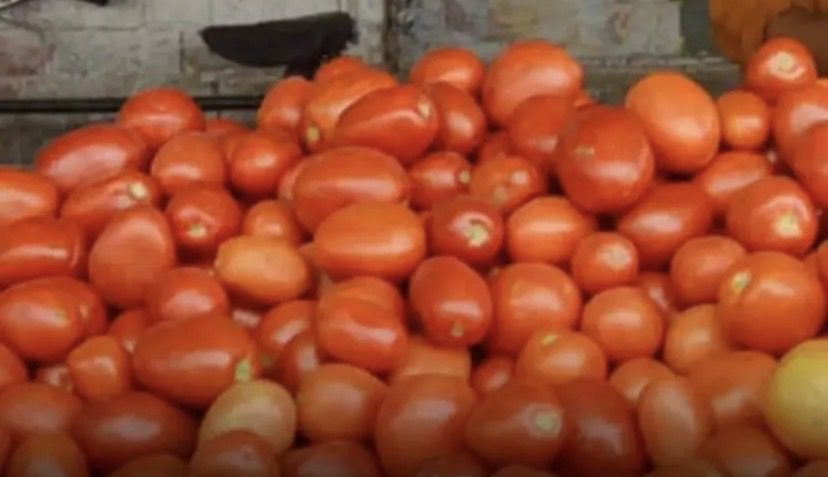
KARACHI (Web Desk) – Tomato prices have reached unprecedented levels in Karachi, with retail rates climbing to as high as Rs500 per kilogram, adding to the financial strain on households already coping with rising food costs. The sharp increase has continued despite the arrival of imported tomatoes from Iran, which many consumers had hoped would help stabilize prices.
Retail markets across the city are currently offering Iranian and Quetta-grown tomatoes at prices ranging between Rs450 and Rs500 per kilogram. In several neighbourhood markets, shoppers are paying Rs110 to Rs125 for a quarter kilogram, making tomatoes one of the most expensive vegetables available.
Traders say limited supplies, increased transportation costs, and strong market demand have prevented prices from falling even after imported consignments entered wholesale markets. While additional shipments have improved availability, they have not been sufficient to create a significant reduction in retail prices.
Some vegetable vendors are selling smaller-sized, lower-grade, or partially unripe tomatoes for around Rs400 per kilogram. However, consumers say the lower-priced produce is often of inferior quality and unsuitable for many household cooking needs.
The continued increase has become a major concern for families, as tomatoes are considered an essential ingredient in daily meals. Many shoppers have started reducing their purchases or turning to alternative vegetables in an effort to manage household budgets.
Market dealers believe that wholesale prices remain elevated because of supply chain pressures and higher operational expenses. Transportation charges, handling costs, and fluctuating availability from production areas have all contributed to keeping retail prices well above normal levels.
Consumers visiting vegetable markets across Karachi expressed frustration over the sustained price hike, saying that the arrival of imported tomatoes had created expectations of immediate relief. Instead, retail prices have remained close to record levels, limiting purchasing power for many low- and middle-income households.
Wholesale traders maintain that prices could begin easing if imports continue steadily and local production improves in the coming weeks. A larger supply entering the market would increase competition among sellers and could gradually push retail rates downward.
Agricultural experts note that vegetable prices often fluctuate because of seasonal production patterns, weather conditions, transportation disruptions, and changing demand. When domestic supplies decline, Pakistan frequently relies on imports to bridge the gap until fresh local crops become available.
Retailers also point to higher fuel and logistics expenses, saying these costs are ultimately reflected in consumer prices. They argue that maintaining quality during transportation and storage has become more expensive, particularly for perishable items such as tomatoes.
Food inflation has remained a significant challenge for households in recent months, with prices of several essential vegetables and grocery items experiencing frequent changes. Consumers are increasingly comparing prices across different markets in search of more affordable options, although differences between localities remain limited.
Market observers believe tomato prices will depend largely on the volume of future imports and improvements in domestic supplies. If larger consignments continue arriving and weather conditions support local harvesting, prices may gradually stabilize. However, any disruption in supply or increase in transportation costs could keep retail rates elevated.
For now, shoppers in Karachi continue to face high tomato prices despite imported supplies reaching city markets. Consumers and traders alike are hoping for improved availability in the coming weeks, which could bring much-needed relief and restore prices to more affordable levels.


