


By Our Correspondent
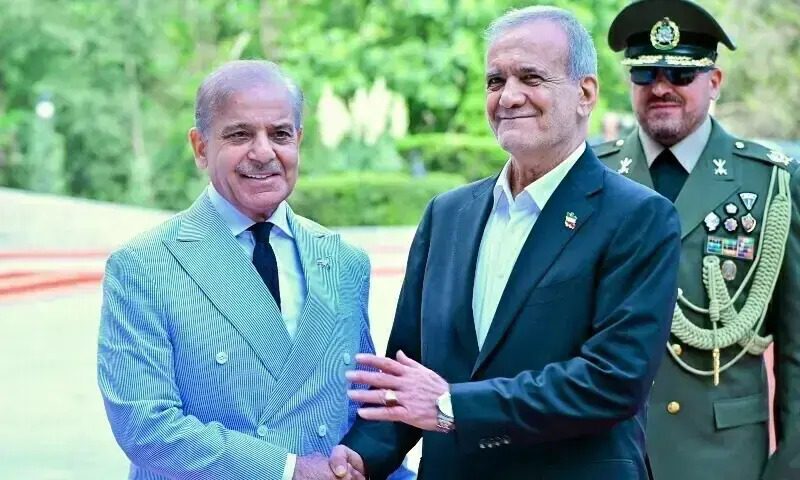
ISLAMABAD: Prime Minister Shehbaz Sharif on Thursday told Iranian President Masoud Pezeshkian that the recently signed Islamabad Memorandum of Understanding (MoU) could play a significant role in rebuilding Iran and promoting long-term peace across the region.
According to a statement issued by the Prime Minister’s Office (PMO), the two leaders held a telephone conversation lasting more than 30 minutes, their first direct contact since the signing of the agreement aimed at ending hostilities between Iran and the United States.
During the conversation, Prime Minister Shehbaz congratulated President Pezeshkian, the Iranian leadership and the people of Iran on what he described as a historic peace agreement. He said the accord had the potential not only to reduce tensions in the Middle East but also to create conditions for economic recovery and reconstruction in Iran after months of conflict.
The premier noted that the agreement could help restore regional stability, revive economic activity and strengthen bilateral relations between Pakistan and Iran in areas including trade, energy, security and regional connectivity.
Shehbaz also welcomed Tehran’s decision to pursue a diplomatic solution and expressed hope that the next phase of negotiations would lead to a comprehensive and durable settlement. He reaffirmed Pakistan’s support for Iran as a neighbouring and brotherly country and pledged continued cooperation on issues of mutual interest.
The prime minister further conveyed his best wishes to Iran’s Supreme Leader, Ayatollah Ali Khamenei, and reiterated Pakistan’s commitment to peace, dialogue and regional development.
According to the PMO, President Pezeshkian thanked Prime Minister Shehbaz and Pakistan’s military leadership for their role in facilitating diplomatic engagement during a period of heightened tensions. He acknowledged Pakistan’s efforts to encourage dialogue and said Tehran appreciated the support extended by Islamabad during difficult circumstances.
The Iranian president reportedly described Pakistan’s contribution to the mediation process as constructive and valuable, adding that Iran would continue to remember the country’s support. He also expressed a desire to expand cooperation with Pakistan across a range of sectors, including commerce, investment and regional affairs.
Both leaders agreed to maintain close contact in the coming days and discussed the possibility of exchanging official visits at the earliest opportunity to further strengthen bilateral ties.
The Islamabad MoU, signed earlier this week by President Pezeshkian, US President Donald Trump and Prime Minister Shehbaz Sharif in his role as mediator, outlines a framework for ending more than 100 days of conflict between Washington and Tehran.
Under the agreement, both sides have committed to a phased process that includes reopening the Strait of Hormuz, easing restrictions affecting maritime trade and beginning negotiations aimed at achieving a broader settlement within 60 days.
The accord has been welcomed internationally as a major diplomatic breakthrough. Observers believe it could help ease uncertainty in global energy markets, improve regional security and create opportunities for economic recovery across the Middle East.
Officials in Islamabad view the development as an important step towards strengthening peace and stability while highlighting Pakistan’s growing diplomatic role in promoting dialogue and conflict resolution.


