



By M Qadeer
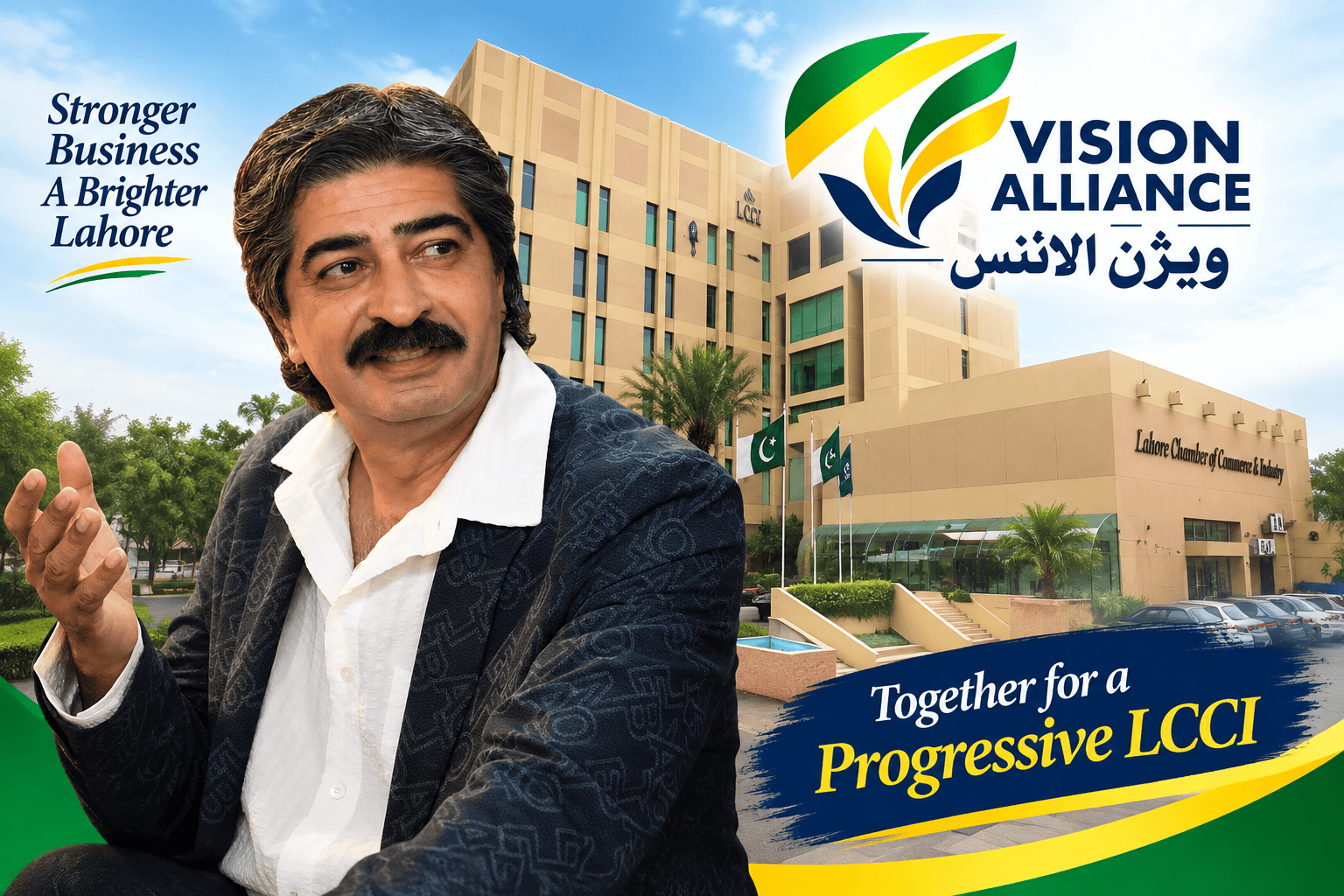
LAHORE: Former Lahore Chamber of Commerce and Industry (LCCI) Vice President Shahid Nazir Chaudhry has voiced support for the Vision Alliance ahead of the LCCI elections, saying the chamber needs experienced leadership capable of representing traders, manufacturers, exporters, importers and SMEs.
Nazir, who is not contesting the election himself, said his support for the alliance was based on his long association with the business community and his assessment of the leadership being offered to LCCI members.
According to the LCCI profile, Nazir has more than four decades of experience in trading and imports and has served as an LCCI executive committee member and vice president. He has also been associated with business and trade organisations and has experience in customs, taxation, import regulations and banking matters.
In an interview, Nazir discussed the forthcoming chamber election, the challenges confronting Lahore’s business community and his reasons for supporting the Vision Alliance and its leadership.
Q: You are not contesting this year’s election. What prompted you to become active in the campaign?
Shahid Nazir: I have spent many years associated with the LCCI and the wider business community. The chamber has always been an important platform for raising the concerns of businessmen before government institutions.
Although I am not contesting this election, I believe that people with experience in business and chamber affairs have a responsibility to remain engaged. My decision to support the Vision Alliance comes from my confidence in its leadership and the direction it is presenting to the business community.
The LCCI belongs to its members. Every group and every candidate should ultimately be judged by their experience, programme and ability to represent the business community.
Q: Why have you placed your confidence in Ali Hussam Asghar?
Shahid Nazir: Ali Hussam Asghar has considerable experience of the LCCI and the business community. He has previously served as a senior office-bearer of the chamber and has remained involved in business issues.
Leadership of the LCCI requires an understanding of both the marketplace and institutional engagement. A chamber president has to deal with government departments, regulators, financial institutions and business associations.
I believe Ali Hussam Asghar understands these dynamics. His experience can help the chamber present business issues in a structured and effective manner.
Q: What are the biggest challenges facing the business community today?
Shahid Nazir: The business community is facing multiple challenges. The cost of doing business, taxation, energy prices, regulatory procedures, access to finance and difficulties faced by SMEs are among the issues that require continuous attention.
Businesses need a predictable policy environment. Entrepreneurs make investments based on calculations extending several years into the future. If policies change frequently or businesses face uncertainty, investment decisions become difficult.
The LCCI should therefore maintain continuous dialogue with policymakers and present practical proposals rather than simply highlighting problems.
Q: What should be the approach of the next LCCI leadership toward the government?
Shahid Nazir: The relationship should be based on constructive engagement. The LCCI must represent the interests of its members firmly, but at the same time it should provide workable solutions.
During my own association with the chamber, I have seen that government officials are more receptive when the business community presents properly documented proposals supported by facts and industry input.
The chamber should remain an institutional bridge between the private sector and government.
Q: How important are SMEs in the chamber’s agenda?
Shahid Nazir: SMEs are extremely important. A large number of entrepreneurs begin with small businesses and gradually expand their operations.
However, smaller businesses often face difficulties in obtaining finance, dealing with regulatory requirements and adopting modern technology.
The LCCI should make sure that the voice of small businesses is not overshadowed by larger companies. A chamber should provide representation across the entire business spectrum.
Q: What about traders?
Shahid Nazir: Traders are an integral part of Lahore’s economy. Lahore has major markets representing almost every segment of commerce.
The problems of traders can be different from those of manufacturers or exporters. They may face issues relating to taxation, documentation, municipal regulations, market infrastructure and law-and-order conditions.
The LCCI should maintain regular contact with market associations and ensure that their concerns reach the relevant authorities.
Q: You have yourself served as an LCCI office-bearer. What have you learned from that experience?
Shahid Nazir: Chamber leadership requires patience and continuous engagement. You cannot solve business problems by making statements alone.
You have to meet officials, understand regulations, consult affected businesses and follow up on decisions.
When I served at the LCCI, I saw that many problems were complicated because several government departments were involved. The chamber therefore needs people who understand how to pursue an issue through the proper institutional channels.
Q: What role should the LCCI play in taxation issues?
Shahid Nazir: Taxation is one of the most important issues for businesses. The objective should be to broaden the tax base while creating a system that is understandable and workable for businesses.
The chamber should consult its members before major tax proposals and communicate their concerns to policymakers.
At the same time, businesses must also recognise their responsibilities. A strong economy requires both a functioning tax system and an environment in which businesses can operate competitively.
Q: Energy costs are another major concern. What should the chamber do?
Shahid Nazir: Energy is a fundamental component of production and commerce. High energy costs affect manufacturers directly, but they also affect traders and consumers through increased operating and transportation costs.
The LCCI should continue presenting data showing how energy costs affect different sectors and should advocate policies that improve competitiveness.
The objective should not simply be to demand concessions. The chamber should propose sustainable solutions that benefit businesses while remaining workable for the national economy.
Q: How important are exports to Lahore’s economic future?
Shahid Nazir: Exports should remain a major priority. Pakistan needs foreign exchange, and exporters play an important role in generating it.
However, exporters cannot compete internationally if their production costs are substantially higher than those of competitors in other countries.
We need policies that improve productivity, reduce unnecessary regulatory hurdles and encourage value-added exports.
The LCCI can play an important role by identifying barriers faced by exporters and presenting sector-specific recommendations.
Q: What do you expect from the Vision Alliance if its candidates are elected?
Shahid Nazir: I would expect the leadership to remain accessible to members and to maintain regular consultation.
The business community does not need promises alone. It needs follow-up and measurable progress.
The chamber should establish clear priorities and communicate regularly with its members about the issues being pursued before government institutions.
I also believe different business groups should be brought together. Unity does not mean that everyone will agree on every issue, but the chamber should provide a platform where differences can be discussed constructively.
Q: You have described Ali Hussam Asghar as a leader with experience. What particular qualities do you believe are required in the next leadership?
Shahid Nazir: Experience is important, but it must be combined with accessibility, consultation and commitment.
A chamber leader should listen to businessmen from different sectors. He should understand that the concerns of an exporter may differ from those of a retailer, manufacturer or small trader.
Leadership should also be willing to engage with government institutions and remain persistent when pursuing an issue.
Q: What message would you like to give to LCCI voters?
Shahid Nazir: I would encourage every eligible voter to participate in the election and carefully examine the candidates and their programmes.
As someone who has spent many years in the business community, I have expressed my confidence in the Vision Alliance and Ali Hussam Asghar’s leadership. I believe members should examine the competing teams, their experience and their stated priorities before making their choice.
The LCCI is an important institution, and its direction affects businesses across Lahore.
Q: Why do you believe business unity is important at this stage?
Shahid Nazir: Business unity is essential because individual businesses often cannot resolve major policy issues on their own.
When traders, manufacturers, exporters, importers and SMEs present common concerns through a recognised institution, their position can be communicated more effectively.
However, unity should not mean suppressing differences. The chamber should accommodate different views and develop consensus wherever possible.
Q: What should be the relationship between the LCCI and market associations?
Shahid Nazir: It should be continuous and practical. Market associations understand grassroots business problems because their members deal with them every day.
The LCCI should regularly consult these associations rather than waiting for an issue to become a crisis.
Similarly, market associations should use the chamber as an institutional platform for presenting their concerns.
Q: What would you say about the importance of continuity in chamber policies?
Shahid Nazir: Continuity is very important. Every new leadership should build upon useful initiatives already undertaken rather than starting from zero.
The chamber has accumulated considerable institutional knowledge over the years. New leaders should benefit from that experience and improve existing systems.
At the same time, they should introduce new initiatives where the business environment has changed.
Q: Finally, what is your overall message regarding the forthcoming election?
Shahid Nazir: This election is an important opportunity for LCCI members to consider the future direction of their chamber.
I have made my position clear. I support the Vision Alliance and have confidence in Ali Hussam Asghar’s leadership.
But ultimately, every LCCI member has the right and responsibility to examine the candidates, understand their programmes and participate in the electoral process.
The chamber should emerge from the election with a leadership committed to serving the entire business community. Whether it is taxation, energy, exports, SMEs, regulatory reforms or market issues, the real test will be the ability to turn commitments into practical engagement and results.
The LCCI’s strength comes from its members, and its leadership should remain accountable to them.


