

• Latest
  • Trending
  • All
  • Pakistan
  • Business
  • World
  • Epaper
  • Opinion
  • Interview
  • Entertainment
  • News Analysis
  • Sports
  • FBR & Customs
  • Health
  • NGOs
  • Crime
Middle East on the brink: Escalating war threatens global stability

Petroleum levy: The real burden behind Pakistan’s petrol price hike

Empowering your financial journey 7 powerful lessons introverts can learn from Warren Buffett

Empowering your financial journey 7 powerful lessons introverts can learn from Warren Buffett

ADVERTISEMENT
Aaron Hardie’s all-round brilliance powers Peshawar Zalmi to second PSL title

Aaron Hardie’s all-round brilliance powers Peshawar Zalmi to second PSL title

Pakistan records one of largest recent fuel price increases globally, industry sources say

War impact or policy shift? Why fuel is so expensive in Pakistan now

Gamophobia: Word of the day

Gamophobia: Word of the day

Strict action promised against dumping as NTC chief backs tariff reforms to protect local industry

Strict action promised against dumping as NTC chief backs tariff reforms to protect local industry

Pak International Business Forum hails Pakistan-Iran transit trade move as boost to regional connectivity

Pak International Business Forum hails Pakistan-Iran transit trade move as boost to regional connectivity

Punjab’s Sugarcane Dev. Cess should be made equal to other provinces: PSMA

Export surplus sugar to cut trade deficit, says LCCI president

International Vesak Day observed in Pakistan with reverence

International Vesak Day observed in Pakistan with reverence

Iran says it is prepared for both peace talks and escalation

Iran says it is prepared for both peace talks and escalation

Word of the day: Thanatophobia

Word of the day: Thanatophobia

Loadshedding ends as LNG shipments arrive, minister warns of higher electricity costs

Loadshedding ends as LNG shipments arrive, minister warns of higher electricity costs

Labour Day: Workers’ rights and our collective responsibility

Labour Day: Workers’ rights and our collective responsibility

Iran Supreme Leader vows to protect nuclear, missile programs as Gulf tensions test ceasefire

Iran Supreme Leader vows to protect nuclear, missile programs as Gulf tensions test ceasefire

Oil prices drop and global markets recover after Trump signals talks to end Iran war

Govt raised petrol by Rs6.51 and diesel by Rs19.39 per litre, pushing prices near Rs400

Pakistan’s economic future hinges on productivity-led reforms: IMF findings raise alarm; Lahore Chamber voices serious concern

Pakistan’s economic future hinges on productivity-led reforms: IMF findings raise alarm; Lahore Chamber voices serious concern

Exports fall, foreign investment declines in latest economic outlook

Exports fall, foreign investment declines in latest economic outlook

Epaper April 30, 2026

Epaper April 30, 2026

CSS exam 2025 results announced, 355 candidates pass

CSS exam 2025 results announced, 355 candidates pass

Meesha Shafi challenges defamation ruling in Lahore High Court over Ali Zafar case

Meesha Shafi challenges defamation ruling in Lahore High Court over Ali Zafar case

Putin warns of ‘dire consequences’ if Iran fighting resumes after Putin–Trump call

Putin warns of ‘dire consequences’ if Iran fighting resumes after Putin–Trump call

LCCI urges review of infrastructure cess, stronger govt-business coordination

LCCI urges review of infrastructure cess, stronger govt-business coordination

CM Maryam Nawaz meets Oscar-Winning Filmmaker Sharmeen Obaid-Chinoy, agrees on Punjab Film City collaboration

CM Maryam Nawaz meets Oscar-Winning Filmmaker Sharmeen Obaid-Chinoy, agrees on Punjab Film City collaboration

Man carries sister’s skeleton to bank in Odisha, sparking outrage over bureaucratic hurdles

Man carries sister’s skeleton to bank in Odisha, sparking outrage over bureaucratic hurdles

Trump shares private talk with King Charles, raising protocol questions

Trump shares private talk with King Charles, raising protocol questions

Auqaf reforms earn recognition at Punjab Tourism Expo

Auqaf reforms earn recognition at Punjab Tourism Expo

German chancellor says Iran proved stronger than expected in conflict with US

German chancellor says Iran proved stronger than expected in conflict with US

Shahid Khaqan Abbasi says wrong fuel policies, weak governance hurting people and economy

Shahid Khaqan Abbasi says wrong fuel policies, weak governance hurting people and economy

Taylor Swift Vienna concert attack suspect pleads guilty in Austrian court

Taylor Swift Vienna concert attack suspect pleads guilty in Austrian court

PM Shehbaz, EU delegation vow to deepen trade ties, commend peace efforts

PM Shehbaz, EU delegation vow to deepen trade ties, commend peace efforts

  • Home
  • Top News
  • World
    • Interview
  • Pakistan
    • Politics
    • Crime
  • Iran-US-Israel war
  • Epaper
  • Opinion
  • Sports
    • Cricket
  • Business
    • Business
  • Entertainment
  • History in focus
    • Tech
    • Event News
    • Event Reporting
    • NGOs
  • Blog
  • #24159 (no title)
Monday, May 4, 2026
  • Login
The Tribune
  • Home
  • Top News
  • World
    • Interview
  • Pakistan
    • Politics
    • Crime
  • Iran-US-Israel war
  • Epaper
  • Opinion
  • Sports
    • Cricket
  • Business
    • Business
  • Entertainment
  • History in focus
    • Tech
    • Event News
    • Event Reporting
    • NGOs
  • Blog
  • #24159 (no title)
  • Weird
  • FBR & Customs
  • News Analysis
  • Health
  • Fake News
No Result
View All Result
  • Home
  • Top News
  • World
    • Interview
  • Pakistan
    • Politics
    • Crime
  • Iran-US-Israel war
  • Epaper
  • Opinion
  • Sports
    • Cricket
  • Business
    • Business
  • Entertainment
  • History in focus
    • Tech
    • Event News
    • Event Reporting
    • NGOs
  • Blog
  • #24159 (no title)
  • Weird
  • FBR & Customs
  • News Analysis
  • Health
  • Fake News
No Result
View All Result
The Tribune
No Result
View All Result
  • Home
  • Top News
  • World
  • Pakistan
  • Iran-US-Israel war
  • Epaper
  • Opinion
  • Sports
  • Business
  • Entertainment
  • History in focus
  • Blog
  • #24159 (no title)

Petroleum levy: The real burden behind Pakistan’s petrol price hike

The Tribune International by The Tribune International
2 months ago
in Opinion
0 0
A A
0
0
SHARES
2
VIEWS
Share on FacebookShare on Twitter


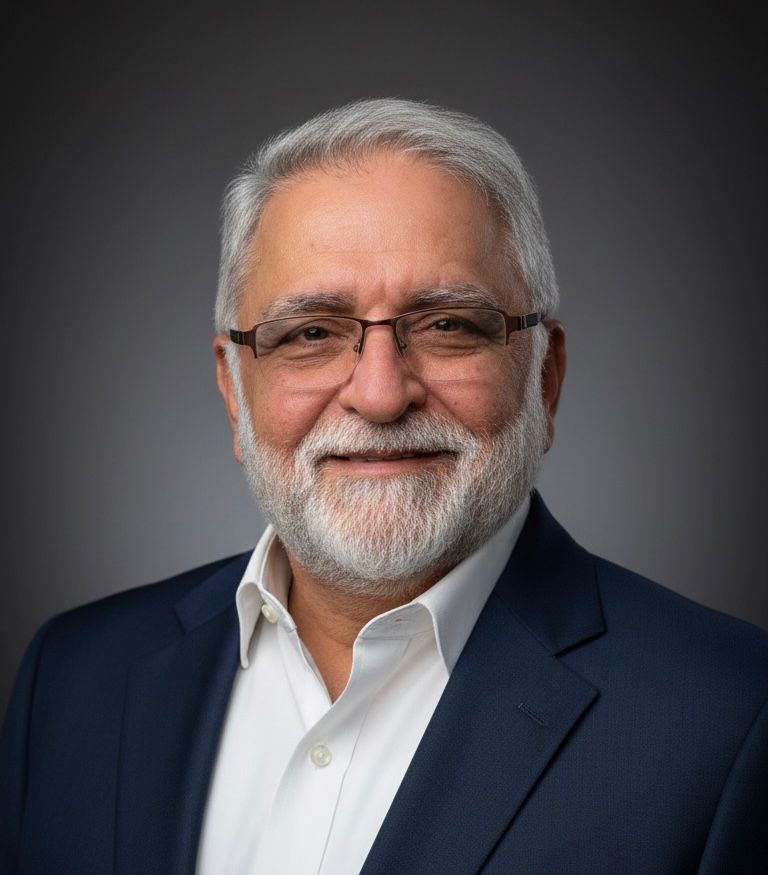
Dr Alamdar Hussain Malik


Pakistan’s economy has been under immense pressure from rising inflation, dwindling foreign reserves, and persistent trade imbalances, while households grapple with limited purchasing power. Against this backdrop, the government has increasingly relied on petroleum levy as a major revenue source rather than cutting unnecessary expenditures or reforming inefficient public spending.

Read also: Rs.55 petrol hike hits debt-ridden Pakistan: Who will shoulder the burden?

Currently, Pakistan collects around rupees 84 per litre as petroleum levy on petrol and roughly rupees 76 per litre on high-speed diesel, making fuel heavily taxed. Added to this are dealer commissions, distribution costs and marketing margins — together contributing another PKR 15–20 per litre — meaning that a large portion of what consumers pay at the pump is government revenue, not the base cost of fuel itself.

The government’s decision in March 2026 to raise petrol prices by approximately PKR 55 per litre, bringing the price to around PKR 321 per litre, sent shockwaves across the economy. This sharp hike — nearly a 20 % increase in a single adjustment — was justified by rising global crude prices amid geopolitical tensions. However, it raises an important policy question: why was the petroleum levy not reduced instead of imposing such an abrupt increase?

To put this into perspective, Pakistan’s per capita GDP is around USD 1,600 (~PKR 450,000), reflecting the limited income and purchasing power of the average citizen. In contrast, India’s per capita GDP is about USD 2,300, Bangladesh’s around USD 2,000, Sri Lanka’s over USD 4,000, and OECD averages exceed USD 45,000 — clearly indicating that fuel taxation affects these economies differently depending on income levels and social safety nets.

Petrol price levels illustrate this disparity: before the recent hike, Pakistan’s pump prices were roughly comparable to regional peers; India’s petrol has varied around ₹94–105 per litre (≈ PKR 230–250) and Bangladesh’s around USD 1.02 per litre. After the hike, Pakistan’s price of PKR 321 per litre far exceeds typical regional levels, even before accounting for inflationary pressures.

In South Asia, while absolute petrol prices may at times be lower than in Europe or North America, the impact on household budgets is far more severe because of lower incomes and higher reliance on petrol for transportation and goods movement. By comparison, in the United States fuel prices generally average around USD 0.70–0.90 per litre (~PKR 100–130) depending on region, and in Europe petrol commonly exceeds EUR 1.60–2.00 per litre (~PKR 450–560) but is borne by much higher average incomes.

Despite these global differences, the key driver of domestic burden in Pakistan is clear: petroleum levy, not just international oil cost.

The government argues that petrol levies are necessary to meet fiscal targets; Pakistan collected over PKR 1.1 trillion through petroleum levy last fiscal year, and the current revenue target is around PKR 1.4–1.5 trillion.

However, passing most of the fuel cost burden to consumers — especially through high levy charges — intensifies inflation and squeezes household budgets already stretched by rising food and transport costs.

A fundamental solution to ease the burden of high petroleum levies lies in rigorous fiscal reform and responsible governance. Pakistan’s total public sector wage bill — including federal, provincial, autonomous bodies, project staff and pensions — is estimated at around PKR 6–7 trillion annually. The government must cut non‑essential expenditures, implement a one-pay-structure across all cadres to rationalize salaries and remove disparities — potentially saving up to PKR 300 billion annually — and right‑size bureaucracies to improve efficiency. Over 50 major state-owned enterprises that continue to drain public resources should be closed or restructured, and positions that have remained vacant for years should not be artificially maintained. Similarly, ghost employees, costing tens of billions annually, must be identified and removed. Furthermore, the progress and performance of dozens of autonomous bodies should be carefully reviewed, with those showing poor performance either closed or merged. Most critically, PSDP (Public Sector Development Program) projects, with an annual allocation of roughly PKR 2.5–3 trillion, must be closely monitored; projects with undefined or negligible progress should be stopped, and the freed funding diverted to projects demonstrating high progress and tangible results. Collectively, these measures could save PKR 400–500 billion annually, enough to substantially reduce reliance on petroleum levies, provide relief to ordinary citizens struggling under rising fuel and living costs, and improve overall economic efficiency. Such reforms are not only a fiscal necessity but a moral imperative to align public expenditure with the nation’s economic realities.

Equally important, Pakistan must prioritize agriculture and livestock production, which form the backbone of its economy. Rising petrol and diesel prices directly increase the cost of irrigation, mechanized farming, transportation, and processing of agricultural produce. This reduces farm profitability and undermines the potential for value addition in livestock products, dairy, meat, and poultry sectors. With proper investment in modern farming techniques, cold chain infrastructure, and agro-processing, Pakistan could increase yields, reduce post-harvest losses, and generate higher export earnings, simultaneously strengthening rural incomes and national food security. By easing the burden of petroleum levies and directing savings toward agriculture and livestock development, the government can transform these sectors into engines of economic growth rather than leaving them vulnerable to rising fuel costs.

The petrol price surge, driven by levy charges, has ripple effects across the economy. Increased fuel costs push up commuter and freight charges, raising transportation costs for goods and services. In agriculture, diesel-powered irrigation pumps, tractors and logistics become more expensive, reducing farmers’ profitability and contributing to higher food prices. In industry, rising energy costs weaken competitiveness, worsening Pakistan’s persistent import-export imbalance.

Petrol pricing in Pakistan is not merely a reflection of global oil prices; it is shaped by domestic policy choices. Currently, over 60–65% of the retail petrol price (~PKR 321 per litre) consists of government levies, including petroleum levy, general sales tax, and other duties, while only about 35–40% represents the base cost of crude, refining, and distribution. In comparison, India’s fuel levies account for roughly 50% of pump price (~PKR 230–250 per litre), Bangladesh around 35–40% (~PKR 250–260 per litre), and in Europe levies contribute 55–60% (~PKR 480–530 per litre) of the total price but are offset by higher per capita incomes (~USD 45,000). The per capita GDP in Pakistan (~USD 1,600) highlights why these high levies disproportionately burden households, translating to higher transport and food costs and pushing up overall inflation by ~0.8–1% for every PKR 50 increase per litre. If Pakistan is to achieve sustainable economic stability, policymakers must recognize that petroleum levy — not crude price — drives the majority of consumer cost at the pump, and reforming levy policy, alongside fiscal and governance measures, is the most effective immediate step to protect households and the economy.

All these measures — fiscal reform, closure or merger of underperforming autonomous bodies, right-sizing, and PSDP project reallocation — can only be effectively implemented if the Office of the Auditor General of Pakistan plays its due role in conducting rigorous audits of government organizations, particularly autonomous bodies.

Transparent and timely audits, together with oversight by the Federal and Provincial Public Accounts Committees (PACs), will ensure accountability, detect inefficiencies, and prevent misuse of public funds, making it possible to channel savings toward reducing the petroleum levy burden, boosting agricultural productivity, and supporting livestock development for sustainable economic growth.
 

RelatedPosts

War impact or policy shift? Why fuel is so expensive in Pakistan now

Labour Day: Workers’ rights and our collective responsibility

Cheap water is not cheap

Attempt to hijack PVMC Act 1996: A direct assault on veterinary profession in Pakistan

A flood of degrees, a drought of jobs


SendShareShareTweetShareSendShare

Get real time update about this post categories directly on your device, subscribe now.

Unsubscribe
ADVERTISEMENT

Related Posts

Pakistan records one of largest recent fuel price increases globally, industry sources say
Opinion

War impact or policy shift? Why fuel is so expensive in Pakistan now

Labour Day: Workers’ rights and our collective responsibility
Opinion

Labour Day: Workers’ rights and our collective responsibility

Pakistan’s water crisis is not unique — How others fixed theirs
Opinion

Cheap water is not cheap

Attempt to hijack PVMC Act 1996: A direct assault on veterinary profession in Pakistan
Opinion

Attempt to hijack PVMC Act 1996: A direct assault on veterinary profession in Pakistan

A flood of degrees, a drought of jobs
Opinion

A flood of degrees, a drought of jobs

Energy crisis and temporary measures: Where Pakistan stands and how long can it sustain 
Opinion

Governance gap: Why Pakistan trails despite vast resources

May 2026
M T W T F S S
 123
45678910
11121314151617
18192021222324
25262728293031
« Apr    

History

Categories

Browse by Category

  • Business
  • Business
  • Cricket
  • Crime
  • Entertainment
  • Epaper
  • Event News
  • Event Reporting
  • Fake News
  • FBR & Customs
  • Health
  • History in focus
  • Interview
  • Iran-US-Israel war
  • Letter to Editor
  • Mobile
  • News Analysis
  • NGOs
  • Opinion
  • Pakistan
  • Politics
  • Sports
  • Tech
  • Top News
  • Weird
  • Word of the day
  • World
  • Pioneers Businessmen Group hosts grand iftar dinner in honour of Chairman Ali Hussam Asghar

    Pioneers Businessmen Group hosts grand iftar dinner in honour of Chairman Ali Hussam Asghar

    0 shares
    Share 0 Tweet 0
  • Upgradation work at Badshahi Mosque to be completed after Eid: Dr Ehsan Bhutta

    0 shares
    Share 0 Tweet 0
  • Business leaders attend Iftar dinner held in honour of Ali Hussam Asghar in Lahore

    0 shares
    Share 0 Tweet 0
  • Eid ul Fitr amid global conflict: A call for unity and humanitarian leadership in the Muslim World

    0 shares
    Share 0 Tweet 0
  • From ‘Greater Israel’ to ‘Akhand Bharat’: A dangerous plan faces Pakistan’s iron-clawed defense

    0 shares
    Share 0 Tweet 0
  • About Us
  • Blog
  • Blog
  • Cart
  • Checkout
  • Contact Us
  • Disclaimer
  • My account
  • Privacy Policy
  • Shop
  • Terms and Conditions
  • 📰 Advertise With Us

© 2026 The Tribune International. All rights reserved. | Powered by JNews
Disclaimer: The Tribune International is an independent platform and is not affiliated with any other organisation.
Reach us: Thetribuneintl@gmail.com

Welcome Back!

Sign In with Facebook
Sign In with Google
Sign In with Linked In
OR

Login to your account below

Forgotten Password?

Retrieve your password

Please enter your username or email address to reset your password.

Log In
Translate »

Add New Playlist

No Result
View All Result
  • Home
  • Top News
  • World
    • Interview
  • Pakistan
    • Politics
    • Crime
  • Iran-US-Israel war
  • Epaper
  • Opinion
  • Sports
    • Cricket
  • Business
    • Business
  • Entertainment
  • History in focus
    • Tech
    • Event News
    • Event Reporting
    • NGOs
  • Blog
  • #24159 (no title)

© 2026 The Tribune International. All rights reserved. | Powered by JNews
Disclaimer: The Tribune International is an independent platform and is not affiliated with any other organisation.
Reach us: Thetribuneintl@gmail.com

This website uses cookies. By continuing to use this website you are giving consent to cookies being used. Visit our Privacy and Cookie Policy.