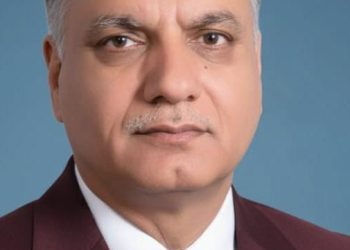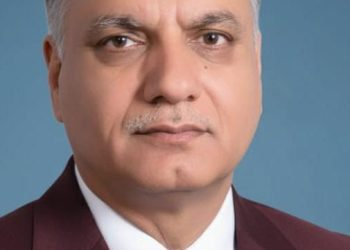
Dr. Alamdar Hussain Malik
The World Bank’s recent report has delivered a stark warning: in the past three years, 20 million Pakistanis have fallen below the poverty line, while the unemployment rate has surged to 22%. These figures, alarming as they are, only reveal part of a much deeper and more troubling reality.
Read also: Pakistan’s economy on ventilators as textile sector collapse
Before analyzing these statistics, it is important to first determine and define poverty in a true sense.
Poverty is far more than just a lack of money. It is the inability of individuals or families to afford even the most basic necessities for survival, including adequate food, clean water, shelter, healthcare, and education. In terms of nutrition, it means millions cannot afford the minimum 2,350 calories per day required for an active and healthy life. Poverty, therefore, is not just about economic deprivation—it is a daily struggle for survival.
The World Bank’s “Reclaiming Momentum Towards Prosperity: Pakistan’s Poverty, Equity and Resilience Assessment” provides one of the most comprehensive analyses of Pakistan’s recent poverty trends. It reveals that after decades of progress in reducing poverty, recent years have seen those gains stall and even reverse. From 2001 to 2018, Pakistan achieved remarkable poverty reduction, with the rate falling from 64.3% to about 21.9%, driven by rising incomes in non‑agricultural sectors and a shift of labor from subsistence farming toward services and informal work. However, this momentum slowed after 2015 and was disrupted by compounding shocks, including the COVID‑19 pandemic, catastrophic floods in 2022, persistently high inflation, and macroeconomic instability. These shocks have eroded household welfare and pushed millions back into poverty.
According to the World Bank, the national poverty rate has climbed sharply from around 18.3% in 2021–22 to over 25% in 2023–24, meaning millions more have fallen into deprivation. When measured against the updated global poverty threshold of $4.20 per person per day, nearly half the population struggles to meet minimum consumption needs. Extreme poverty, defined as surviving on less than about $3 per day, has also surged, rising from roughly 4.9% to more than 16.5%. The report highlights that over 85% of jobs in Pakistan are informal, offering low wages, minimal protections, and limited opportunities for advancement. Coupled with insufficient access to education, healthcare, and basic services, this has created a population highly vulnerable to economic shocks. Many households live just above the poverty line, meaning that even a minor crisis—an illness, crop failure, or price spike—can push them back into destitution.
The impact of poverty is multi-dimensional. Millions cannot afford a balanced diet, leaving children malnourished with stunted growth, weak immunity, and lower cognitive development. Poverty forces children into labor, depriving them of schooling and perpetuating cycles of illiteracy and low skills. Poor families often cannot access medical care, resulting in preventable diseases, higher mortality, and chronic health problems. Those living in poverty are more exposed to exploitation, insecurity, and social exclusion, making it harder to improve their circumstances. Careful calculations suggest that around 120 million people—more than half the population—live below the poverty line. Families often have to choose between buying food and paying for education or healthcare. Children begin life with disadvantages that may never be overcome, and adults are trapped in insecure, low-paying jobs that cannot meet even basic needs.
Poverty is not just a statistic—it is the daily reality of millions of Pakistanis who struggle to survive. It erodes human potential, traps families in intergenerational hardship, and undermines the very fabric of society. Children growing up in poverty face lifelong disadvantages, from malnutrition to lack of education, which limits their ability to contribute productively to the economy. Adults, meanwhile, are forced into insecure, low-paying jobs, often unable to meet even basic needs. If unchecked, poverty will continue to fuel social unrest, crime, and inequality, while slowing economic growth and national development. The cost of inaction is immense—not just in economic terms, but in human lives, dignity, and opportunities lost. Addressing this crisis requires immediate, sustained, and comprehensive action: inclusive economic policies, targeted welfare programs, improved education and healthcare access, and employment generation must become national priorities.
When nearly half of Pakistan’s population is living below the poverty line, it is difficult to imagine the country realistically aspiring to become an “Asian Tiger.” Economic growth cannot be measured merely by GDP figures or stock market indices. For a nation to transform into a thriving, competitive economy, the majority of its population must be productive, healthy, and capable of contributing to economic progress. Yet in Pakistan, millions are trapped in informal, low-paying jobs, children are denied quality education, and families lack access to basic nutrition and healthcare. Without addressing these structural issues, the dream of becoming an “Asian Tiger” remains a distant fantasy rather than an achievable goal. The political and economic leadership must therefore shift focus from slogans to concrete, people-centered policies: investment in human capital, targeted poverty alleviation, job creation, and social protection are not optional—they are prerequisites for any real economic transformation. No nation can rise to tiger status while half its people struggle for survival.
Dr. Alamdar Hussain Malik
Advisor, Veterinary Sciences
University of Veterinary and Animal Sciences, Swat
Former Financial Adviser
Finance Division, Government of Pakistan