


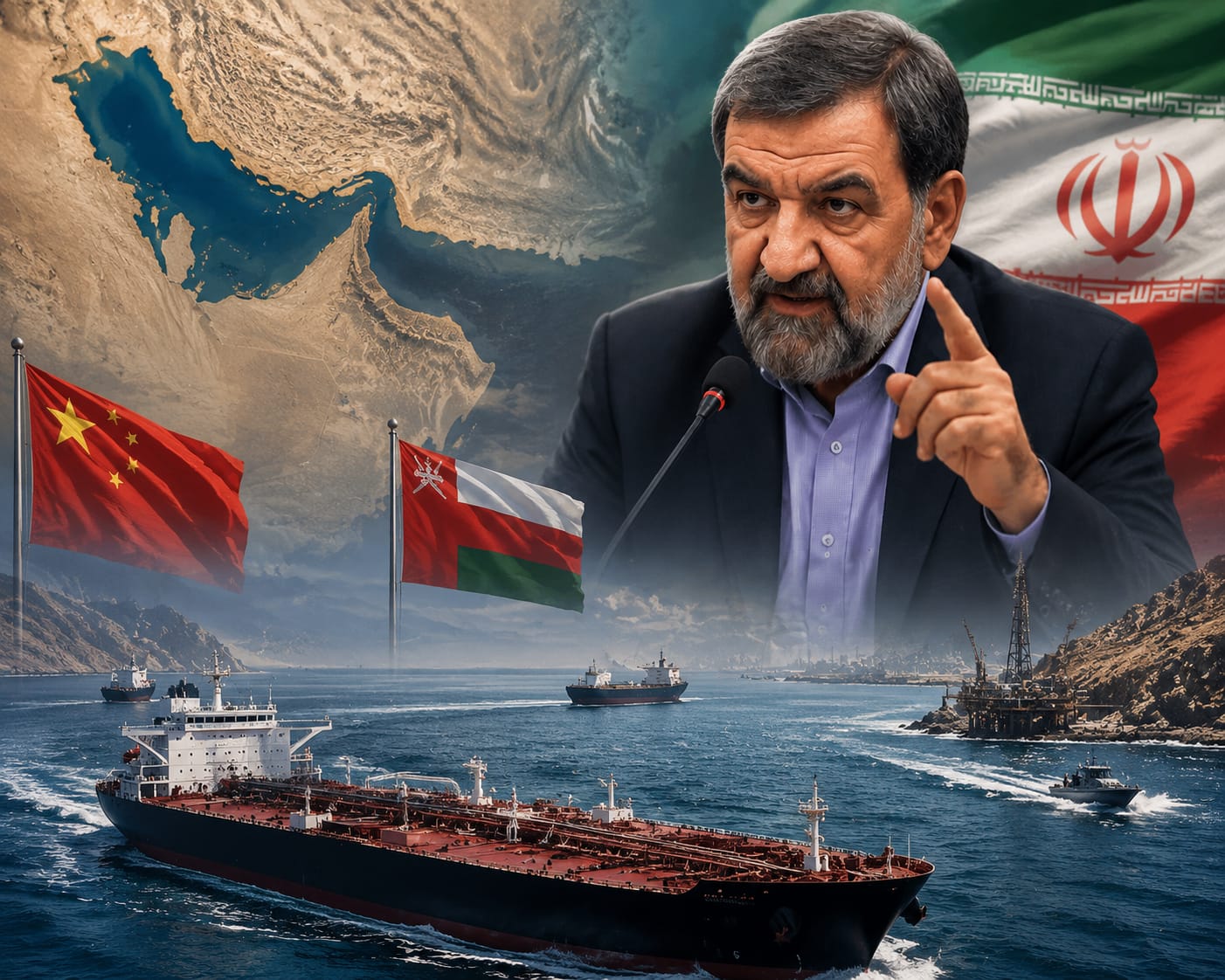
TEHRAN (News Desk) – Iran has warned that the Strait of Hormuz will not be reopened unless the United States changes its approach toward Tehran and accepts Iran’s stated conditions, escalating tensions around one of the world’s most important energy routes.
Mohsen Rezaei, secretary of Iran’s Supreme National Security Council, conveyed the message during a meeting with China’s ambassador to Tehran, according to Iran’s semi-official Tasnim news agency.
Rezaei said the United States was responsible for insecurity in the Gulf region, the Strait of Hormuz and the Sea of Oman, accusing Washington of creating instability through what he described as an “illegal war” against Iran.
“The Strait of Hormuz will not be opened until the United States changes its behavior and accepts Iran’s conditions,” Rezaei was quoted as saying.
The remarks come amid growing international concerns over the security of the Strait of Hormuz, a narrow waterway between Iran and Oman that serves as a critical passage for global energy shipments. A significant portion of the world’s oil and liquefied natural gas exports pass through the strategic maritime route every year.
Any prolonged disruption in the Strait could have major consequences for global energy markets, potentially pushing up oil prices and increasing pressure on economies dependent on fuel imports.
Iran demands end to conflict and release of blocked funds
Rezaei accused Washington of fueling regional instability and called on the US government to take steps to reduce tensions.
He demanded that the United States end what Tehran describes as a war against Iran, release Iranian assets blocked overseas and stop supporting conflicts across the region, including developments in Lebanon and Gaza.
Iran has repeatedly criticized US policies in the Middle East, particularly American sanctions and military presence in the region. Tehran argues that these measures threaten regional stability, while Washington maintains that its policies are aimed at protecting allies and countering Iran’s influence.
The latest statement reflects Iran’s broader strategy of using its geopolitical position and control over access to the Strait of Hormuz as leverage in regional disputes.
China and Oman factor into Strait tensions
Rezaei’s comments were made during talks with China’s ambassador, highlighting Beijing’s role as one of Iran’s major diplomatic and economic partners.
China has maintained relations with Tehran despite extensive US sanctions on Iran and has previously called for dialogue and stability in the Gulf region.
Meanwhile, Rezaei clarified that any potential agreement between Iran and Oman regarding a route through the Strait of Hormuz would be separate from the wider issue of reopening the waterway.
Oman has historically played a mediating role between Iran and Western countries and has maintained diplomatic channels with both Tehran and Washington.
Global economic concerns rise
The Strait of Hormuz remains one of the most sensitive maritime chokepoints in the world. Analysts say even the threat of disruption can affect international energy prices because traders factor geopolitical risks into global markets.
Countries across Asia, including major energy importers, closely monitor developments in the Gulf because disruptions could affect fuel supplies, transportation costs and inflation.
For Pakistan, which imports a large share of its energy requirements, prolonged instability in the Gulf could create additional pressure on oil import bills, foreign exchange reserves and domestic fuel prices.
However, any long-term closure of the Strait would depend on broader diplomatic and military developments involving Iran, the United States and regional powers.
Future outlook
The latest warning from Tehran indicates that tensions between Iran and the United States remain unresolved despite repeated calls from international actors for dialogue.
Diplomatic efforts by countries such as China and Oman may become increasingly important as global powers seek to prevent further escalation in the Gulf.
A reopening of the Strait of Hormuz would likely require negotiations addressing Iran’s concerns, regional security issues and broader disputes between Tehran and Washington.
Until then, markets and governments around the world are expected to closely watch developments surrounding the strategic waterway, which remains central to global energy security.


