



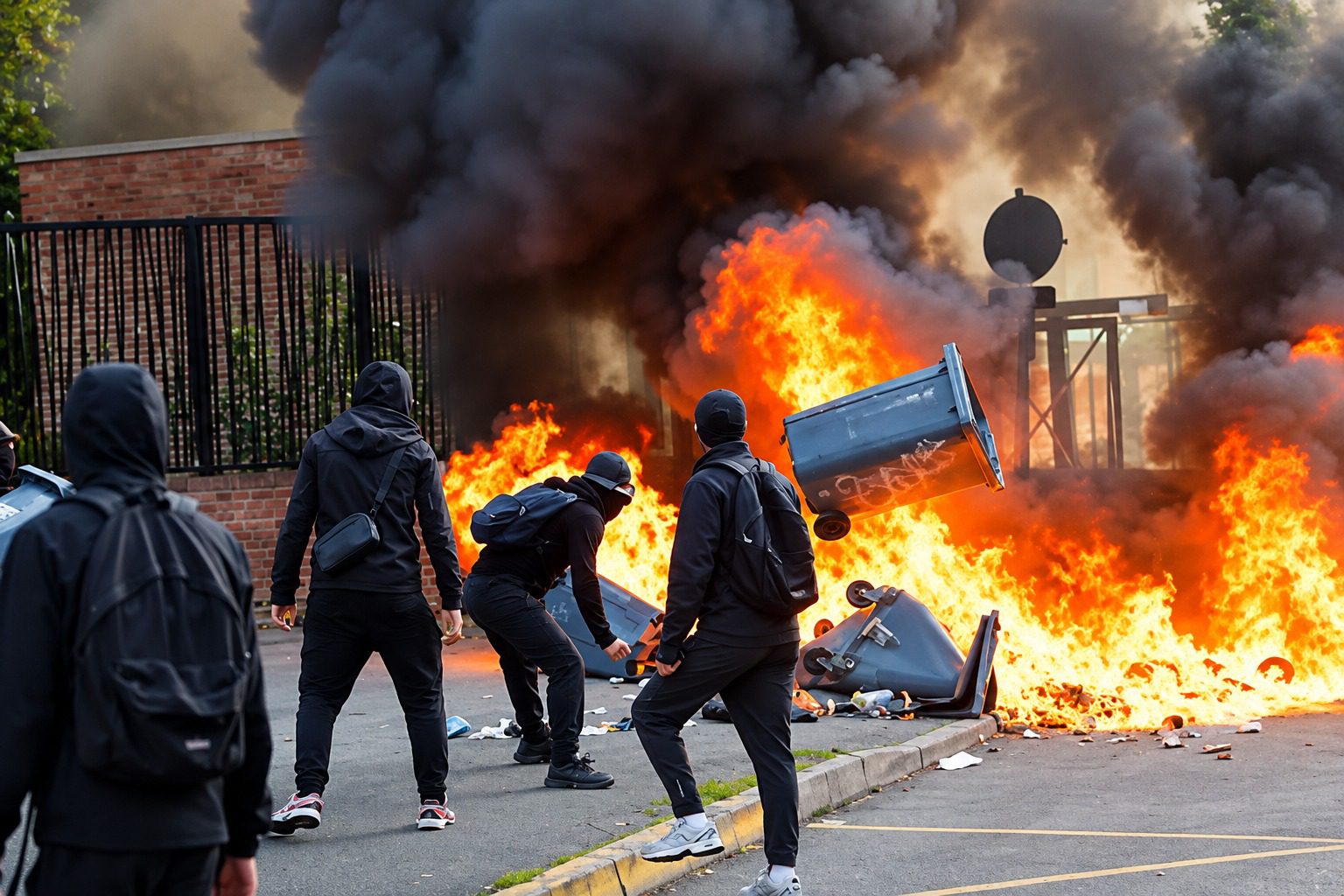
PARIS (Web Desk) – Protests by high school students continued across France on Friday, with clashes reported between demonstrators and police as a nationwide movement over school conditions led to the closure of hundreds of institutions.
The demonstrations, which began in the Paris region last week before spreading to other parts of the country, have involved students blocking entrances to schools and confronting security forces. Authorities said hundreds of high schools were affected by the protests.
Students have cited several grievances, including long school hours, poor classroom conditions and staff shortages. Some demonstrators have also accused police of using excessive force while attempting to clear school entrances.
The government has acknowledged that some of the concerns raised by students are legitimate but has criticised the violence and damage associated with parts of the protests.
In Paris, fires were reported at the entrances of two secondary schools on Friday. Firefighters were called to deal with the incidents, while police maintained a presence around several schools affected by demonstrations.
Education Minister Edouard Geffray said nearly 400 of France’s approximately 3,700 high schools were expected to be closed or disrupted during Friday’s protests.
He argued that violent groups were taking advantage of the student movement and urged parents to discourage young people from participating in demonstrations where their safety could be at risk.
The education minister said dozens of members of school staff had been injured since the protests began, including school principals. He also said a significant number of students had suffered injuries and that several schools had sustained serious damage.
Some schools, particularly in Marseille, moved towards remote teaching arrangements as authorities attempted to maintain educational activities despite disruptions.
Justice Minister Gerald Darmanin said prosecutors had been asked to examine cases involving property damage and determine whether parents could be held financially responsible for destruction allegedly caused by their children.
According to the minister, around 2,000 people had been taken into police custody since the beginning of the protest movement, with minors making up the overwhelming majority.
Tensions were also reported in other cities. In Rennes, students gathered outside Jean-Mace high school amid a substantial police presence, while tear gas was reportedly used during disturbances near a school in Brest.
Some protesters said the police response had increased their anger and accused officers of using disproportionate measures to disperse demonstrations.
The unrest has also entered the political debate ahead of France’s presidential election. Government figures have accused the left-wing France Unbowed party of supporting or encouraging the demonstrations, a claim rejected by senior party officials.
France Unbowed official Manuel Bompard dismissed the government’s allegations and accused it of promoting unfounded theories about the origins of the protests.
Seeking to reduce tensions, Geffray was due to meet representatives of education unions and high school student organisations to discuss the students’ concerns and explore possible areas of agreement.
The government faces pressure to address complaints about school facilities, staffing and students’ workloads while also dealing with concerns over violence and disruption.
For the students, the protests have become a means of drawing attention to conditions they say are affecting daily life in schools. For authorities, the immediate challenge is to restore normal educational activity while opening channels for dialogue with student representatives.
With demonstrations continuing in several parts of the country, the coming days are expected to determine whether negotiations can ease the unrest or whether further school disruptions will occur.