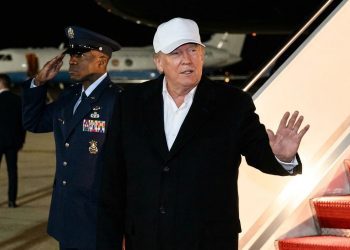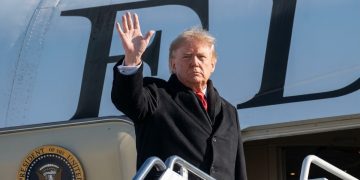



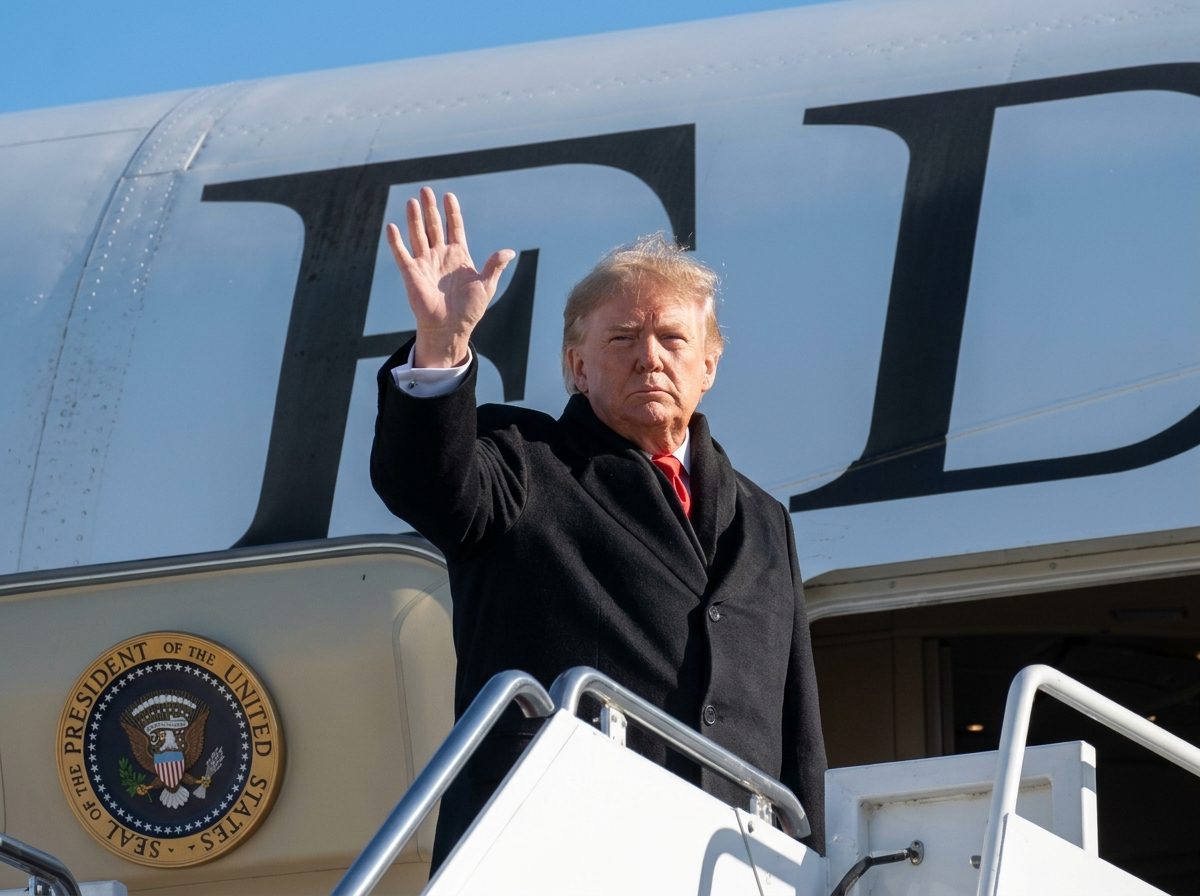
MANILA (Web Desk) – US President Donald Trump arrived in the Philippines on Tuesday as demonstrations against his policies continued in the capital, marking the beginning of a significant diplomatic phase of his Asian tour amid growing geopolitical competition in the Indo-Pacific.
Read More : Trump faces mounting public dissatisfaction as support for Iran war remains low
Trump’s visit comes towards the conclusion of the Association of Southeast Asian Nations (ASEAN) summit and ahead of a series of high-level meetings expected to address regional security, trade, technology and relations with China.
The US president is scheduled to participate in a special US-ASEAN summit and hold the first leaders’ meeting of the Quad grouping in two years.
The Quad comprises the United States, Japan, Australia and India and is regarded as an important framework for cooperation on security, maritime affairs and economic resilience in the Indo-Pacific.
The upcoming meeting will be Trump’s first with the other Quad leaders during his current presidency, following a two-year gap since the previous gathering.
The meeting is expected to focus on maritime security, critical minerals, artificial intelligence, export restrictions and the diversification of supply chains.
Other potential areas of discussion include undersea communication cables, emerging technologies and regional disaster relief cooperation.
The gathering is particularly significant because it precedes the Asia-Pacific Economic Cooperation (APEC) forum in Shenzhen, China, where Trump is expected to engage with Chinese President Xi Jinping.
The wider diplomatic programme also includes an anticipated trilateral meeting involving the United States, China and Russia, placing additional importance on Washington’s efforts to maintain relationships with key regional and global powers.
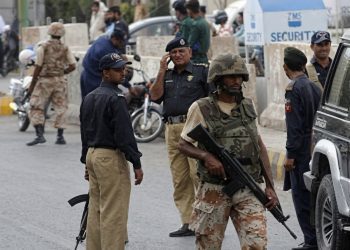
Trump’s arrival in Manila was accompanied by protests, with demonstrators gathering in the Philippine capital for a fifth consecutive day.
Protesters have criticised American foreign policy, called for an end to the war in the Middle East and opposed the US-led Pax Silica supply chain initiative.
Some demonstrations have included the burning of effigies depicting Trump, reflecting opposition among sections of the Philippine public to his administration’s international policies.
Despite the protests, Washington is seeking to reinforce its diplomatic and economic engagement with Southeast Asian countries, which have become increasingly important amid tensions between major global powers.
Quad seeks stronger regional coordination
The Quad meeting is expected to send a message of continued cooperation among its four members at a time when China is expanding its economic and strategic influence across the region.
Beijing has previously criticised the grouping, viewing it as an attempt to contain its influence, while Quad members have maintained that their cooperation is not directed against any particular country.
Former US Deputy Secretary of State Kurt Campbell described the timing of the meeting as significant, particularly ahead of Trump’s expected engagement with Chinese and Russian leaders.
He also highlighted the importance of the US-Japan relationship, describing it as central to Washington’s broader strategy in Asia.
The White House has presented the Quad as a practical partnership focused on addressing regional challenges and supporting a free and open Indo-Pacific.
Japan is expected to play an important role in discussions, particularly regarding economic security and technological cooperation.
Japanese Prime Minister Sanae Takaichi said on Tuesday that her country would adopt a more proactive role in regional affairs and work with ASEAN members to strengthen economic and energy resilience.
She highlighted concerns over export restrictions, vulnerabilities associated with artificial intelligence and dependence on critical mineral supplies.
Takaichi said cooperation with Southeast Asian countries would be important in strengthening supply chains and responding to instability in the international order.
Trade and security remain central to US-Asia ties
Meanwhile, Trump is scheduled to sign a joint statement with Thai Prime Minister Anutin Charnvirakul concerning progress towards a reciprocal trade agreement.
Thailand remains an important economic partner for the United States, with the American market accounting for a significant share of Thai exports.
The US designated Thailand a major non-NATO ally in 2003, reflecting longstanding security and diplomatic ties between the two countries.
On Wednesday, Trump is expected to meet Philippine President Ferdinand Marcos Jr, whose country maintains a longstanding defence alliance with Washington.
The meeting is likely to provide an opportunity to discuss bilateral security cooperation, regional maritime concerns and economic relations.
The Philippines occupies a strategically important position in the South China Sea, where territorial disputes and competing maritime claims have remained a source of regional tension.
Trump will subsequently travel to Shenzhen for the APEC gathering hosted by Chinese President Xi Jinping.
His visit to China is expected to attract considerable international attention because of continuing trade disagreements, technology restrictions and broader strategic competition between Washington and Beijing.
The diplomatic engagements across Manila and Shenzhen come at a sensitive moment for American foreign policy, with Washington seeking to balance economic interests, regional alliances and relations with competing global powers.
For Southeast Asian countries, the meetings offer an opportunity to strengthen partnerships with major economies while protecting their own economic and security interests amid an increasingly uncertain international environment.