Columnist: Pakistan must turn minerals into prosperity, not elite profit
Pakistan's mineral wealth can drive prosperity only through transparent deals, provincial participation, local benefits, domestic processing and strong security, the columnist argues, warning against elite capture and raw-material exports.
There is a question Pakistan must answer before celebrating the wealth beneath its mountains: Will its mineral resources become the foundation of national prosperity, or another chapter in the history of wealth accumulated by the powerful while ordinary citizens remain deprived? Pakistan stands at a potentially defining economic moment. Beneath its mountains, deserts and rugged landscapes lie deposits of copper, gold, coal, chromite, antimony and other minerals, alongside emerging prospects in lithium and rare earth elements. At a time when the world is competing for the resources that power advanced technology, clean energy, modern industry and defence capabilities, Pakistan’s geological potential could become a major source of economic strength and strategic influence.
But potential is not prosperity. Mineral deposits do not automatically create national wealth, just as foreign investment does not automatically guarantee public benefit. The difference lies in the quality of governance, the terms of agreements, the protection of national interests and the ability of the state to ensure that the people ultimately own the dividends of their resources.
Pakistan’s real challenge is not simply to extract its minerals. It is to convert them into national power, industrial capacity and shared prosperity.
The global competition for critical minerals is rapidly reshaping economic and strategic relationships. Copper is indispensable to electricity networks, renewable energy and modern infrastructure. Lithium, nickel and graphite are important to battery technologies. Rare earth elements are essential to advanced electronics, precision equipment, communications and several defence applications.
These resources are no longer merely commodities. They are strategic assets. Countries able to secure reliable supplies, develop processing capacity and control important stages of the value chain will enjoy significant economic and geopolitical advantages.
Pakistan therefore has an opportunity that extends far beyond earning foreign exchange through the export of raw materials. It can become a meaningful participant in emerging global supply chains—provided it develops the institutions, infrastructure, technology and policy consistency required to compete.
Estimates of Pakistan’s mineral potential have ranged from approximately $6 trillion to $8 trillion. These figures, frequently cited in government-related assessments and policy discussions, indicate the scale of the country’s geological opportunity. They should not, however, be mistaken for independently verified, commercially recoverable reserves or guaranteed national revenue.
The more important reality is the gap between potential and performance. Despite its mineral endowment, Pakistan’s mining sector has historically contributed only a modest share to the national economy. Limited exploration, inadequate geological data, inconsistent regulation, energy constraints, weak processing capacity, security challenges and institutional fragmentation have prevented the sector from achieving its promise.
The lesson is unmistakable: the value of a nation’s resources is determined not only by what lies underground, but by the wisdom, integrity and competence with which those resources are managed above ground.
The question no government can afford to evade: Whose minerals are these?
This is where the national debate becomes politically sensitive—and where the government must demonstrate the greatest openness.
Political parties representatives have raised concerns about the transparency of mineral agreements, the division of authority between federal and provincial institutions, the protection of local rights and the possibility that powerful interests could benefit disproportionately from the exploitation of public resources.
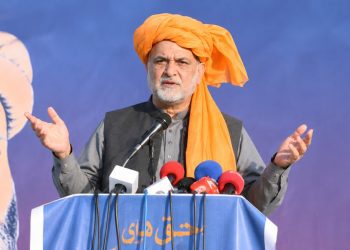
These concerns cannot simply be dismissed as political opposition. JUI-F chief Maulana Fazlur Rehman has called for mineral agreements to be made public. PTI representatives in Khyber Pakhtunkhwa have challenged arrangements they consider inconsistent with provincial authority and have demanded parliamentary oversight. Opposition parties in Balochistan have also raised constitutional and provincial-autonomy objections to the province’s mining legislation.
Such positions do not, by themselves, establish that national resources are being unlawfully transferred or that any individual has personally benefited. Allegations must be tested against evidence, not treated as proven facts. Equally, the absence of proven wrongdoing is no reason to avoid legitimate questions.
At the Pakistan Minerals Investment Forum 2026, held in Islamabad on 12–13 November, 13 agreements and memorandums of understanding were announced. These *covered a range of activities, including exploration, investment, geological surveys and work relating to existing mining licences. Their combined financial value was not publicly disclosed in the reporting available at the time.
It is important to distinguish between an expression of interest, an MoU, an exploration arrangement, a joint venture and a binding mining concession. They do not carry identical legal or financial consequences. Nevertheless, the public has a legitimate interest in knowing what is being agreed in its name.
Who are the parties? What resources and areas are involved? What are the financial commitments? What are the royalty, tax and revenue-sharing arrangements? Who bears the environmental and rehabilitation costs? What safeguards prevent conflicts of interest, preferential treatment or private enrichment at public expense?
These are not anti-investment questions. They are the foundations of responsible investment.
No government, political party, institution or private company owns Pakistan’s mineral wealth. It is a national trust, and those entrusted with managing it must be answerable to the nation.
National security and the defence of economic sovereignty
Pakistan’s mineral wealth is not merely an economic asset; it is an increasingly important component of national security and strategic sovereignty. In an era when critical minerals determine industrial competitiveness, advanced military capabilities and technological independence, protecting these resources and the infrastructure required to develop them is an essential national responsibility.
The Pakistan Armed Forces have a legitimate and significant role in safeguarding the country’s territorial integrity, strategic installations and critical economic infrastructure against internal and external threats. The security of mineral-rich regions, mining operations, transport corridors, investors, workers and associated infrastructure must therefore form part of a broader national-security framework.
Field Marshal Syed Asim Munir’s commitment at the Pakistan Minerals Investment Forum to protecting the entire mining ecosystem reflects this strategic understanding. His emphasis on safeguarding mines, miners, investments, industries, projects and associated people recognises that economic development cannot take root where security is persistently threatened.
This resolve deserves recognition and support. Pakistan must not allow terrorism, sabotage or hostile interference to deprive its people of the economic opportunities offered by their own resources. Protecting strategic projects is not merely about reassuring investors; it is about defending Pakistan’s ability to determine its own economic future.
However, national security and economic development must advance together. Security arrangements must be complemented by constitutional legitimacy, political inclusion, provincial participation and tangible economic benefits for local populations. The Armed Forces, civilian institutions, provincial governments and private investors each have their respective responsibilities in this national undertaking.
The defence of Pakistan’s sovereignty does not end at its geographical frontiers; it also encompasses the protection of its strategic resources, economic independence and the national interests of future generations.
Balochistan: the constitutional and human dimension
No serious national mineral strategy can succeed without the confidence and participation of the people of Balochistan and other resource-rich regions.
Balochistan’s mineral potential is considerable, but the province also faces persistent challenges of underdevelopment, unemployment, insecurity and public mistrust. Communities living closest to mineral deposits must not remain distant from the benefits generated by their exploitation.
The constitutional framework, particularly the devolution of powers under the 18th Amendment, makes federal-provincial coordination essential. Provincial rights and the legitimate role of elected provincial institutions must be respected. National investment policy must be developed through consultation and cooperation, not through administrative shortcuts or unilateral decisions.
Local communities deserve more than ceremonial assurances. They need transparent royalty and revenue-sharing arrangements, fair compensation, employment opportunities, technical training, healthcare, education, clean water and visible investment in public infrastructure.
A mining project that generates substantial revenue but leaves surrounding communities impoverished is not a model of national development. It is a recipe for resentment, instability and ultimately economic failure.
The people of Balochistan must see themselves not as spectators to the development of their land, but as stakeholders and beneficiaries of its future.
Reko Diq: opportunity must be matched by responsibility employment, infrastructure development and long-term economic activity.
Yet its progress also demonstrates the importance of security, predictable regulation, financing and sustained institutional commitment. International investors require confidence, but Pakistan must also protect its own interests. A successful project must deliver a fair and transparent return to the country, respect provincial and community rights, maintain high environmental standards and create meaningful domestic economic capacity.
Reko Diq must not become merely another story of minerals extracted from Pakistan and value created elsewhere. It should become a model of responsible partnership, local development, technology transfer and long-term national benefit.
The greatest strategic mistake Pakistan could make would be to treat mineral development as a race to export raw materials. The real economic opportunity lies in building the complete value chain—from geological exploration and extraction to processing, refining, smelting, manufacturing and technology development. This is how mineral wealth can create skilled employment, strengthen domestic industry, reduce import dependence and generate sustainable export earnings.
Foreign investors can bring capital, technology, expertise and access to international markets. Pakistan should welcome credible partnerships. But investment must strengthen domestic capacity rather than create permanent dependence.
Agreements should encourage local processing wherever commercially and technically viable, develop Pakistani expertise, support universities and research institutions, train skilled workers and create opportunities for domestic companies. Modern mining must also adhere to rigorous environmental standards, protecting water resources, agricultural land, workers’ health and the ecological future of resource-rich regions.
The objective should not be to choose between foreign investment and national ownership of the economic future. Pakistan needs both: international partnerships on fair terms and the domestic capacity to capture a meaningful share of the resulting value.
Five guarantees that can turn mineral wealth into national prosperity
Pakistan now needs a credible national framework built around five essential guarantees:
1. Transparency: All major agreements, concessions, beneficial ownership structures, financial commitments, royalty arrangements and revenue-sharing terms should be disclosed, subject only to clearly justified commercial or security restrictions. Independent audits and parliamentary scrutiny must be institutionalised.
2. Constitutional legitimacy: Federal and provincial responsibilities must be clearly defined and respected. Resource development should proceed through consultation, lawful authority and meaningful participation by the provinces and their elected representatives.
3. Protection against elite capture: Transparent bidding, conflict-of-interest safeguards, disclosure of beneficial ownership and independent oversight must prevent public resources from becoming instruments of patronage, favouritism or private enrichment. No individual or group should be able to convert public authority into private mineral wealth.
4. Equitable national dividends: Resource-producing provinces and local communities must receive a fair and measurable share of the benefits. Employment, education, healthcare, infrastructure, technical training and environmental protection should be built into project obligations and monitored against clear targets.
5. Security and policy continuity: Pakistan must protect mining regions, workers, investors and strategic infrastructure against terrorism and sabotage. At the same time, stable laws, predictable regulation, professional institutions and consistent policies must survive political transitions. Security, governance and investor confidence are mutually reinforcing—not competing priorities.
A national opportunity that must not be squandered Pakistan’s mineral resources could help reshape its economic future, strengthen its strategic independence and give its people a greater stake in national prosperity. But this opportunity will not be realised through conferences, announcements, political slogans or investment figures alone.
It will require institutional integrity, professional competence, constitutional harmony, national security, environmental responsibility and an unwavering commitment to public interest.
The government must provide transparent answers. Political parties must offer constructive scrutiny rather than exploit public anxieties for short-term advantage. Provincial institutions must exercise their constitutional responsibilities responsibly. Investors must respect Pakistan’s laws and communities. The Armed Forces must continue to fulfil their vital responsibility of protecting the country’s sovereignty and strategic assets. And every institution entrusted with this national undertaking must remain accountable for its role.
This is not a choice between supporting investment and defending national interests. It is not a choice between supporting the Armed Forces and demanding transparency. Pakistan needs security with constitutional responsibility, investment with accountability, and development with justice.
The ultimate test will not be how many agreements are signed, how many investors attend a forum or how much mineral wealth is claimed to lie beneath our soil. It will be measured by how many jobs are created, how much value is added within Pakistan, how much revenue reaches the public, how securely our strategic interests are protected and how visibly the lives of ordinary citizens improve.
Pakistan’s mineral wealth belongs to Pakistan. Its protection is a national responsibility; its development is a collective duty; and its dividends must belong to its people. That is the difference between extracting resources and building a nation.