



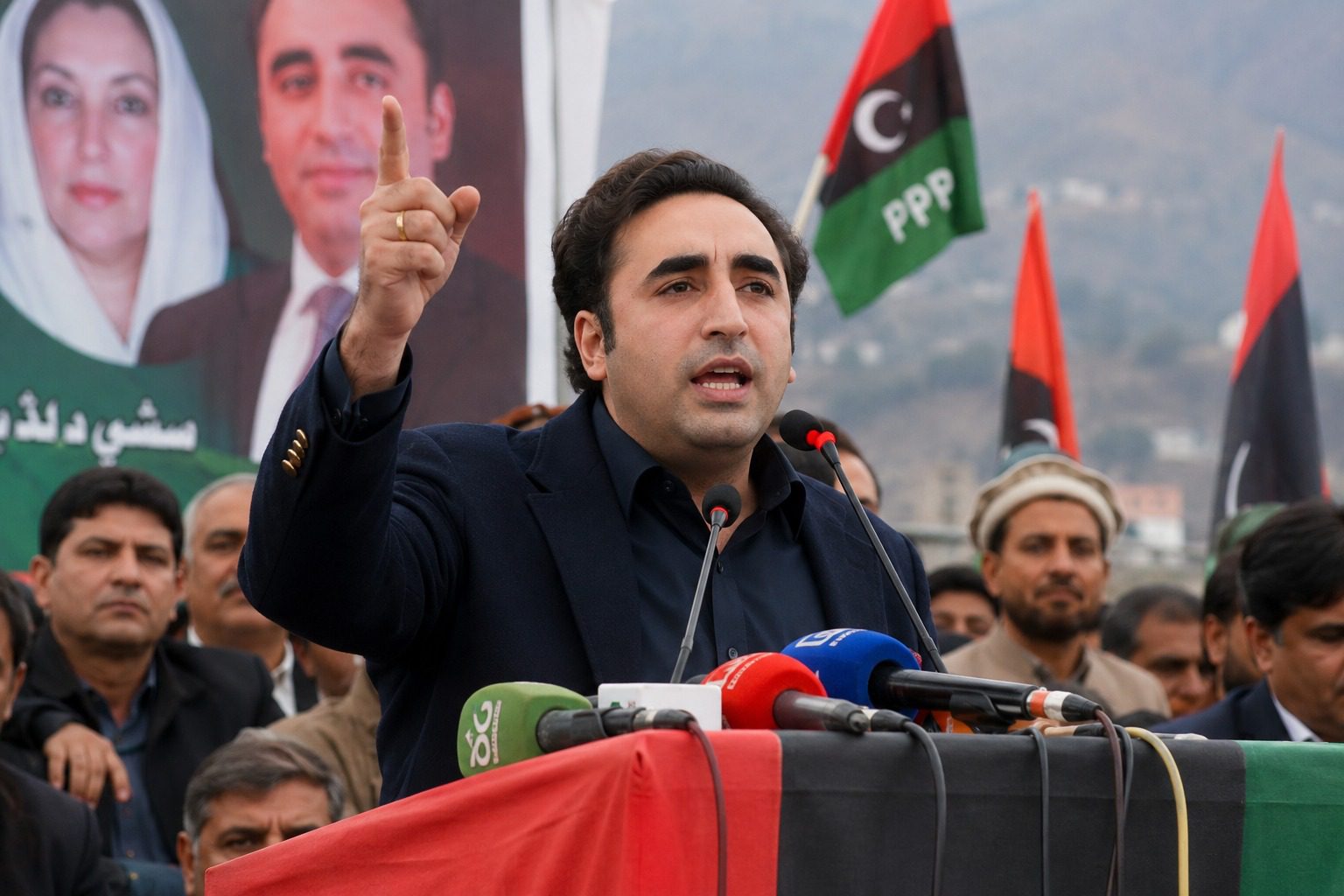
MUZAFFARABAD (Web Desk) – Voting is underway in the second phase of the Azad Jammu and Kashmir (AJK) Legislative Assembly elections, with Pakistan Peoples Party (PPP) Chairman Bilawal Bhutto-Zardari once again alleging electoral irregularities and accusing the Pakistan Muslim League-Nawaz (PML-N) of attempting to influence the process.
Polling began at 8am across eight of the nine constituencies in the Muzaffarabad division as well as 12 constituencies reserved for Kashmiri refugees living in different parts of Pakistan. The AJK Election Commission later extended polling time by one hour, allowing voters to cast ballots until 6pm.
Voting in LA-27 (Muzaffarabad-I) was postponed after heavy rainfall affected the constituency, according to AJK election authorities.
More than 300 candidates are contesting seats covered by the second phase, with hundreds of polling stations established across AJK and other parts of the country for refugee constituencies.
Bilawal alleges electoral interference
As voting continued, Bilawal accused the PML-N of using pressure and intimidation to influence voters.
In a statement on social media, the PPP chairman alleged that his party’s regional president and candidate for LA-31, Chaudhry Latif Akbar, had been attacked. He also claimed that a PPP worker, Mushtaq Shah, was killed in the same constituency.
Bilawal blamed individuals associated with the PML-N for the alleged violence and called for the immediate arrest of those responsible.
The PPP separately submitted a complaint to the AJK Election Commission, seeking an investigation into the alleged assault on Akbar and what it described as a security failure.
AJK Prime Minister Faisal Mumtaz Rathore, who belongs to the PPP, also took notice of the incident and directed senior government and police officials to ensure that those responsible were brought to justice.
PPP submits complaints
The PPP has reported alleged violations at polling stations in several constituencies, including claims that its polling agents were prevented from monitoring voting procedures.
The party has also alleged ballot manipulation, irregular voting, removal of ballot boxes and interference by political workers at various locations.
Among the constituencies mentioned in PPP complaints are LA-25, LA-30, LA-31, LA-32, LA-34 and LA-42.
The party has asked the Election Commission to investigate the complaints and take action where violations of electoral rules are established.
In one complaint concerning LA-32, the PPP alleged that ballot stuffing had taken place. In another, relating to LA-30, it claimed a ballot box was removed from a polling station.
The PPP also alleged that some of its polling agents were denied entry or prevented from performing their duties at polling stations in Punjab and other areas where voting was taking place for refugee seats.
PML-N rejects allegations
The PML-N has rejected the allegations and described them as politically motivated.
Kashmir Affairs Minister Amir Muqam urged political parties to avoid turning the election into a blame game, saying allegations without evidence could undermine public confidence in the electoral process.
He called on political stakeholders to allow voting to continue peacefully and respect the outcome determined by voters.
The PML-N also submitted a response to a PPP complaint, describing allegations against one of its candidates as unfounded and arguing that they were being used to create controversy around polling.
Dispute follows first phase
The latest confrontation follows a contentious first phase of the AJK elections held in the Mirpur division on July 27.
The PPP had accused the PML-N of electoral malpractice after the first round and demanded re-polling in certain constituencies. Both parties subsequently held discussions in an attempt to resolve their differences through legal and political channels.
Bilawal has now argued that the Election Commission’s response to complaints from the first phase was inadequate and warned that his party reserves the right to demand fresh polling in constituencies where it believes serious irregularities occurred.
PPP leader Nadeem Afzal Chan also urged the electoral authorities to demonstrate that the process was transparent and credible.
He warned that failure to address complaints could create further political tensions ahead of the third phase.
Election held in three stages
The AJK elections are being conducted in three phases because of security considerations.
The first phase was held in the Mirpur division on July 27. The second phase is taking place on August 2, while voting for the remaining constituencies in the Poonch division is scheduled for August 10.
Internet services in parts of the Muzaffarabad division were restored shortly before the second phase after a prolonged suspension.
AJK Chief Election Commissioner Ghulam Mustafa Mughal said the Election Commission would perform its duties according to the law and would not operate under political pressure.
Thousands of voters eligible
According to election authorities, more than 800,000 voters are registered in the Muzaffarabad division, while the 12 refugee constituencies have a combined electorate of more than 438,000.
More than 1,400 polling stations have been established in the Muzaffarabad division, with a significant number classified as sensitive or highly sensitive.
Additional polling stations have been established across Punjab, Sindh, Khyber Pakhtunkhwa and Balochistan for refugee constituencies.
The second phase is therefore being closely monitored not only in AJK but also in major Pakistani cities where registered refugee voters are casting ballots.
Political stakes remain high
The dispute between the PPP and PML-N has added to the significance of the second phase, particularly after the two coalition partners exchanged accusations following the first round.
While the PML-N has defended its electoral performance, the PPP maintains that complaints regarding the first phase must be addressed before the credibility of the remaining stages can be assured.
With the final phase scheduled for August 10, the handling of complaints, security arrangements and the conduct of polling officials are likely to remain central issues in the coming days.
The AJK Election Commission now faces pressure to investigate reported violations promptly and maintain confidence in the electoral process as voting progresses.


