


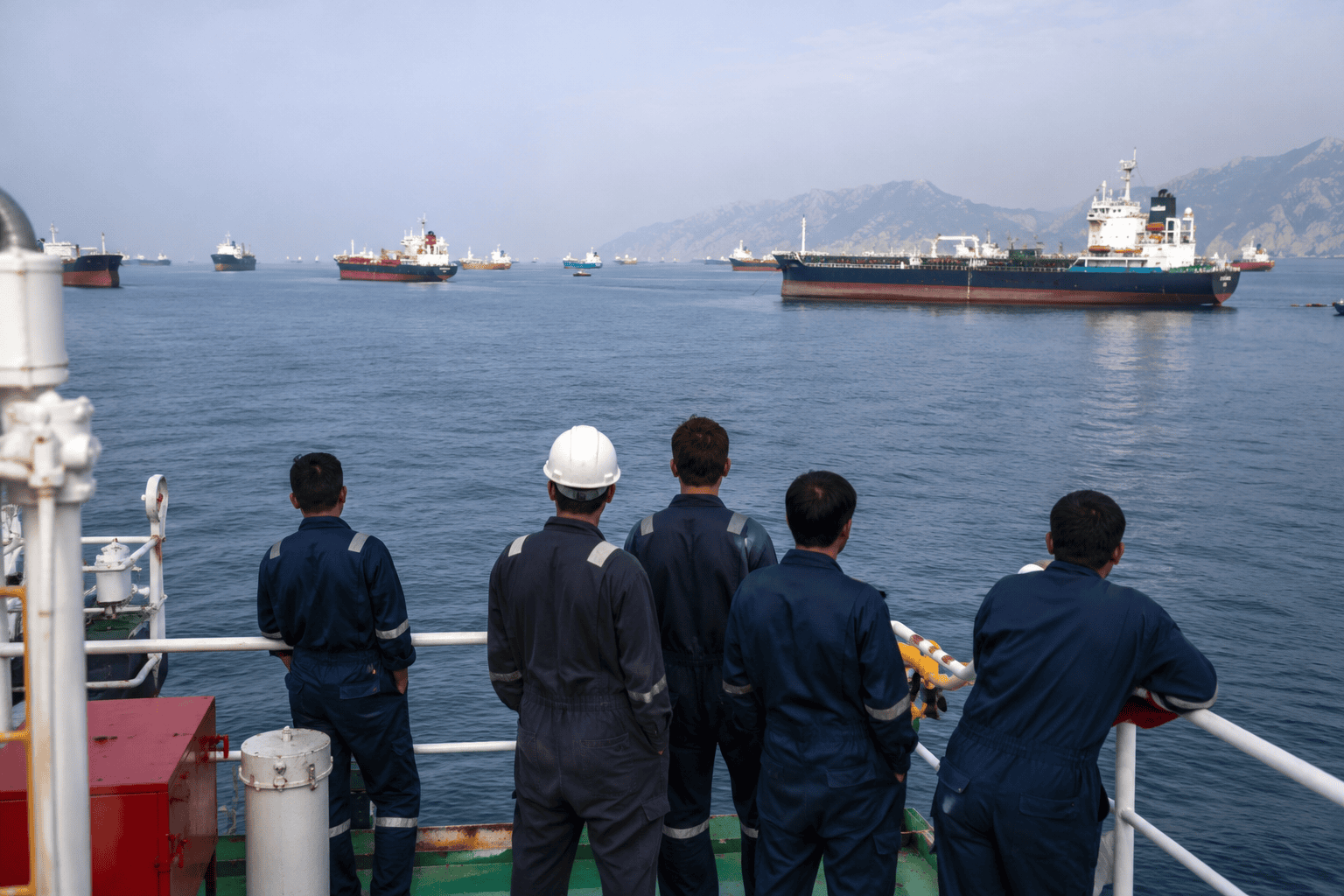
LONDON/GENEVA (Web Desk) –An estimated 6,000 seafarers remain stranded aboard commercial vessels operating near the Strait of Hormuz, as the United Nations and international maritime organisations have renewed calls for urgent measures to protect crews amid heightened security risks in one of the world’s busiest shipping corridors.
The warning comes as geopolitical tensions in the Gulf continue to disrupt normal shipping operations, leaving many merchant vessels waiting offshore or delaying transits through the strategic waterway.
According to the International Maritime Organization (IMO) and the International Labour Organization (ILO), thousands of seafarers are working under increasingly difficult conditions as security concerns, delayed voyages and operational uncertainty affect maritime traffic in the region.
The agencies have urged governments, flag states, shipowners and maritime authorities to place the safety and welfare of seafarers at the centre of any response to the crisis.
Strait of Hormuz remains a global shipping lifeline
The Strait of Hormuz is regarded as one of the world’s most strategically important maritime chokepoints. Connecting the Persian Gulf with the Gulf of Oman and the Arabian Sea, it serves as a critical route for global energy exports and commercial shipping.
A significant share of the world’s crude oil, liquefied natural gas (LNG), and container cargo passes through the narrow waterway each day. Any disruption to navigation can have immediate consequences for international trade, freight costs and global energy markets.
Shipping companies have reported delays, rerouting decisions and increased insurance costs as security conditions remain uncertain.
Thousands of seafarers caught in prolonged uncertainty
International maritime organisations estimate that approximately 6,000 seafarers are currently aboard vessels affected by delays or operational restrictions linked to the situation around the Strait of Hormuz.
Many crews have experienced extended periods at sea while awaiting clearance to proceed or safer navigation conditions.
Maritime labour organisations warn that prolonged deployments can increase fatigue, mental stress and safety risks for crews responsible for operating large commercial vessels under challenging circumstances.
The humanitarian aspect of the crisis has become an increasing concern alongside its commercial impact.
UN agencies call for immediate action
The IMO and ILO have jointly appealed for practical measures to safeguard seafarers working in the region.
The organisations stressed that merchant ships and civilian crews should not become unintended victims of geopolitical disputes.
They urged governments and industry stakeholders to:
- Prioritise the safety of civilian crews.
- Facilitate crew changes wherever possible.
- Maintain uninterrupted humanitarian assistance.
- Ensure vessels can operate in accordance with international maritime law.
- Strengthen communication between shipping companies and maritime authorities.
The agencies also emphasised that seafarers play an essential role in sustaining global trade and food and energy supplies.
Shipping industry faces rising costs
Beyond the humanitarian concerns, the situation has placed additional financial pressure on the global shipping industry.
Maritime analysts say ship operators are facing:
- Higher war-risk insurance premiums.
- Increased fuel consumption due to longer routes.
- Delayed cargo deliveries.
- Additional security expenses.
- Operational uncertainty.
These costs may eventually be reflected in higher freight rates and increased prices for imported goods in many countries.
Global trade could face wider implications
The Strait of Hormuz remains one of the most sensitive maritime routes in the world because of the volume of cargo that transits through it.
Any prolonged disruption has the potential to affect:
- International energy markets.
- Oil and LNG exports.
- Container shipping schedules.
- Global supply chains.
- Commodity prices.
While commercial traffic continues through the region, shipping companies are closely monitoring security developments before routing vessels.
Pakistan closely watches developments
Pakistan has a strong interest in maintaining uninterrupted maritime trade through regional sea lanes.
The country’s imports of petroleum products, industrial raw materials and other essential commodities rely heavily on secure international shipping routes.
Any sustained disruption in Gulf shipping could influence freight charges, import costs and domestic fuel prices, making developments around the Strait of Hormuz particularly significant for Pakistan’s economy.
Maritime organisations seek coordinated response
International shipping bodies continue to encourage close coordination between governments, naval authorities and commercial operators to reduce risks to civilian shipping.
Industry experts say ensuring the safety of merchant crews while maintaining the free flow of lawful maritime commerce remains the immediate priority.
As diplomatic efforts continue to ease regional tensions, maritime organisations are urging all parties to respect international law and protect civilian seafarers working in one of the world’s most strategically important waterways.
.


