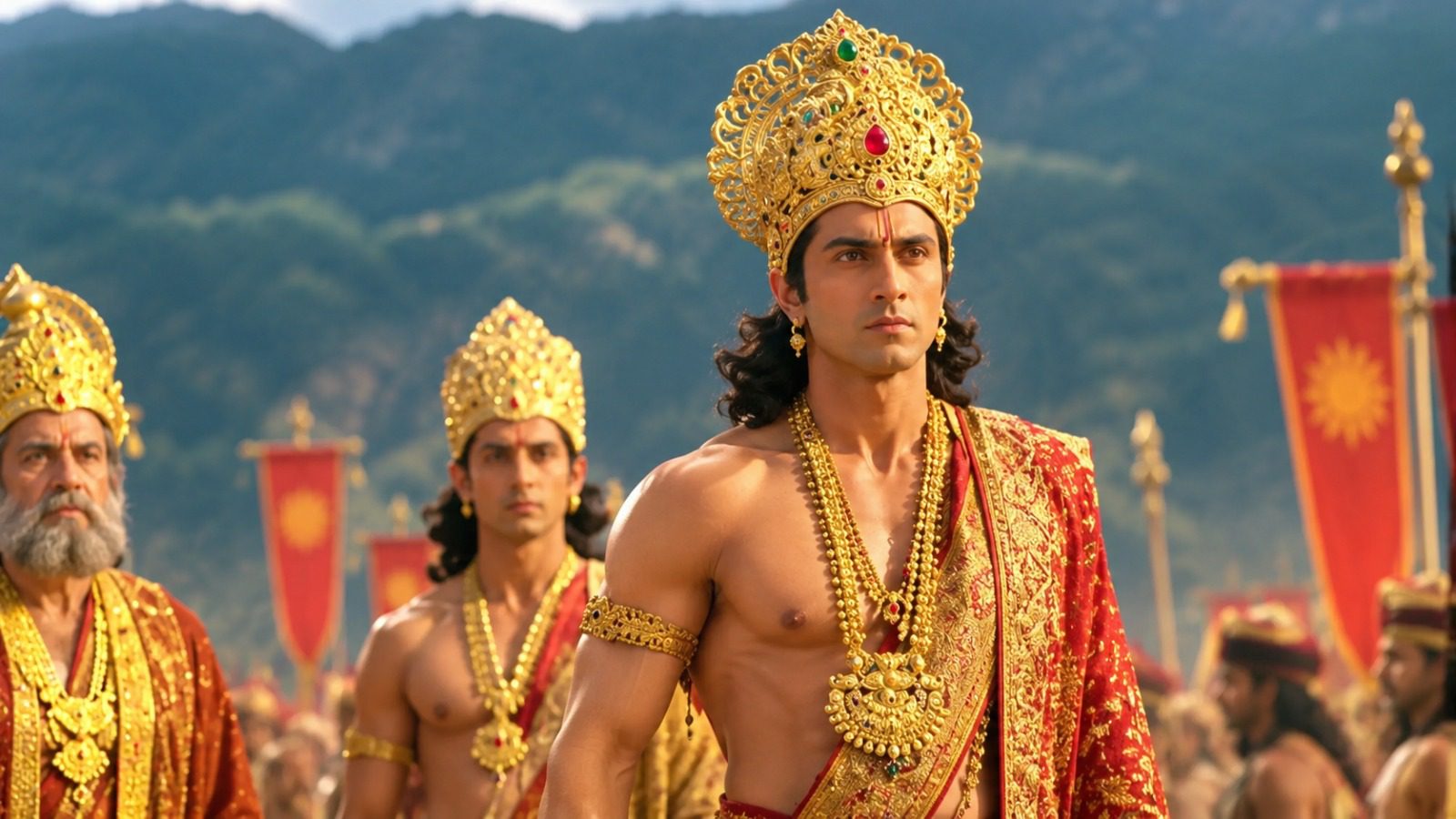
India’s $500m Ramayana epic tests the limits of faith, technology and global cinema
India’s reported $500 million Ramayana project blends mythology, Hollywood technology and star power, but mixed reviews and religious sensitivities pose challenges to its global ambitions.
NEW DELHI (Web Desk) – India’s most expensive cinematic venture has arrived in theatres with an ambition extending far beyond the domestic box office: to transform one of Hinduism’s most revered epics into a global film franchise.
Titled Ramayana: Rise of a Legend, the first instalment of a planned two-part production brings together Bollywood star Ranbir Kapoor, southern Indian superstar Yash, Hollywood visual-effects expertise and two Oscar-winning composers in an unprecedented attempt to give the ancient story a contemporary cinematic identity.
The two-film project has a reported combined budget of $500 million (£370 million), placing it among the most ambitious productions in Indian cinema. Directed by Nitesh Tiwari, the film seeks to combine the emotional and spiritual resonance of the Ramayana with the visual scale and technical sophistication associated with major international blockbusters.
Yet the production faces a challenge that money and technology alone cannot resolve: meeting the expectations of audiences for whom the Ramayana is not merely a literary classic, but a living religious and cultural tradition.
The story follows Lord Ram, played by Kapoor, the prince of Ayodhya who is sent into a 14-year exile with his wife Sita, portrayed by Sai Pallavi. Their lives take a dramatic turn when Sita is abducted by Ravana, the powerful, ten-headed ruler of Lanka, played by Yash. The confrontation between Ram and Ravana is expected to form the centrepiece of the second instalment, scheduled for release next year.
Producer Namit Malhotra, who heads visual-effects company DNEG, has brought international technical resources to the project. The company has previously worked on major Hollywood productions, including Dune and Interstellar. The musical score is a collaboration between Indian composer AR Rahman and German-born Hollywood composer Hans Zimmer, whose work includes Gladiator, The Dark Knight and Dune.
The film’s reception, however, has been far from unanimous. Indian critics have praised its scale and visual ambition but questioned whether the spectacle consistently serves the narrative.
NDTV’s Saibal Chatterjee awarded it three out of five stars, arguing that the impressive visuals frequently overshadow the storytelling and that performances lack consistency. Hindustan Times critic Rishabh Suri was more favourable, giving it four stars and praising the production values and acting, although he identified weaknesses in the first half and soundtrack.
The international response has also been divided. The Guardian’s Peter Bradshaw described the film as a spectacular and engaging epic, awarding it four stars. By contrast, IGN’s Siddhant Adlakha criticised its action sequences and computer-generated imagery, giving it four out of 10.
The debate has extended to the film’s use of artificial intelligence. The filmmakers used AI technology to adjust actors’ lip movements for the English-language version, a decision intended to improve accessibility for international viewers. However, the technique has attracted criticism over the artificial appearance of some facial movements.
Beyond its cinematic credentials, the production carries the weight of a story that has shaped South Asian culture for centuries. The Ramayana has been retold through religious traditions, literature, theatre, sculpture, puppetry and television, evolving across generations while retaining its central themes of duty, loyalty, sacrifice and the struggle between good and evil.
For Indian audiences, comparisons with Ramanand Sagar’s 1987 television adaptation are inevitable. That 78-episode series became a cultural phenomenon, with millions gathering around television sets for its Sunday broadcasts. Arun Govil, who famously portrayed Ram in the series, returns in the new film as King Dasharatha, Ram’s father.
The latest adaptation also enters a sensitive political and cultural environment. Ram has increasingly become a prominent symbol of Hindu identity in contemporary India, making screen portrayals of the epic particularly vulnerable to public scrutiny.
The 2023 film Adipurush, another expensive adaptation, faced criticism from Hindu groups over its depiction of religious figures, dialogue and visual effects. The controversy demonstrated how creative reinterpretations of sacred narratives can quickly become wider cultural disputes.
Kapoor has acknowledged the pressure associated with portraying a figure worshipped by millions, describing the role as both a rare opportunity and a daunting responsibility. Pallavi has similarly spoken about approaching Sita’s character as a spiritual as well as artistic experience.
The new Ramayana therefore represents more than a technological milestone for Indian filmmaking. It is an attempt to bridge mythology and modern entertainment, domestic cultural memory and international audiences.
Whether its enormous investment translates into lasting cinematic success remains to be seen. But the production has already placed a centuries-old epic at the centre of a contemporary debate over faith, artistic interpretation and the future of Indian cinema.