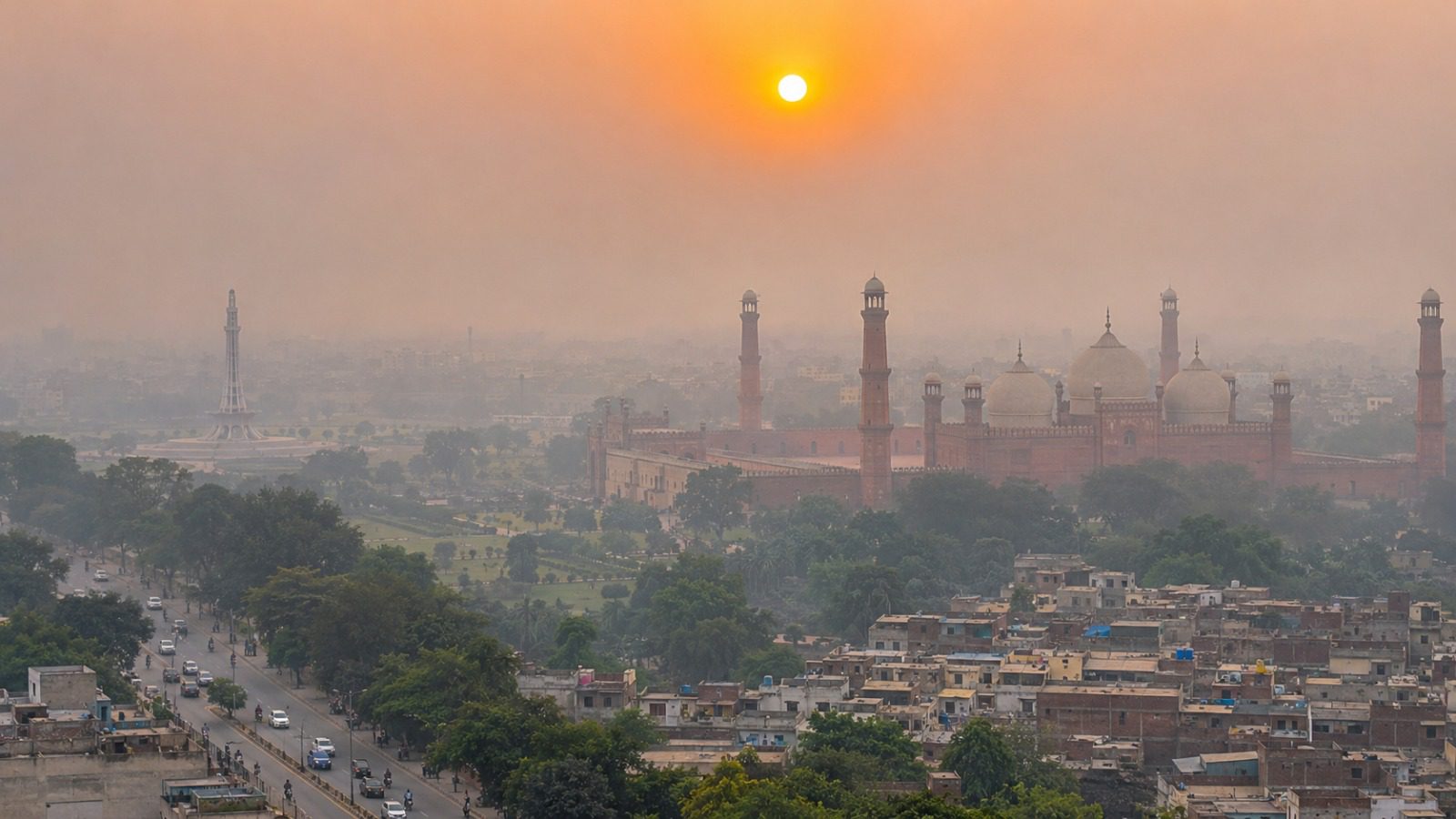
LAHORE (Web Desk) – Lahore has emerged as the world’s third most polluted city, with its Air Quality Index (AQI) reaching 215, as deteriorating air quality continues to affect major urban centres across Pakistan.
Read also: Smog, seasonal infections push Lahore hospital visits past 35,000 in a week
According to the latest air quality readings reported on Friday, India’s Kolkata topped the global pollution ranking with an AQI of 242, while Lahore secured the third position.
The situation remained particularly alarming in other Pakistani cities, where pollution levels were significantly higher than those recorded in the provincial capital.
Multan reported an exceptionally high AQI of 480, placing it among the most polluted urban centres in the country. Bahawalpur recorded an AQI of 291, followed by Rahim Yar Khan at 287.
Sargodha registered an AQI of 257, while Skardu recorded 255, indicating that deteriorating air quality was not confined to densely populated industrial cities.
Gujranwala also reported unhealthy air conditions, with an AQI of 221, while Sialkot recorded a reading of 190.
The latest figures highlight the widespread nature of air pollution across Pakistan, particularly in Punjab, where several cities are experiencing deteriorating environmental conditions.
Health risks of rising air pollution
The worsening air quality poses serious health concerns, particularly for children, older people and individuals suffering from respiratory and cardiovascular conditions.
Exposure to polluted air can cause coughing, throat irritation, breathing difficulties and aggravate existing respiratory illnesses, including asthma.
Fine particulate matter, particularly PM2.5, is considered one of the most dangerous components of air pollution because its microscopic particles can penetrate deep into the lungs and enter the bloodstream.
Prolonged exposure to these pollutants can increase the risk of heart and lung diseases.
Residents are generally advised to limit unnecessary outdoor activities when pollution levels are high, particularly during periods of heavy smog. People should also avoid strenuous outdoor exercise and use properly fitted particulate-filtering masks when exposure cannot be avoided.
Growing need for pollution control
The latest pollution readings have renewed concerns about the need for effective measures to improve air quality across the country.
Experts have identified vehicle emissions, industrial smoke, construction dust, waste burning and agricultural residue burning among the major contributors to air pollution in Pakistan.
Strengthening vehicle emission checks, enforcing industrial environmental standards, controlling open burning and expanding urban green spaces could help reduce pollution levels.
The situation also highlights the importance of reliable air quality monitoring and timely public health advisories to protect residents from prolonged exposure to hazardous pollutants.