


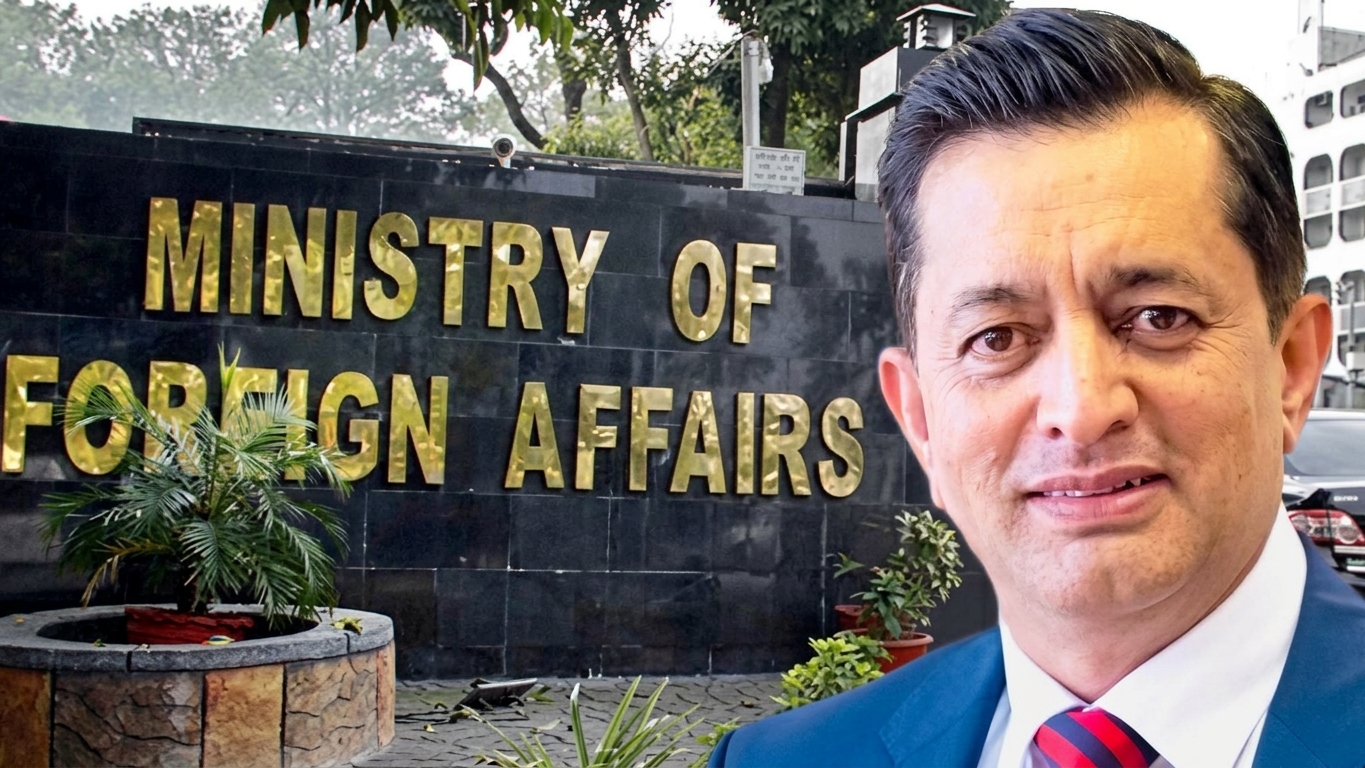
Pakistan has received an invitation from India to attend the upcoming Shanghai Cooperation Organisation summit in New Delhi, but has yet to decide whether to participate, the Foreign Office said on Friday.
Spokesperson Sajjad Haider Khan told a weekly media briefing that the decision would be taken by the country’s leadership after consultations with relevant institutions.
The summit is scheduled to be held in the Indian capital from November 20 to 22, bringing together representatives of member states of the regional organisation.
The invitation comes amid strained relations between the nuclear-armed neighbours, which have maintained limited diplomatic engagement over a range of political and security issues. Islamabad’s response to the invitation will be determined through its internal consultation process, the spokesperson said.
Khan also addressed the possibility of Indian Punjab Chief Minister Bhagwant Mann visiting Pakistan, saying permission for such a trip rested with the Indian government. He added that Pakistan had not placed restrictions on visas for Indian citizens.
Religious travel and Kartarpur Corridor
The spokesperson highlighted Pakistan’s stated efforts to facilitate visits by Sikh pilgrims from India, particularly for religious events and visits to important Sikh heritage sites.
He said Pakistan had issued visas to an additional 4,000 Sikh pilgrims during the first six months of 2026. In 2025, the country granted 9,318 visas to Indian pilgrims, while 9,000 Sikh pilgrims and 248 Hindu pilgrims visited Pakistan.
However, movement through the Kartarpur Corridor has remained suspended since May 2025, according to the spokesperson. The corridor connects Sikh pilgrims with Gurdwara Darbar Sahib in Kartarpur, one of the religion’s most significant sacred sites.
Khan said Pakistan was ready to welcome Sikh visitors and facilitate their travel once India lifted the restrictions. Islamabad was also looking forward to receiving pilgrims for celebrations marking the 557th birth anniversary of Baba Guru Nanak Dev Ji.
The issue remains an important part of people-to-people contact between the two countries, particularly for Sikh communities seeking access to religious sites across the border.
Pakistan highlights regional diplomatic role
The Foreign Office spokesperson also discussed Pakistan’s diplomatic engagement aimed at reducing tensions in the region, including its role in facilitating dialogue between Iran and the United States.
Khan described Pakistan as a sincere mediator in the dispute, saying it had helped bring the two countries together after 47 years without direct talks. He said Islamabad would continue supporting diplomatic efforts to promote peace and stability.
He added that regional stability was important not only for Pakistan and its neighbours but also for countries beyond the region.
The spokesperson also announced that Lieutenant General (retd) Nauman Mahmood, secretary-general of the Makkah-based joint defence alliance, would soon take up his responsibilities in Riyadh.
Pakistan resolution adopted at United Nations
Separately, Khan said a Pakistani resolution on conventional arms control had been adopted at the United Nations with 180 votes in favour.
He said the resolution called for restraint, balance and dialogue to reduce risks associated with regional conflicts and conventional weapons.
According to the spokesperson, India and Israel were the only countries to vote against the resolution. He criticised their opposition, arguing that it raised questions about their commitment to international peace and stability.
The resolution’s adoption was presented by Islamabad as support for its position that arms control and diplomatic engagement are important to preventing escalation.
The Foreign Office briefing covered several issues affecting Pakistan’s external relations, from engagement with regional organisations and religious travel to diplomatic mediation and international arms control.
The decision on attending the SCO summit remains pending, with Islamabad indicating that consultations will determine its final position.