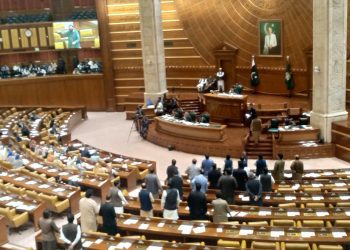




ISLAMABAD (Web Desk) – More than 32.04 million people in Pakistan are suffering from mental health disorders, highlighting the growing public health challenges facing the country and the shortage of qualified mental health professionals, according to figures presented by the Ministry of Health in the National Assembly.
The ministry shared the statistics based on Global Burden of Disease estimates, revealing a substantial gap between the number of people experiencing mental health conditions and the availability of specialised medical professionals.
According to the information provided to lawmakers, Pakistan had only 1,050 registered psychiatrists, raising concerns about access to diagnosis, treatment and psychological support, particularly for people living in rural and underserved communities.
The figures indicate that the country has approximately one registered psychiatrist for every 245,400 people, reflecting the limited availability of specialised mental healthcare services.
The situation has drawn attention to the need for increased investment in mental health facilities, professional training and public awareness programmes to address the growing demand for treatment.
Punjab has the highest number of psychiatrists
The Ministry of Health provided a provincial breakdown of registered psychiatrists, showing significant differences in their distribution across the country.
According to the figures, Punjab had the highest number of registered psychiatrists at 406, followed by Sindh with 228 and Khyber Pakhtunkhwa with 122.
Balochistan had only 44 registered psychiatrists, highlighting the limited availability of specialised mental healthcare professionals in the province.
The ministry also reported that Islamabad had approximately 300,000 people suffering from mental health disorders as of 2023.
Although the capital has a comparatively developed healthcare infrastructure, the reported number of affected individuals highlights the importance of expanding mental health services in urban centres as well.
The uneven distribution of psychiatrists means that patients in smaller cities and remote districts may face additional difficulties accessing specialised consultations and treatment.
Many people may also have to travel to major urban centres to receive appropriate medical attention, increasing the financial and logistical burden on families.
Mental health awareness remains a major concern
The latest figures highlight the importance of recognising mental health as an essential part of the country’s healthcare system.
Mental health disorders include a wide range of conditions, such as depression, anxiety disorders, bipolar disorder and other psychiatric conditions that can affect an individual’s daily activities, relationships, education and employment.
Despite the availability of treatment options, social stigma, limited awareness and financial difficulties can prevent people from seeking professional assistance.
In some communities, mental health conditions are still misunderstood, resulting in delayed diagnosis and inadequate treatment.
Healthcare professionals have repeatedly highlighted the importance of early identification, professional counselling, medical treatment where required and accessible community-based support.
Expanding mental healthcare facilities in public hospitals and establishing specialised services at district-level medical centres could help improve access for patients.
The shortage of psychiatrists also highlights the need to encourage medical students to pursue specialised training in psychiatry and related disciplines.
Ministry provides HIV/AIDS figures
Alongside mental health statistics, the Ministry of Health also informed the National Assembly about the number of registered people living with HIV/AIDS across Pakistan.
According to the ministry, the country had 3,900 registered HIV/AIDS patients in the figures presented to lawmakers, with Sindh reporting the highest number at 1,915.
Punjab recorded 1,765 registered patients, while Khyber Pakhtunkhwa had 139 and Balochistan reported 46.
The federal capital, Islamabad, had 30 registered patients, while Azad Jammu and Kashmir reported four and Gilgit-Baltistan recorded one.
The provincial breakdown shows that Sindh and Punjab together accounted for the overwhelming majority of the reported registered cases.
The figures also highlight the importance of strengthening healthcare services, improving access to testing and ensuring that people living with HIV receive appropriate treatment and medical support.
Need for stronger public healthcare facilities
The statistics presented in the National Assembly have brought attention to two important public health challenges: the availability of mental healthcare and the provision of services for people living with HIV.
Both areas require effective planning, accessible treatment facilities, trained healthcare professionals and sustained public awareness efforts.
For mental health patients, timely diagnosis and access to qualified specialists can play an important role in improving treatment outcomes and quality of life.
Similarly, people living with HIV require continued medical supervision, access to antiretroviral treatment and protection from discrimination.
The government faces the challenge of ensuring that healthcare services are not concentrated only in major cities but are also available to people in smaller towns and remote areas.
Expanding specialist training, strengthening public hospitals and improving community-level healthcare facilities could help address existing gaps.
The figures presented to parliament provide an indication of the scale of the challenges and underline the importance of making mental health and other essential medical services a greater priority in national healthcare planning.