


By Maheen Sultan
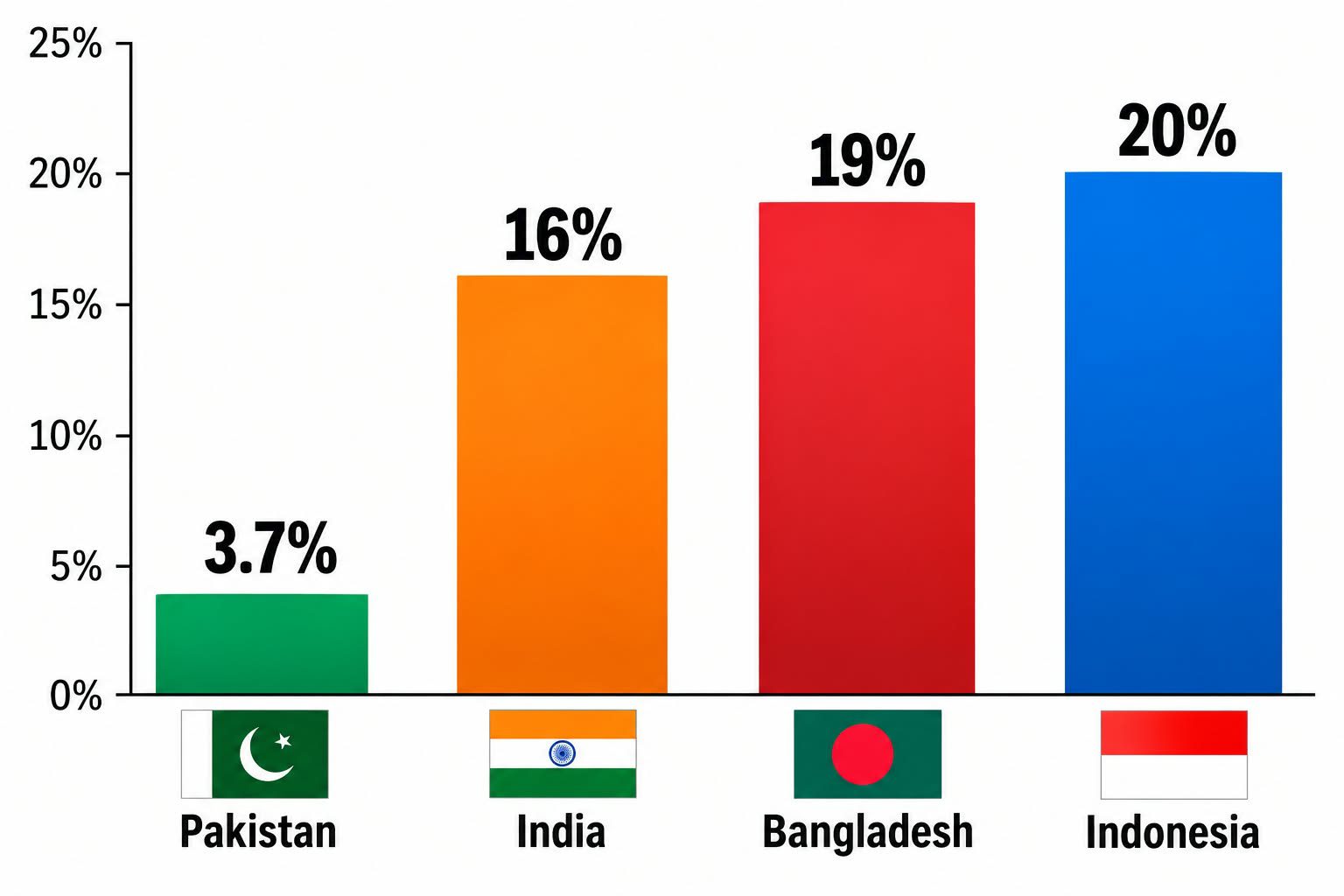
ISLAMABAD: Pakistan’s small and medium enterprises (SMEs) receive just 3.7% of total bank advances, substantially below regional competitors, highlighting the country’s persistent financing gap despite the sector’s significant contribution to economic activity,
According to PwC Pakistan’s Banking Publication 2024, SME lending accounted for 16% of total bank advances in India, 19% in Bangladesh, 20% in Indonesia and 23% in Kenya, compared with only 3.7% in Pakistan. These figures demonstrate the considerable difference in the allocation of bank credit to smaller businesses across the selected economies.
Pakistan’s SME lending share is less than one-fourth of India’s and approximately one-fifth of Bangladesh’s and Indonesia’s. However, these figures represent the comparative snapshot published in 2024 and should not be interpreted as the latest lending ratios for all countries.
Pakistan’s financing position has since improved in absolute terms. According to the Ministry of Finance, outstanding SME financing reached Rs1.148 trillion on October 23, 2026, including Rs538 billion extended to small enterprises.
Millions of businesses remain underserved
Pakistan has more than five million SMEs operating across manufacturing, trading and services, according to PwC Pakistan’s estimates. The sector contributes approximately 40% of GDP, generates nearly 30% of export earnings and accounts for a substantial share of employment.
Despite their economic importance, smaller businesses continue to face difficulties obtaining formal financing. A Competition Commission of Pakistan (CCP) study found that SMEs received only 6-7% of private-sector financing, compared with 25% in Bangladesh and 18% in India.
The CCP study, based on information from 50 financial institutions, 18 focus group discussions and 362 SMEs across 11 cities, also found that medium-sized enterprises received more than 80% of SME financing, indicating that smaller businesses face greater difficulties accessing institutional credit.
Government targets Rs2 trillion financing
The government has set a target of increasing outstanding SME financing to Rs2 trillion and expanding the number of borrowers to 775,000 by June 2028.
According to the Finance Division, the number of SME borrowers reached approximately 350,862 by the end of September 2026, while outstanding financing increased to more than Rs1.137 trillion. The government is seeking to expand lending through commercial banks, microfinance institutions and other financial service providers.
Finance Minister Muhammad Aurangzeb has called for faster implementation of measures to improve access to affordable financing, with particular emphasis on digital credit assessment, financial documentation and financial literacy.
Credit constraints undermine business growth
Limited access to institutional financing remains a major obstacle to SME expansion. Many smaller businesses lack formal accounting records, adequate collateral and documented cash flows, making it difficult to meet conventional bank lending requirements.
Consequently, businesses often depend on personal savings, informal borrowing and supplier credit to finance their operations. These constraints can restrict investment in machinery, technology, production capacity and export development.
For Pakistan to compete more effectively with regional economies, expanding the overall volume of SME financing alone may not be sufficient. Banks will also need to improve access for smaller enterprises, develop appropriate lending products and introduce credit assessment mechanisms that do not rely exclusively on conventional collateral.
With the government targeting Rs2 trillion in SME financing by June 2028, the key challenge will be ensuring that additional credit reaches smaller businesses that have historically remained outside the formal banking system.