


By Asim Shahzad
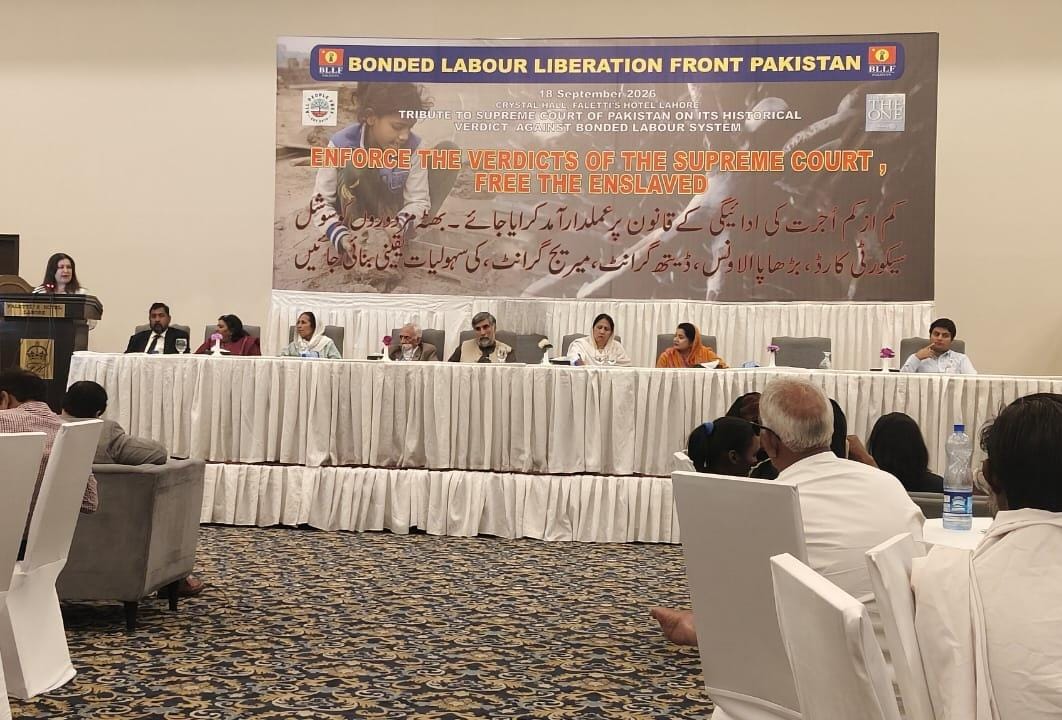
LAHORE: The Bonded Labour Liberation Front Pakistan (BLLF Pakistan) observed Freedom Day 2026 on Sept. 18, commemorating the Supreme Court of Pakistan’s historic judgment declaring debt-based bonded labour illegal and recognising workers’ fundamental right to freedom from bondage.
Speaking at a seminar organised by BLLF Pakistan, participants called for sustained efforts to eliminate debt bondage, forced labour, child labour and exploitation of brick-kiln workers while ensuring fair wages, social protection, education and decent working conditions.
BLLF Pakistan General Secretary Syeda Ghulam Fatima said the Supreme Court verdict had been a landmark development but stressed that legal freedom must translate into practical freedom at workplaces.
She said brick-kiln workers continued to face poverty, debt bondage, inadequate wages, child labour, weak bargaining power and limited access to justice. She stressed that merely notifying minimum wages was insufficient unless workers actually received them and were provided clear records of their earnings.
BLLF Executive Member Mahar Safdar Ali called for stronger complaint mechanisms to protect workers from eviction, threats, violence and dismissal when reporting exploitation. He also urged the establishment of labour unions at brick kilns.
DG Labour and Human Resource Punjab Syeda Kulsoom Hayee said poverty and lack of skills contributed to workers becoming trapped in debt bondage. She said written contracts would be introduced between workers and kiln owners and advised workers to retain copies of their contracts.
She said the government had registered around 7,000 brick-kiln workers and collected data from 160 kilns for social protection purposes. She also announced plans to enrol 5,000 children in schools and stressed that children under 18 should not be employed.
MPA Amjad Ali Javed said social security had been introduced for brick-kiln workers and their children. He said workers’ concerns would be presented before the Punjab chief minister and stressed effective implementation of labour laws.
The BLLF demanded enforcement of bonded labour and child-labour laws, written wage records, stronger labour inspections, social security coverage, legal assistance and protection for workers reporting exploitation.


