


By M Qdeer
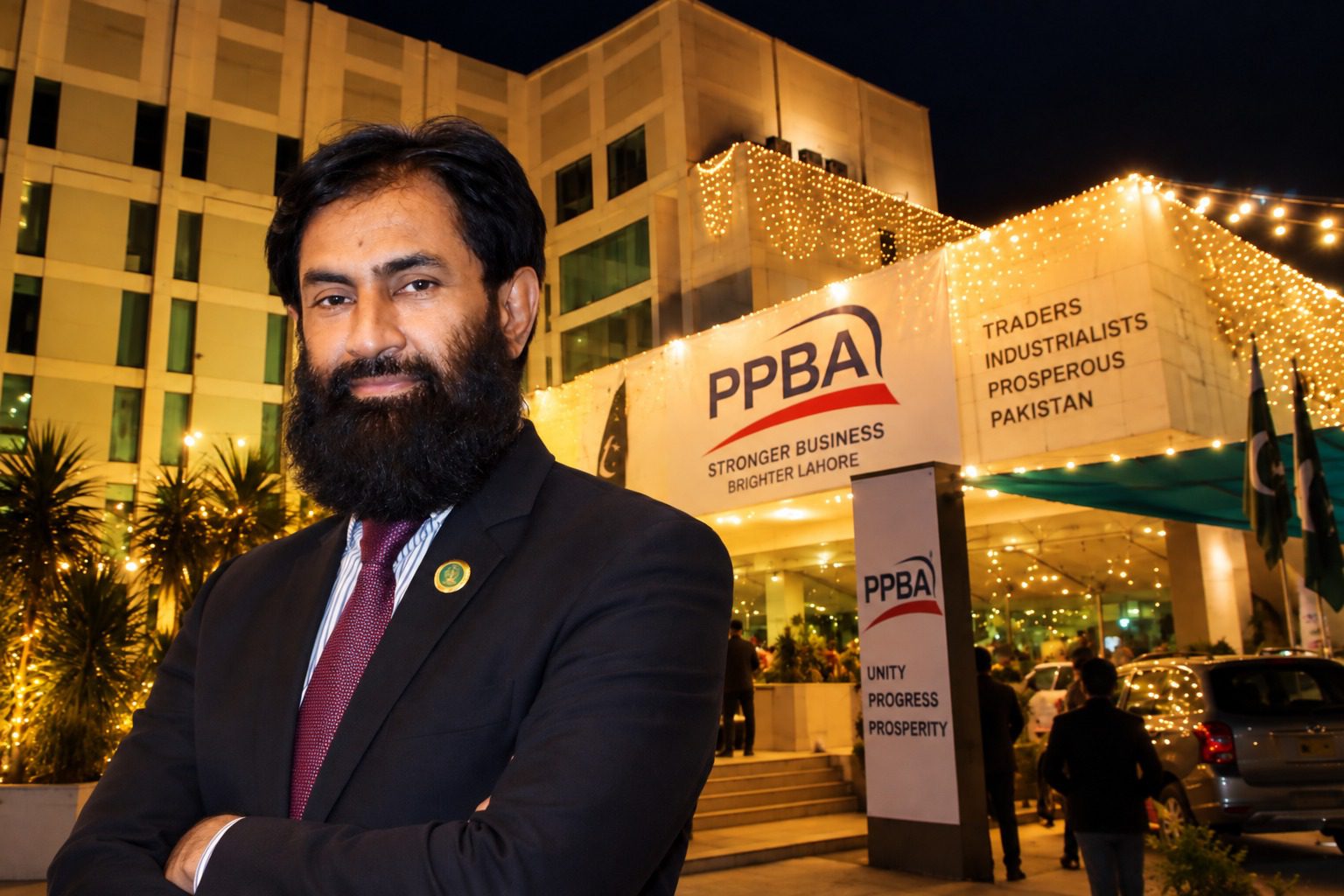
LAHORE: Lahore Chamber of Commerce and Industry (LCCI) Executive Committee member Rana Shoban Akhtar, who is also associated with the industrial community of Drogawala, has called for a stronger institutional focus on the practical problems confronting traders, manufacturers and industrialists, saying the chamber should remain closely connected with businesses and relevant government departments.
In an interview, Akhtar said Lahore’s industrial and commercial sectors were facing a combination of challenges, including high operating costs, energy prices, taxation, regulatory requirements, infrastructure deficiencies, access to finance and difficulties relating to government procedures.
He said the next phase of LCCI’s role should focus on converting these concerns into documented policy proposals, pursuing them with the competent authorities and maintaining follow-up until practical progress is achieved.
Akhtar is currently serving as an LCCI Executive Committee member. Recent LCCI and business-sector events have identified him in that capacity, including meetings concerning industrial development, technology and business facilitation.
Industrial competitiveness must remain a priority
Akhtar said Lahore’s industrial areas provide employment, support supply chains and contribute to production and exports, but businesses cannot expand without a predictable and competitive operating environment.
He said industrialists require reasonable certainty regarding electricity, gas, taxation, financing, labour requirements, regulatory procedures and other major costs before committing capital to expansion.
According to him, the chamber should maintain regular contact with industrial associations and identify problems at the grassroots level rather than relying only on general representations.
He said the experience of industrial areas such as Drogawala demonstrates that many business problems are highly specific and require coordination with particular government departments.
For this reason, Akhtar said LCCI’s advocacy should combine broad economic policy with area-specific intervention where necessary.
Energy costs directly affect production
Akhtar identified energy prices as one of the major factors affecting industrial competitiveness.
He said manufacturers have to incorporate electricity, gas and fuel costs into production calculations, and sharp increases in these costs can affect the competitiveness of locally produced goods.
He called for greater policy predictability and said the impact of energy-related decisions on manufacturing and exports should be considered before measures are introduced.
According to him, industries that consume energy for productive purposes should be viewed in the context of employment, production, exports and the wider economic value they generate.
He said LCCI could strengthen its role by presenting sector-wise data to policymakers showing how energy costs affect different categories of industry.
Industrial areas need better infrastructure
As an industrial-area representative, Akhtar said infrastructure should remain an important component of the chamber’s agenda.
Road conditions, drainage, waste management, water supply, transportation, street lighting, security, telecommunications and access routes can directly affect the movement of raw materials and finished goods, he said.
He maintained that industrial infrastructure should not be treated merely as a municipal issue because disruptions can also affect production, logistics and employment.
Akhtar said LCCI could work with industrial associations to prepare documented lists of infrastructure requirements and present them to the relevant authorities.
He said regular coordination between industrial associations, LCCI and government departments could help distinguish urgent operational problems from longer-term infrastructure requirements.
Business facilitation should reach the ground
Akhtar said the purpose of a chamber is not only to issue policy statements but also to help businesses navigate legitimate institutional requirements.
He said traders and industrialists frequently need guidance regarding taxation, licences, registrations, inspections, environmental requirements, labour regulations and other procedures.
According to him, LCCI should strengthen facilitation mechanisms so that members can understand the applicable requirements and communicate with the relevant departments through proper channels.
He said this would help reduce confusion while also encouraging businesses to comply with the law.
Regulatory matters need balanced handling
Akhtar said businesses must comply with applicable laws, while regulatory institutions should ensure that enforcement procedures remain transparent, properly documented and consistent with legal requirements.
He said when businesses have concerns about notices, inspections, sealing actions or other regulatory measures, the chamber can play a constructive role by facilitating communication between the business community and competent authorities.
He stressed that legitimate enforcement and business facilitation should not be treated as competing objectives.
According to Akhtar, businesses need clarity about their obligations, while government departments need effective mechanisms for dealing with violations.
He said LCCI should help resolve genuine disputes through institutional and lawful procedures instead of allowing individual complaints to become prolonged sources of uncertainty.
Taxation should encourage documentation
Akhtar said taxation remains one of the most frequently discussed issues among traders and industrialists.
He said businesses need clarity, consistency and coordination among tax-related institutions.
According to him, expanding the documented economy requires confidence among existing taxpayers as well as effective measures to bring previously undocumented economic activity into the formal system.
He said unnecessary duplication in procedures should be reduced and digital systems should be used where they can make compliance easier.
Akhtar maintained that the chamber should present practical recommendations to the government rather than limiting its role to criticism of taxation policies.
He said consultation with business representatives before major taxation changes could help policymakers understand their likely impact on different sectors.
Export growth requires a competitive environment
Akhtar said Pakistan’s long-term economic stability requires stronger exports and greater value addition.
He said Lahore has a substantial manufacturing and trading base that can contribute to international markets if businesses receive appropriate support.
According to him, exporters require competitive production costs, reliable energy supplies, efficient logistics, access to machinery and raw materials, predictable taxation and timely government facilitation.
He said LCCI should continue engaging with institutions responsible for trade promotion and export facilitation.
Akhtar also stressed the importance of helping smaller manufacturers become part of export supply chains.
He said export growth should not be limited to large companies and that smaller industrial units can also contribute if they receive access to technology, finance, skills and international market information.
SMEs need stronger institutional support
Akhtar said small and medium enterprises form an important part of Lahore’s commercial and industrial ecosystem.
He said smaller businesses often face greater difficulties in obtaining financing, adopting technology, finding skilled workers and entering international markets.
LCCI, according to him, can help by connecting SMEs with financial institutions, government programmes, larger companies, technology providers and potential business partners.
He said training programmes should also be designed around practical requirements, including accounting, taxation, digital commerce, production efficiency, export documentation and modern marketing.
Government-business coordination
Akhtar said the relationship between the government and the private sector should be based on consultation and continuous engagement.
He said policymakers need information from businesses when designing measures affecting production, trade and investment.
At the same time, he said the business community should present its demands through proper institutional channels and provide data supporting its proposals.
According to Akhtar, LCCI can serve as an important bridge between government institutions and the private sector by collecting sector-specific concerns and presenting workable solutions.
He said the chamber should maintain follow-up after meetings so that issues raised before policymakers do not remain limited to discussions.
Industrial investment depends on confidence
Akhtar said investment decisions are closely linked to business confidence and policy predictability.
An industrialist planning to purchase machinery or establish a new production line has to consider energy, taxation, financing, labour and regulatory costs over several years, he said.
According to him, retaining existing investment is also important because established businesses already possess infrastructure, trained workers, supply chains and market knowledge.
He said policies should therefore encourage existing businesses to expand alongside efforts to attract new investment.
Technology can improve productivity
Akhtar also emphasised the importance of technology adoption in manufacturing and commerce.
He said modern machinery, digital systems, improved production processes and better data management can help companies improve productivity and compete in international markets.
He said LCCI could strengthen links between industry, universities, technology providers and entrepreneurs to encourage practical technology transfer.
Recent LCCI activities have also included initiatives aimed at strengthening industry-academia links and promoting technology and innovation. Akhtar participated in LCCI programmes involving academia and industry representatives during 2026.
According to him, technology adoption should be accompanied by workforce training so that employees can effectively use modern equipment and systems.
Protecting legitimate business activity
Akhtar said the business community expects government institutions to enforce laws but also wants procedures to remain transparent and predictable.
He said legitimate businesses should have access to appropriate forums where they can raise concerns about regulatory decisions.
According to him, LCCI can help businesses understand their legal and regulatory responsibilities while also communicating genuine difficulties to the relevant authorities.
He said this approach could help reduce misunderstandings and create greater confidence between businesses and regulatory institutions.
Industrial associations can strengthen LCCI advocacy
Akhtar said the chamber’s effectiveness could be enhanced through closer cooperation with sectoral and industrial associations.
He said associations have direct knowledge of problems affecting particular industrial areas and sectors.
Regular consultation, according to him, could enable LCCI to identify recurring issues and determine whether they require local administrative action or broader policy intervention.
He said the chamber should maintain a database of major issues raised by members and monitor their progress.
Business complaints require follow-up
Akhtar said one of the key expectations of members is that complaints should not disappear after being submitted.
He suggested that important issues should be documented, assigned to the relevant forum and followed up through a defined institutional process.
If a problem affects several businesses, he said, the chamber should determine whether it reflects a systemic policy or administrative issue.
According to him, evidence-based advocacy would make LCCI’s representations more effective and enable government departments to understand the scale and economic impact of particular problems.
Role of LCCI in economic policy
Akhtar said LCCI should continue strengthening its role as a representative institution for traders, industrialists, exporters, manufacturers and SMEs.
He said chamber representatives should remain accessible to members and regularly visit markets and industrial areas.
The objective, according to him, should be to understand business problems directly and then convert those concerns into policy recommendations.
He said elected representatives should also remain engaged with members throughout their tenure rather than limiting their interaction to the election period.
Focus on employment and production
Akhtar said Lahore’s economic development is closely connected with the performance of its industrial and commercial sectors.
He said policies supporting manufacturing, investment, exports and SMEs could help create employment and strengthen economic activity.
He also stressed that unnecessary barriers to legitimate business activity should be identified and addressed through lawful and institutional mechanisms.
According to him, businesses need an environment in which entrepreneurs can focus on production, investment, employment generation and expansion into new markets.
Message to Lahore’s traders and industrialists
Akhtar said the LCCI election should be viewed in the context of the chamber’s future institutional role and its relationship with the wider business community.
He said traders and industrialists should examine the programmes, experience and priorities presented by all candidates and groups contesting the election.
His emphasis, he added, remains on practical business facilitation, industrial development, infrastructure, exports, taxation, energy costs and stronger engagement between the private sector and government.
As a current LCCI Executive Committee member, Akhtar has participated in chamber activities involving industrial development, technology, academia and business facilitation. Recent reports also recorded his participation in meetings with industrialists regarding operational and regulatory issues affecting factories.
A practical agenda for Lahore’s business community
Akhtar’s proposed agenda centres on several interconnected issues: industrial competitiveness, energy costs, taxation, infrastructure, exports, SME development, regulatory procedures, technology and government-business coordination.
He said LCCI’s role should be to provide an institutional platform through which these concerns can be documented, discussed with policymakers and pursued through appropriate channels.
For Lahore’s traders and industrialists, he said, effective representation means maintaining contact with businesses, understanding their operational challenges and ensuring that legitimate concerns receive continued institutional attention.
Akhtar said the chamber’s future role should therefore focus on practical facilitation, evidence-based advocacy and stronger engagement with the public sector while ensuring that businesses also fulfil their legal and regulatory responsibilities.


